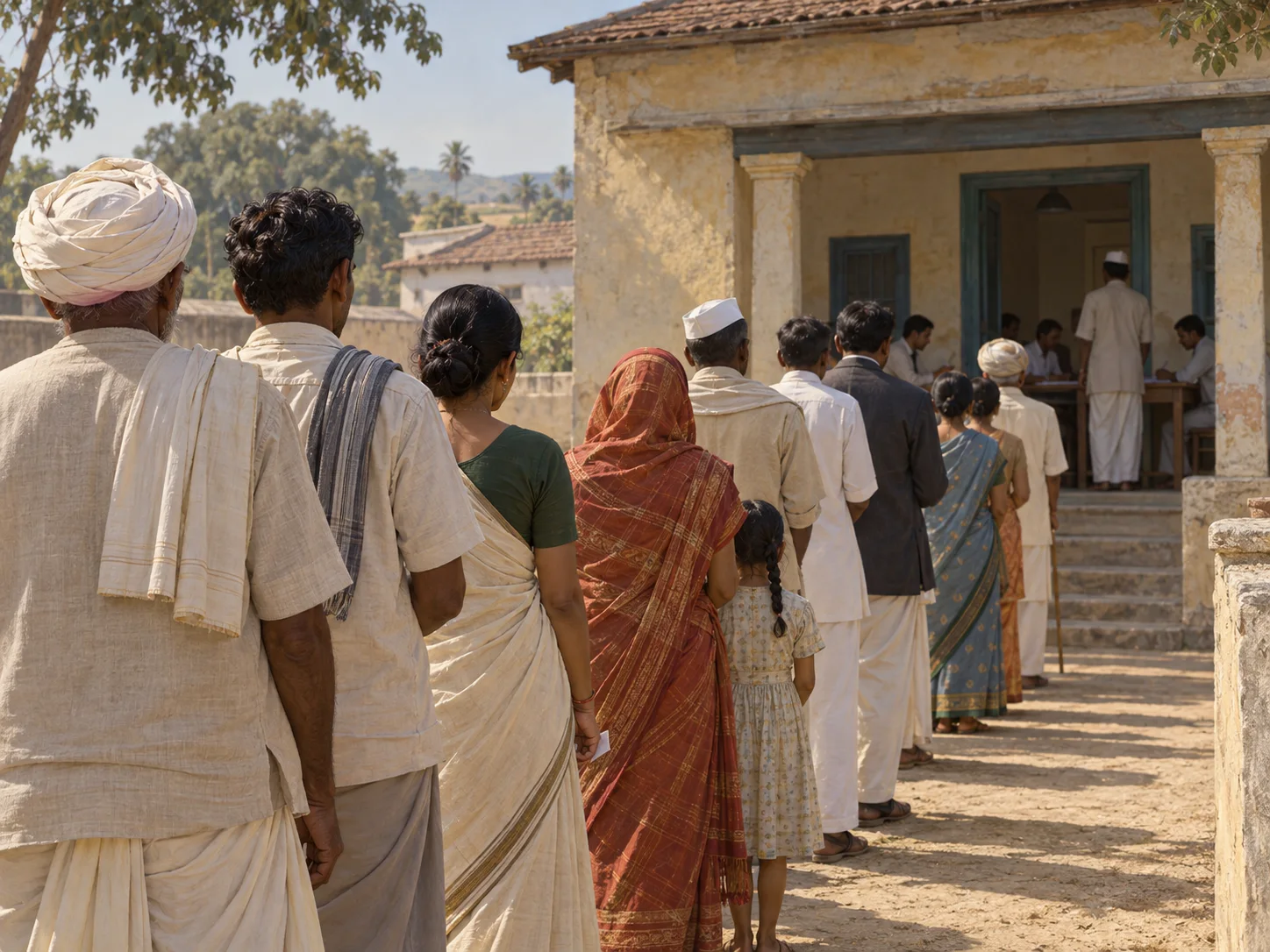
Independent India's first general election ran from October 1951 to March 1952. Election Commission records preserve images of large outdoor voter queues. About 173.2 million people were enrolled and 105,950,083 voted.
To make a secret ballot workable in a country with low literacy, each candidate received a separate steel ballot box marked with an election symbol. More than 2.5 million boxes were supplied to 196,084 polling stations.
The people in line were not approaching a single paper listing names. They had to identify their chosen candidate's symbol and place a ballot paper in the corresponding box. The queue was the physical entrance to a new system that converted universal adult suffrage into millions of individual acts.