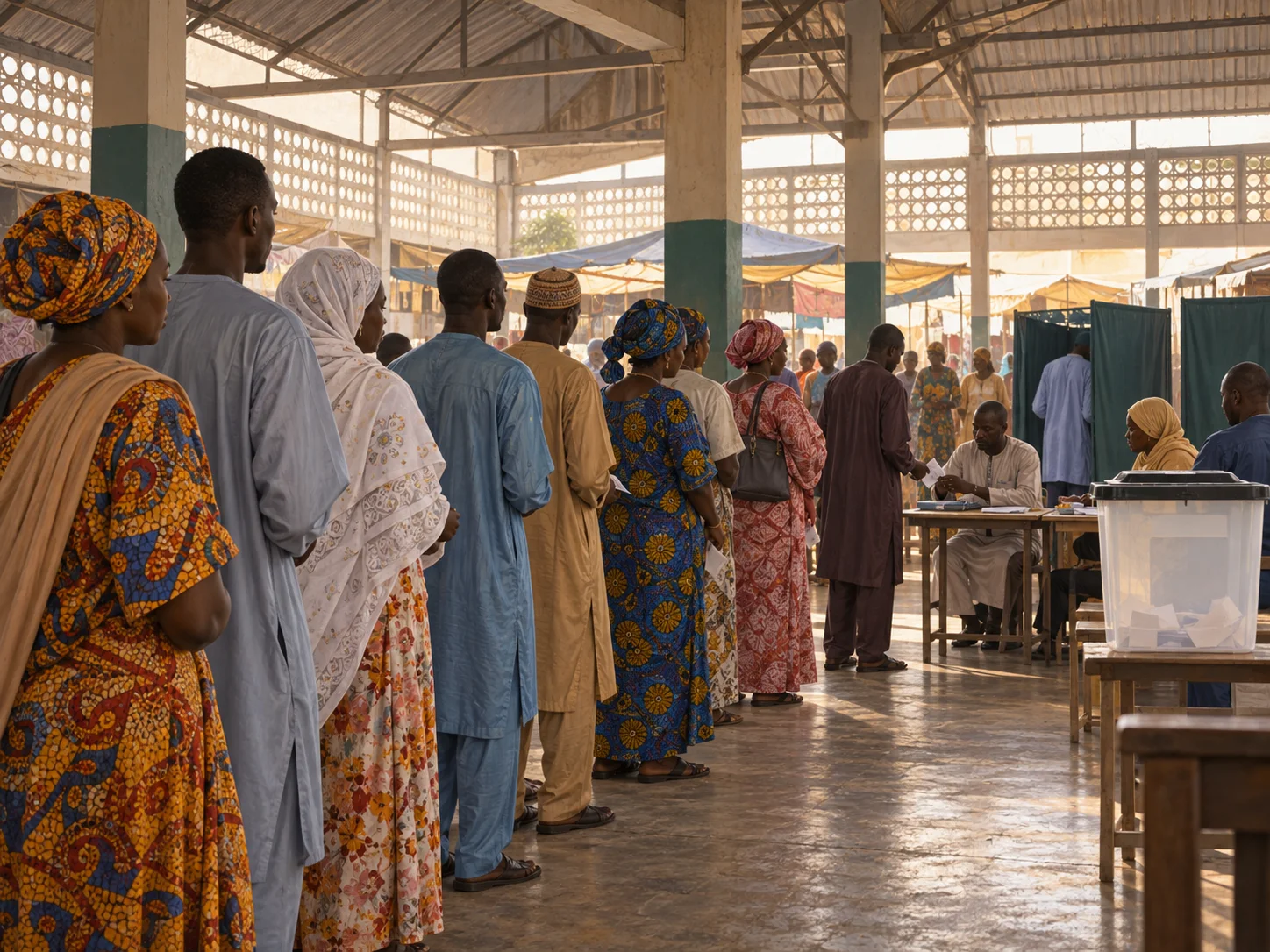
On 24 February 2019, voters queued in Grand Yoff, Dakar, during Senegal’s presidential election. A Voice of America photograph by Seydina Aba Gueye identifies Grand Yoff as Dakar’s second-largest electoral district and documents people waiting to vote.
In a large constituency, a polling station repeats a short sequence many times: locating a name on the register, verifying identity, issuing a ballot, allowing it to be marked and accepting it into the box. Even if each transaction takes only minutes, a line forms when arrivals exceed the rate at which those steps can be completed. Queue length alone cannot prove enthusiasm or fairness, but it does expose the volume of citizens a local process must handle one by one.
The image record does not state the exact number of voters, their waiting time, the polling-station name or the demographic composition of the line. Nor can the uncertainty surrounding a national result be assigned as a common emotion to every person shown. The directly supported claim is specific: voters in Grand Yoff formed a queue on election day.
A presidential election chooses one national office, but participation is broken into many local entrances. The line in one of Dakar’s largest electoral districts shows how national politics depends on neighbourhood-scale records, desks and ballot boxes. Before votes could become a national total, each voter had to reach the front of a local queue. Preserved as a public-domain VOA image, the photograph documents a stage that election totals omit: citizens waiting before their choices could enter the count.
