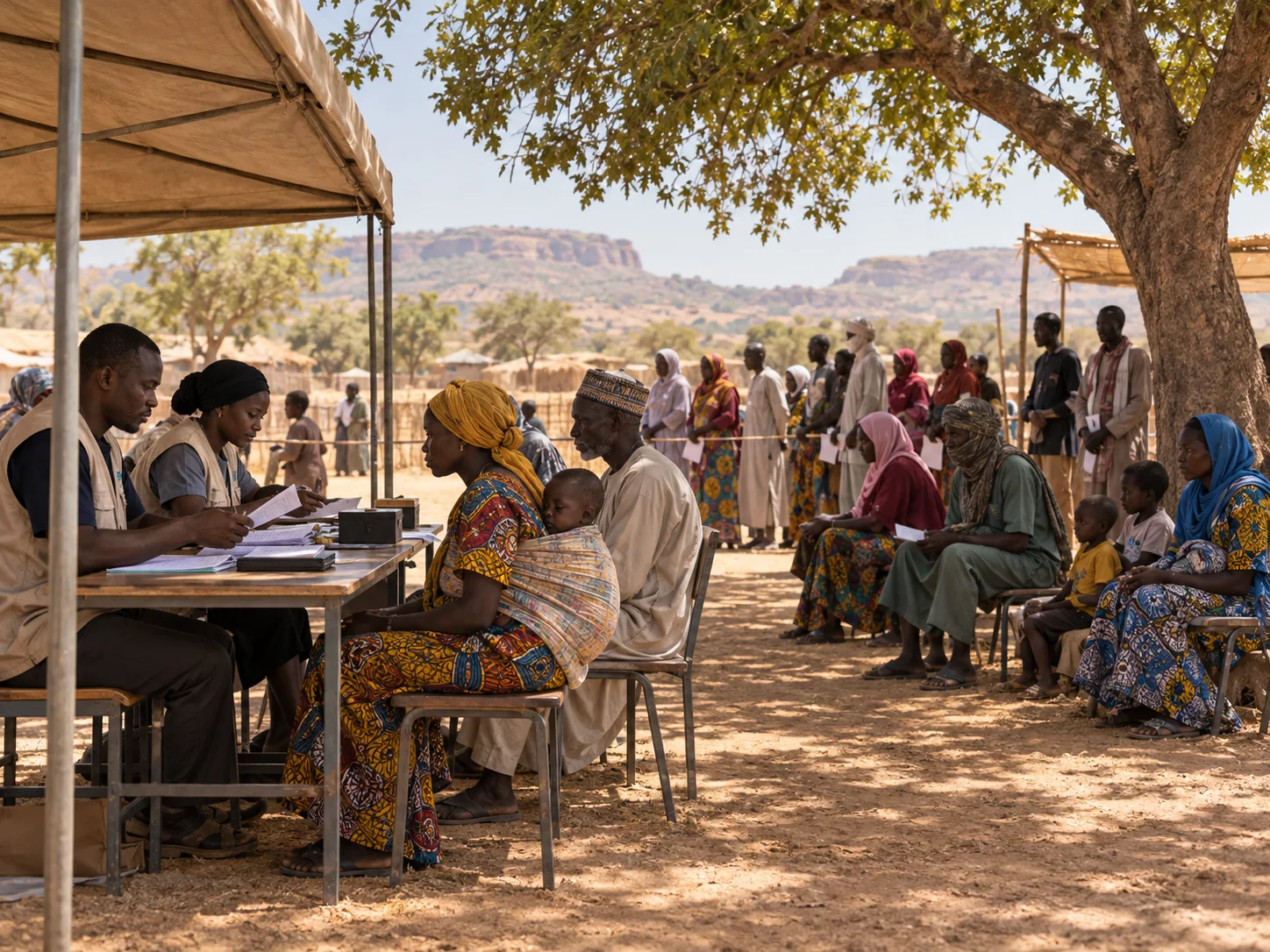
In 2023, people who had fled Burkina Faso formed a registration queue in Dapaong, northern Togo. A field report by UNHCR, the UN Refugee Agency, includes a photograph captioned as newly arrived Burkinabè refugees lining up to register. It also records that Togolese authorities were carrying out registration with UNHCR support.
What people were waiting for was neither a product nor entertainment. Registration was the administrative step through which a person who had crossed the border could be documented and connected to protection and assistance. The line grew out of violence by non-state armed groups in northern Burkina Faso. Mothers described in the report had left ordinary life behind and, after reaching a neighbouring country, still needed to link themselves and their families to an official record.
What makes this queue distinctive is that the end of a journey became the beginning of another wait. Crossing a border did not by itself complete the search for safety; an ordered registration process opened the way toward longer-term protection. Its shape resembled many everyday queues, with one person following another, but the meaning of each step was entirely different.