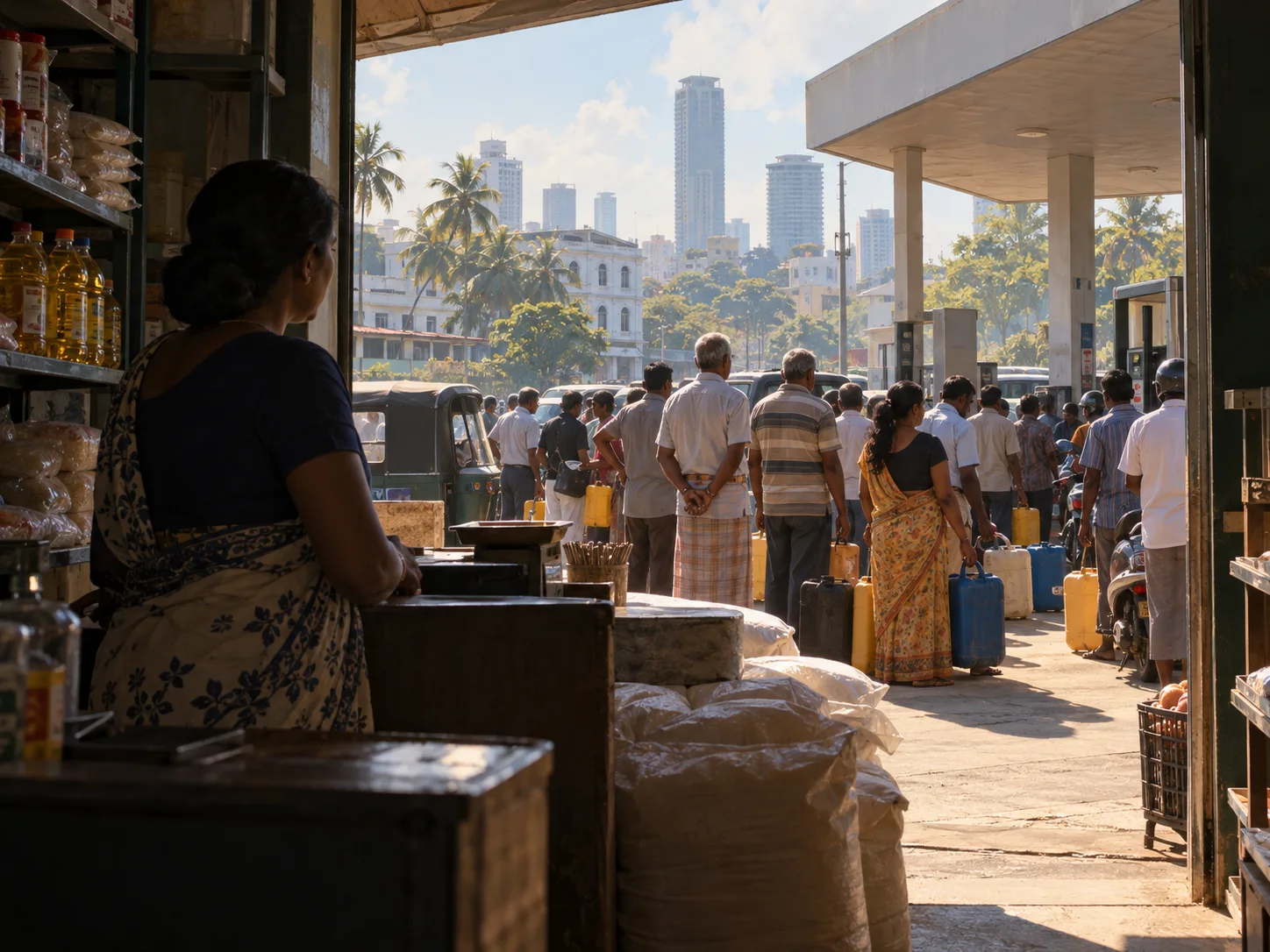
Long queues formed at fuel stations across Sri Lanka on 2 March 2026 as conflict involving Iran raised fears of disrupted oil supplies. Reuters reported from the line in Colombo, where a three-wheeler driver explained that people were flocking to stations even though authorities said the country still held adequate stocks of petrol and diesel. An anticipated shortage, rather than an empty national tank, had already created a present-day queue.
Sri Lankans had endured severe fuel scarcity and long waits during the 2022 economic crisis. In a society carrying that memory, drivers had reason to fill up early. Yet when thousands make the same individually rational decision, demand surges and the congestion they fear becomes real. The fuel queue thus measures more than available litres. It turns memory of an earlier shortage and anxiety about the future into a line of vehicles in the present.