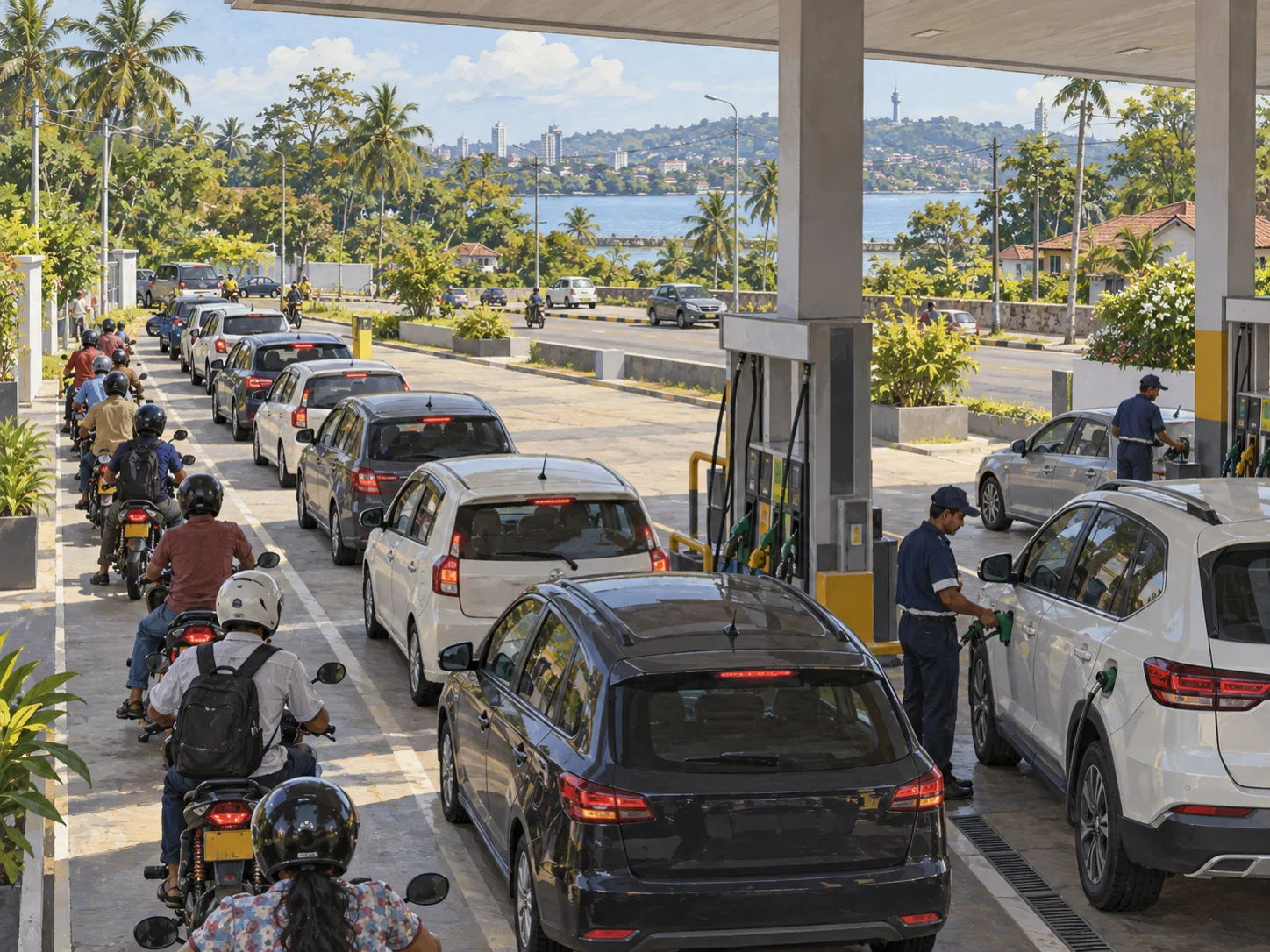
On March 2, 2026, long lines formed at filling stations across Sri Lanka. Reuters reported that U.S. and Israeli strikes on Iran had triggered fears of another fuel shortage. Authorities said the country held enough diesel for 35 days and gasoline for 37 days—the full amount it would normally store—yet motorists still headed to the pumps. The queue was created not by proof that fuel had already run out that day, but by uncertainty about the next opportunity to buy it.
That response carried the memory of 2022. A severe shortage of foreign currency had produced months of fuel scarcity, mass protests, and the removal of President Gotabaya Rajapaksa. Four years later, official assurances about stocks could not immediately erase the habits of caution formed during that crisis. Purchases were pulled forward, so fear of scarcity generated its own immediate congestion.
The queues were raised again at a presidential media briefing on March 5. President Anura Kumara Dissanayake said there was no present supply problem, while explaining that Sri Lanka had limited storage capacity and imported fuel according to demand. This makes the 2026 line distinct from a queue at an already empty station. Drivers were trying to secure fuel while supplies were still said to be sufficient—waiting because the future, rather than the pump in front of them, appeared uncertain.