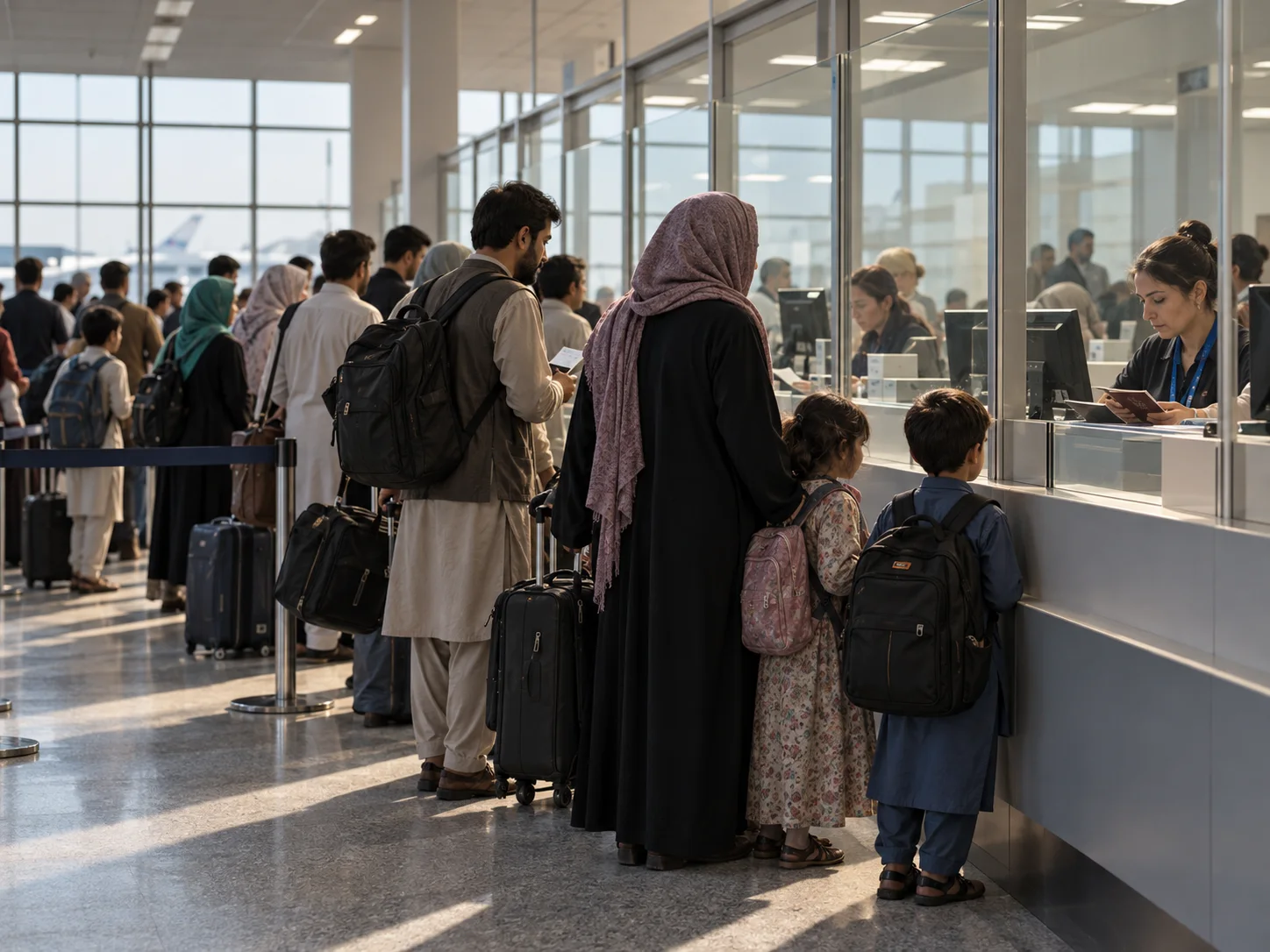
In August 2021, just after the collapse of Afghanistan's government, the people at Kabul airport were not only an undifferentiated crowd. A later evaluation by the U.S. Department of State Office of Inspector General states that, during the noncombatant evacuation operation, State Department personnel at Hamid Karzai International Airport vetted applicants for U.S. evacuation priorities and put them in lines. Department of Defense personnel were manifesting the evacuation flights. The official review therefore records an actual sequence of physical waiting for evacuation processing at the candidate's place and time.
A Reuters video record dated 29 August preserves the scene outside the airport and the voices of people seeking a route out. One woman said that their lives were in danger and asked the foreign authorities to show them a way to leave. A man spoke of women, children and elders losing time outside the airport. The footage also records cars queuing on a nearby street. That traffic line is not the same as the evacuation-processing line. The direct evidence for this article is the Inspector General's specific account of applicants being screened and placed in lines inside the airport; the Reuters record supplies dated, contemporaneous context for what waiting around the airport meant.
Beyond the line lay no ordinary journey. Documents and eligibility were being checked while people waited to learn whether they could board a flight away from danger. The attempt to impose order and the surrounding fear existed at the same time. Across different worlds, waiting one's turn is a recognisable human act. Yet the weight placed on a single turn here—the possibility of safety for oneself and one's family—was far removed from the stakes of an everyday queue.