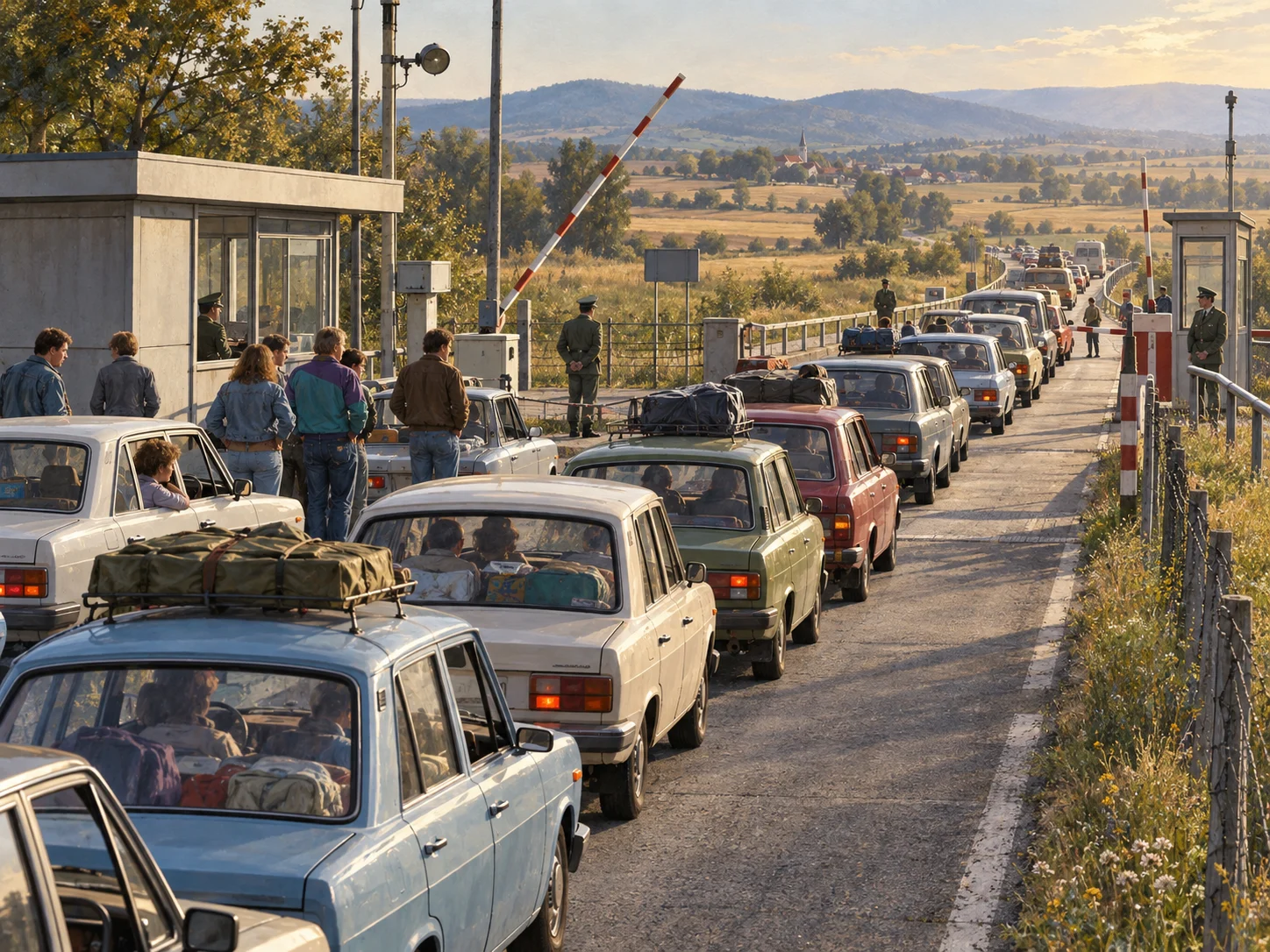
On the evening of 10 September 1989, East German citizens waited for the border between Hungary and Austria to open. A photograph in the Chronicle of the Berlin Wall identifies the people, place and date before the opening. On 11 September, Hungary allowed East German citizens to leave for the West, and about 14,000 departed through Hungary over the following days.
This was not an ordinary border line whose members expected routine passport control. They were waiting for a political boundary that had recently blocked their movement to become a passage. Advancing toward the front was not simply one stage of a trip; for many, crossing meant choosing a route to West Germany instead of returning home.
A border looks like a single line on a map. In practice it is made from fences, guards, permissions, opening times and the order of people waiting. On this night, the immense structure of the Cold War contracted to the question of when one gate would open.