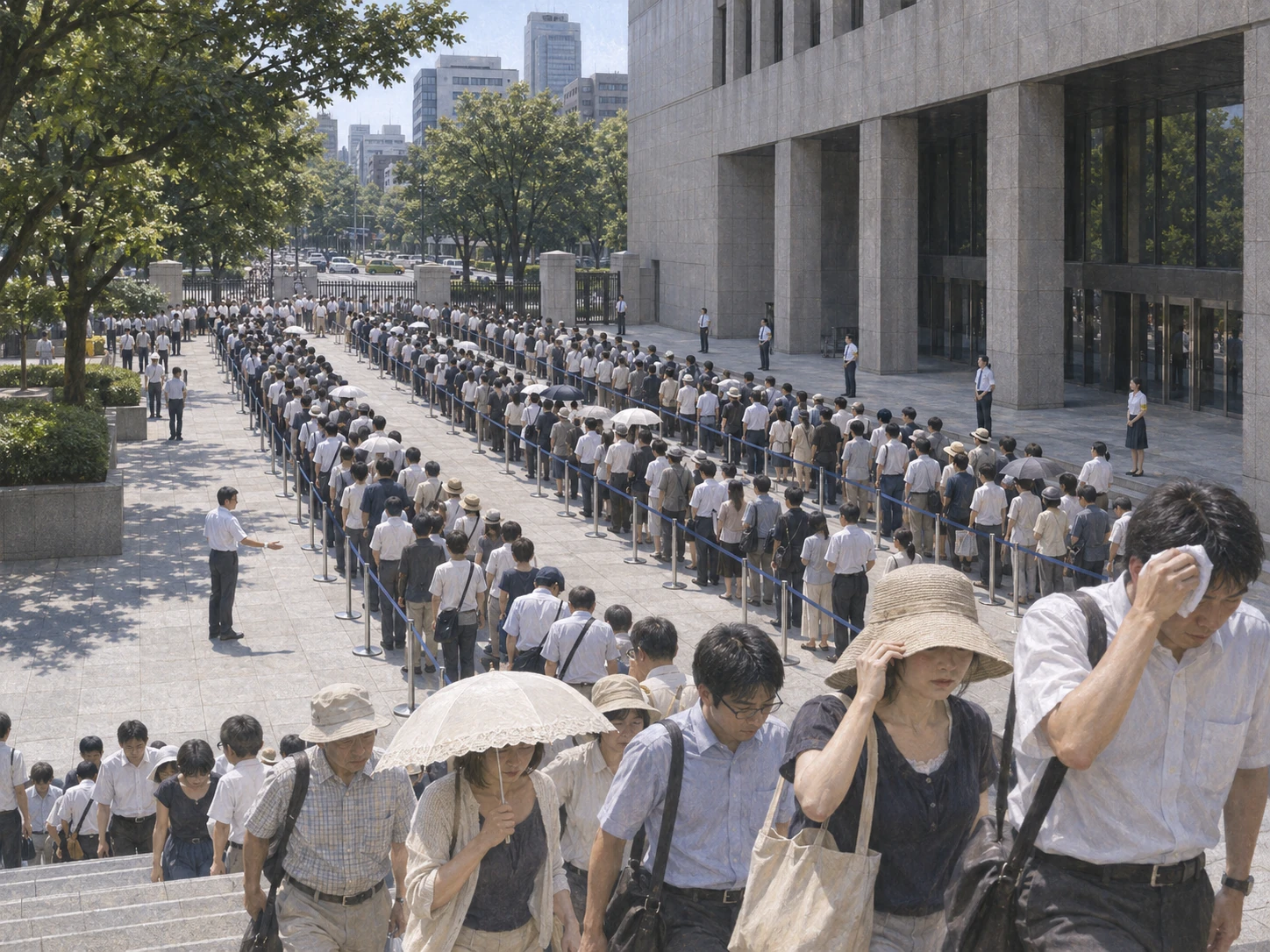
On 3 August 2009, thousands queued outside Tokyo District Court to witness Japan's first criminal trial under the new lay-judge system. Inside, six citizens selected from a pool of forty-seven sat with three professional judges to determine the defendant's sentence. Ordinary citizens had not directly taken part in serious criminal adjudication since Japan suspended its earlier jury system in 1943.
The line was not formed to glimpse a celebrity. It gathered to watch the boundary of judicial authority move from professionals alone toward citizens. Amid anxiety about compulsory service and protests against the system, public curiosity became measurable as the physical length of a queue outside the courthouse.