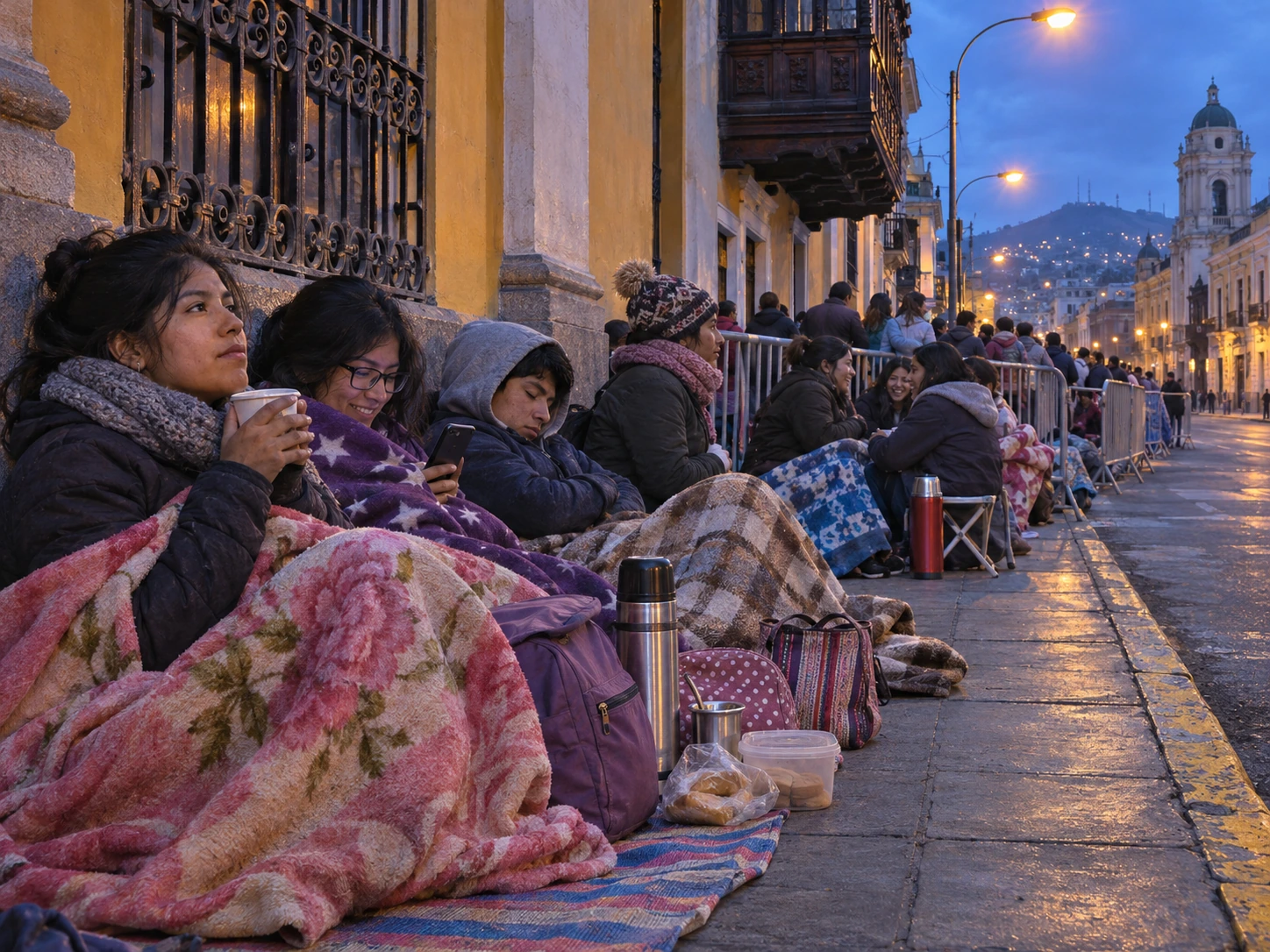
For viewers of Peru’s long-running television program Trampolín a la fama, participation began well before the cameras rolled. In a 2018 recollection, anthropologist Alexander Huerta-Mercado described joining the line outside the studio on Mariano Carranza Street in Lima. The queue was long enough that he spent several nights sleeping there. Waiting did not mean simply standing still: women knitted, cooked, and sold sweets, while people inside the line created their own pencilled number tickets. Closer to admission, a stamp was placed on the forearm and station security wrote another number. The crowd was also divided into separate lines for men and women.
What distinguishes this queue is the layering of informal and official order. Long before the television station took control at the door, would-be audience members had already made their places legible to one another with handwritten numbers and everyday routines. The later stamp and security number did not create the queue from nothing; they translated a street-managed order into the broadcaster’s admission system. A free seat in a popular studio audience therefore became a small shared resource, governed first by the people who slept, cooked, traded, and waited together, and only then by the channel. The television experience began not with applause in the studio but with nights spent protecting one’s place outside.