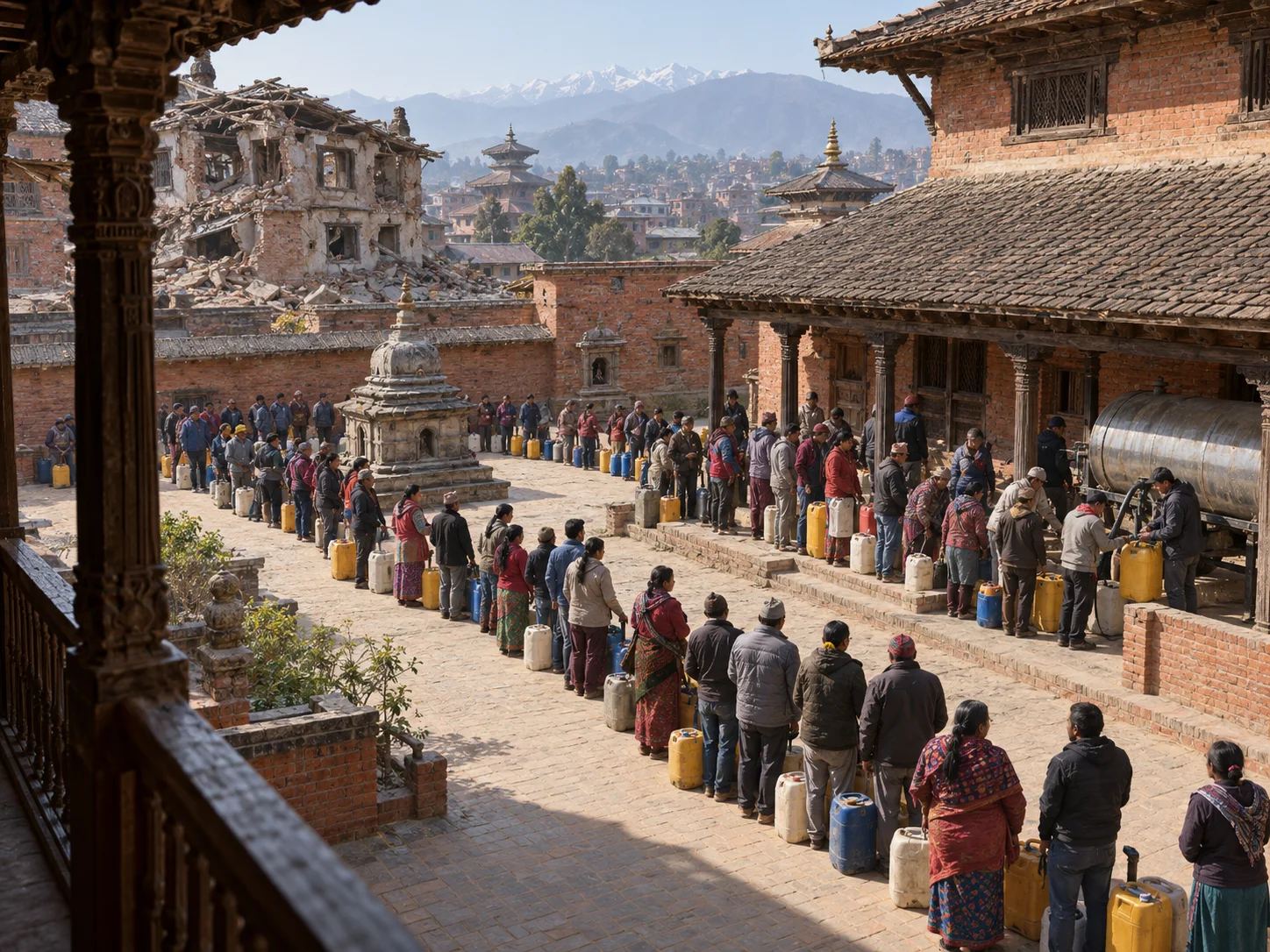
In 2015, protests over Nepal's new constitution and disruption at the Indian border turned a fuel shortage into a nationwide fact of daily life. Reuters reported that, under rationing, lines of motorists waiting at petrol stations stretched for several kilometres. A separate local account documented people at Kathmandu's Bhadrakali petrol pump and said residents spent days in queues for cooking gas.
The distinguishing feature of these queues was that political disruption became measurable in both distance and time. For landlocked Nepal, delays along cross-border supply routes immediately affected transport fuel and household energy. Kilometres of vehicles and days spent waiting for gas showed how a dispute at the border could reach all the way to the petrol pump and the kitchen.