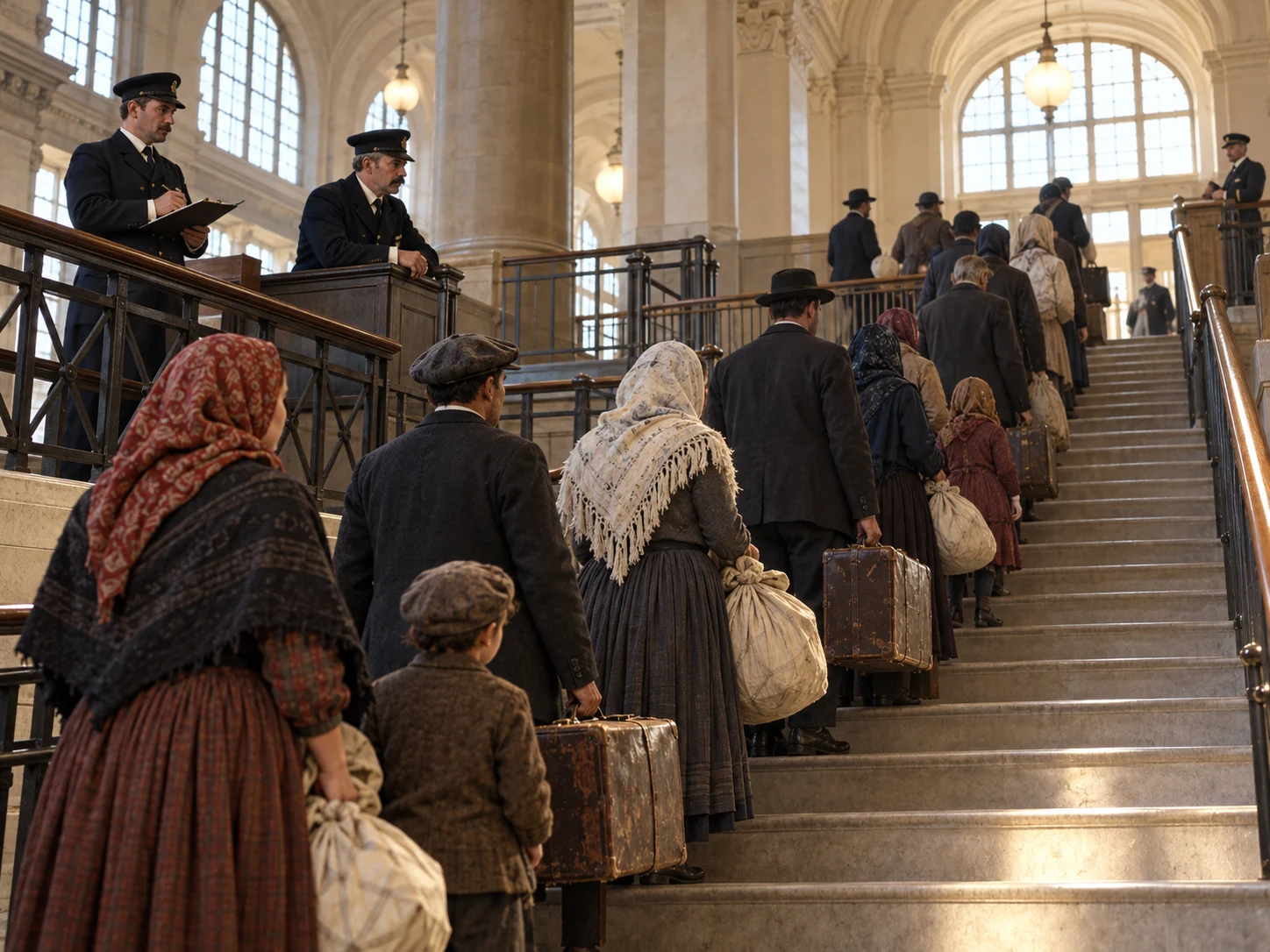
At Ellis Island in the early twentieth century, immigrants were observed while moving in line toward the Great Hall. Public Health Service doctors watched gait and breathing on the stairs, marking clothing when a person was suspected of needing further examination.
A 1917 account says the average stay lasted two or three hours, during which health and immigration inspections were completed. The line was therefore not merely a place to wait; it was part of the examination.
What distinguished this queue was that judgment began before anyone reached a desk. The body advancing in order became evidence used to determine admissibility.