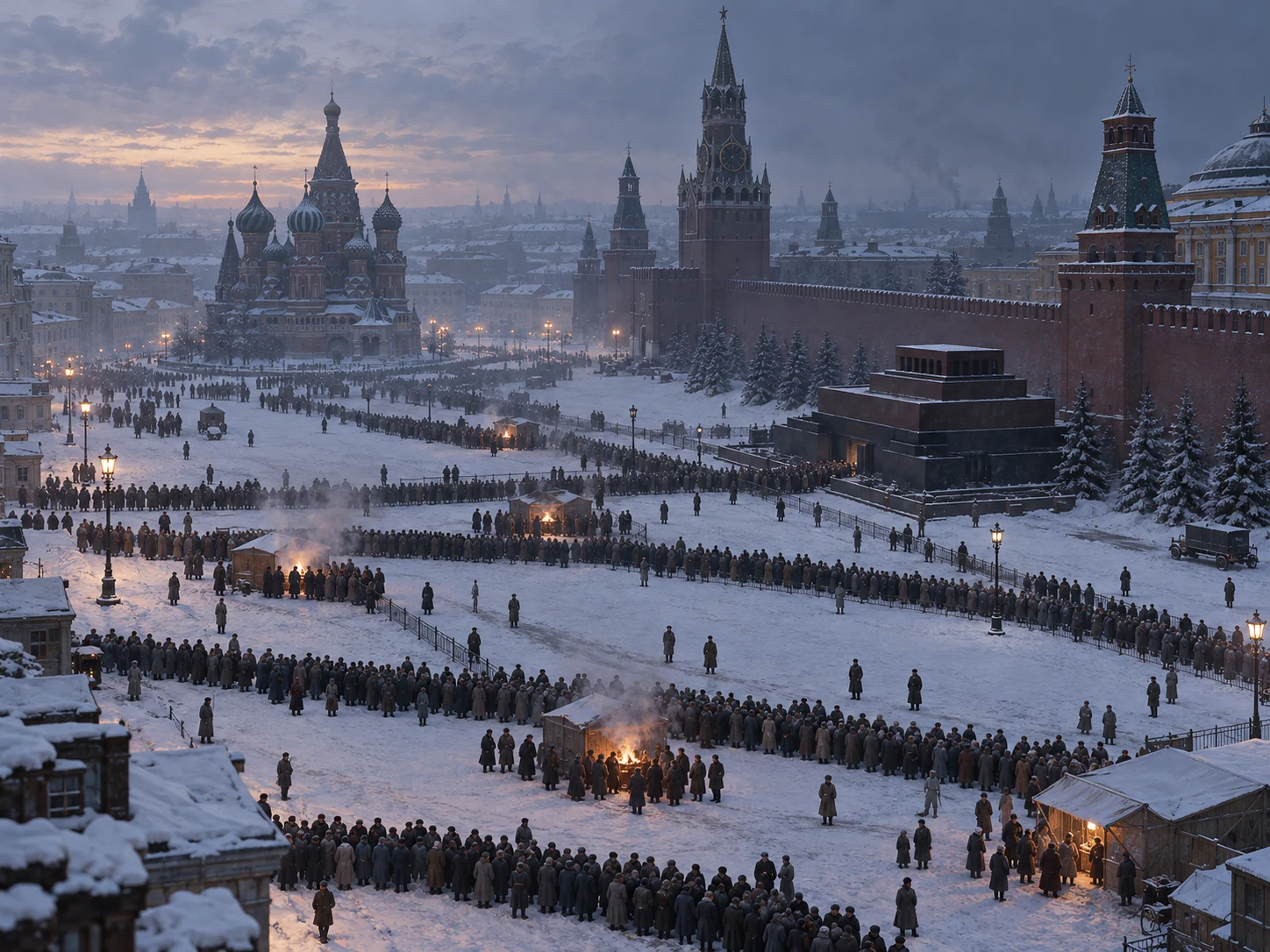
After Vladimir Lenin died in January 1924, mourners continued to file through Moscow to view his body. A contemporary newspaper described an “endless line of mourners” moving through the freezing city. Lenin lay in state in the Hall of Columns before being transferred to a temporary mausoleum in Red Square.
The wait combined private mourning with a political ritual organised by the state. A queue turned mass attendance into a visible sequence, allowing individuals to pass the body one by one. Estimates of the total number and individual waiting times vary across sources, so they are not treated here as settled facts.
The mausoleum later became permanent, and the line to see Lenin outlasted the funeral itself to become a Soviet public ritual. That first winter queue was both a route of mourning and an early demonstration of how the new state would design an entrance to collective memory.