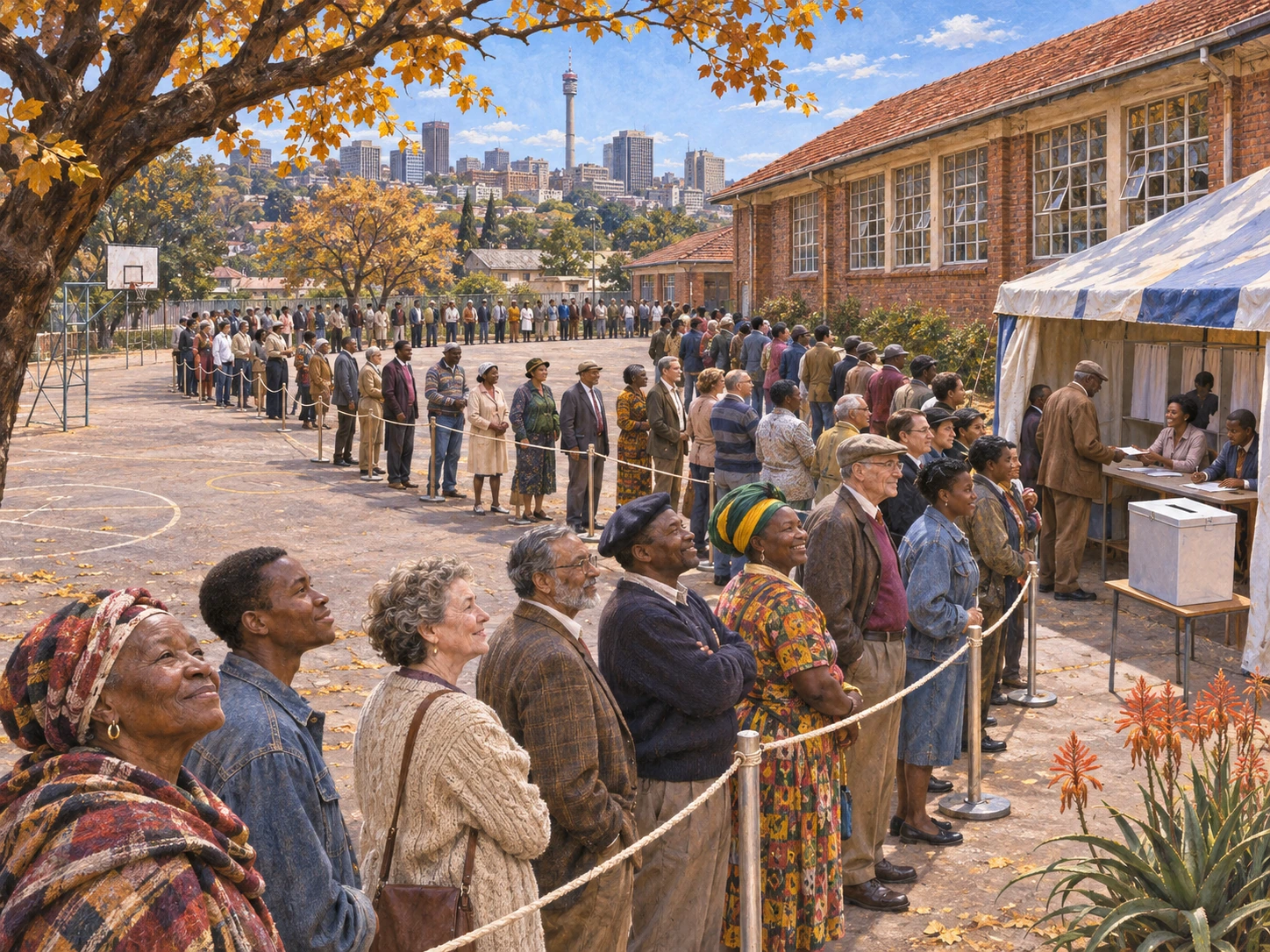
On 27 April 1994, voters formed long lines outside polling stations in South Africa's first fully democratic election. A South African government account says nearly twenty million people queued, while the Apartheid Museum records waits of hours in lines often more than a kilometre long.
For the first time, South Africans over eighteen could vote regardless of race. The queues were therefore more than an operational bottleneck. For the Black majority, participation in a national election was itself new. Time spent reaching the ballot was part of exercising a right that had long been denied.
The election's achievement cannot be measured only by votes counted. The lines outside polling stations show a constitutional change being enacted through the physical waiting of almost twenty million people. The date, 27 April, subsequently became the national holiday Freedom Day.