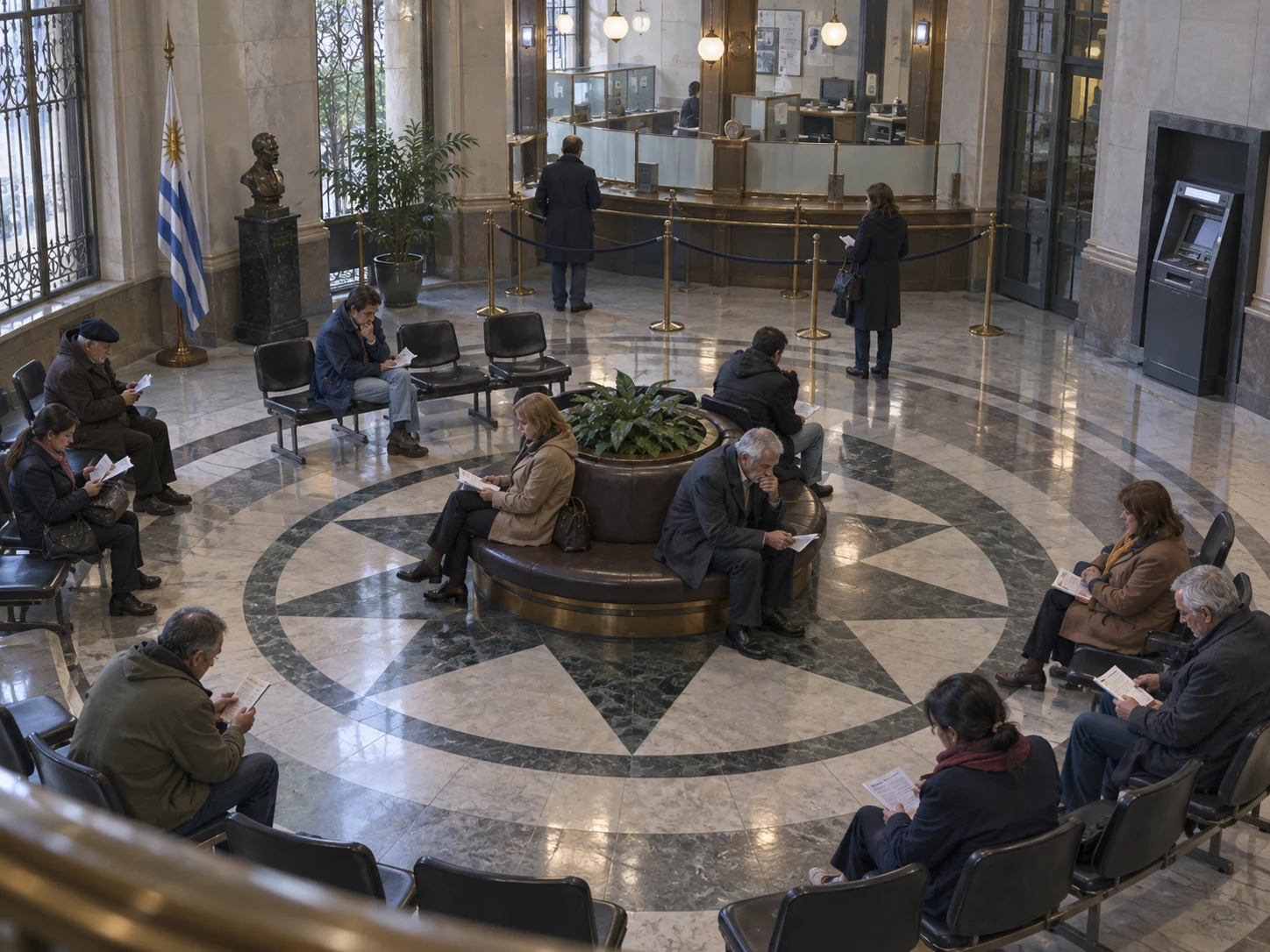
At the end of July 2002, Uruguay suspended banking operations. The government closed the financial system on Tuesday and announced that banks would remain shut for the rest of the week. Yet one narrow route to cash remained. The Guardian reported that nervous Uruguayans formed queues at cash machines for a second consecutive day. With bank doors closed, the order of access shifted to machines built into walls.
The emergency was tied to the financial crises in neighbouring Argentina and Brazil. Uruguay had long cultivated a reputation as a stable regional banking centre, but depositors began to doubt whether that stability would hold. Nearly $6 billion had been withdrawn since the beginning of 2002, equal to about 40 percent of all bank deposits. The central bank suspended two institutions whose reserves had fallen dangerously low. Uruguay’s own foreign reserves had dropped by three-quarters since December, to $725 million.
An ATM queue condensed the logic of a bank run. For one account holder, moving money into cash could be a prudent decision. When thousands made the same decision, each withdrawal reduced the resources available to the next person. Closing branches could slow the pace of the run, but it could not close the gap between a balance displayed in an account and banknotes placed in a hand. The queues in Montevideo made that gap visible: a line of depositors waiting for proof that their money was still obtainable. The shutdown bought time for the government to seek international support. Households, however, needed cash on a daily schedule. The ATM line formed where those two clocks no longer matched.