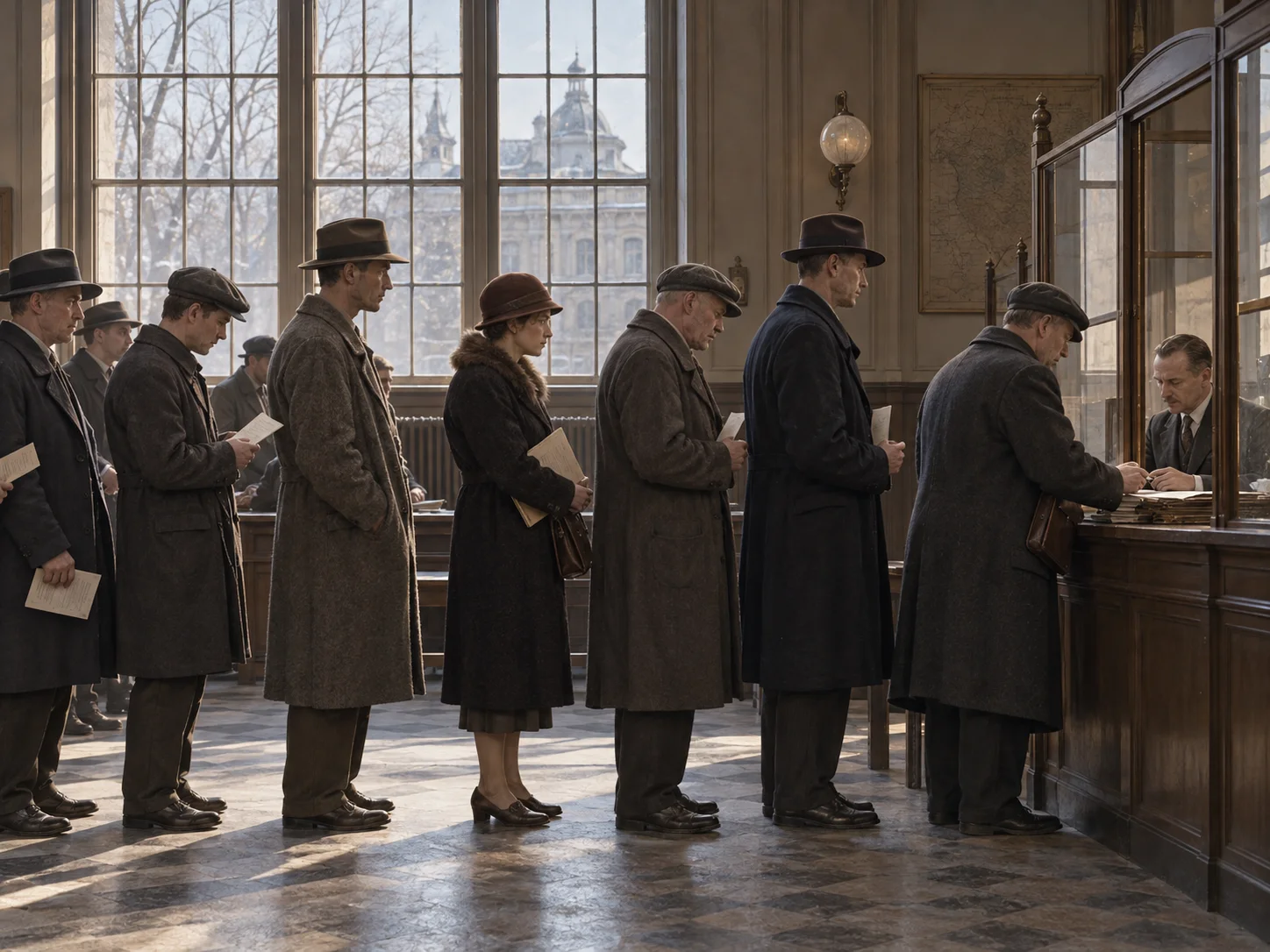
In 1920s Berlin, unemployed residents queued at labour and benefit offices to register and receive support. Historical archive material records people at the Neukölln dole office and notes that roughly 100,000 drew assistance each week.
Losing a job changed not only income but the use of time. Applicants travelled to an office, presented documents and waited for a name or number to be called. A system built to manage mass unemployment appeared in the street as a line processed one person at a time.
Those waiting were not asking for special treatment. They were claiming support to bridge the distance to another job. The anxiety inside that orderly wait remains recognisable at employment offices today.