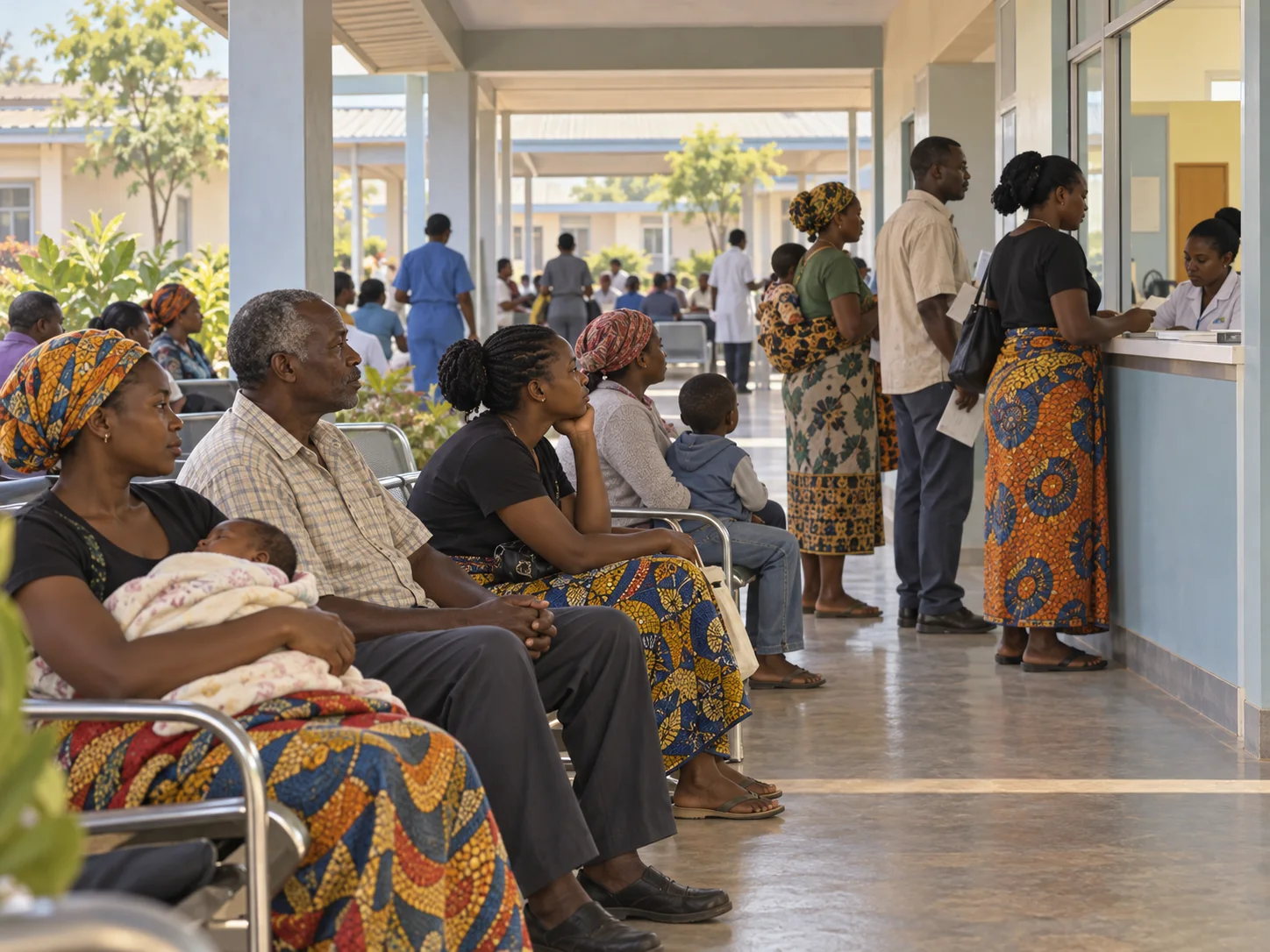
In the 2020s, researchers measured outpatient waits among 410 adults at Kanyama and Chilenje First-Level Hospitals in Lusaka, Zambia. They found that 46.13 percent spent three to six hours moving through care, with the longest waits at reception, triage, and the pharmacy. Most patients were walk-ins rather than scheduled visitors, while long queues, understaffing, limited infrastructure, and paper-based registration were identified as causes of delay.
An outpatient queue is not a single line ordered only by the seriousness of illness. Patients pass through several gateways—registration, triage, consultation, and medicines—and a delay at one point travels with them to the next. When the universal wish to be seen by a clinician meets the limits of staff and space, the queue becomes a visible map of the health system itself.
Quality check: The peer-reviewed study identifies two first-level hospitals in Lusaka, 410 adult patients, and measured waits from reception through the pharmacy, supporting this specific outpatient wait rather than a general claim.