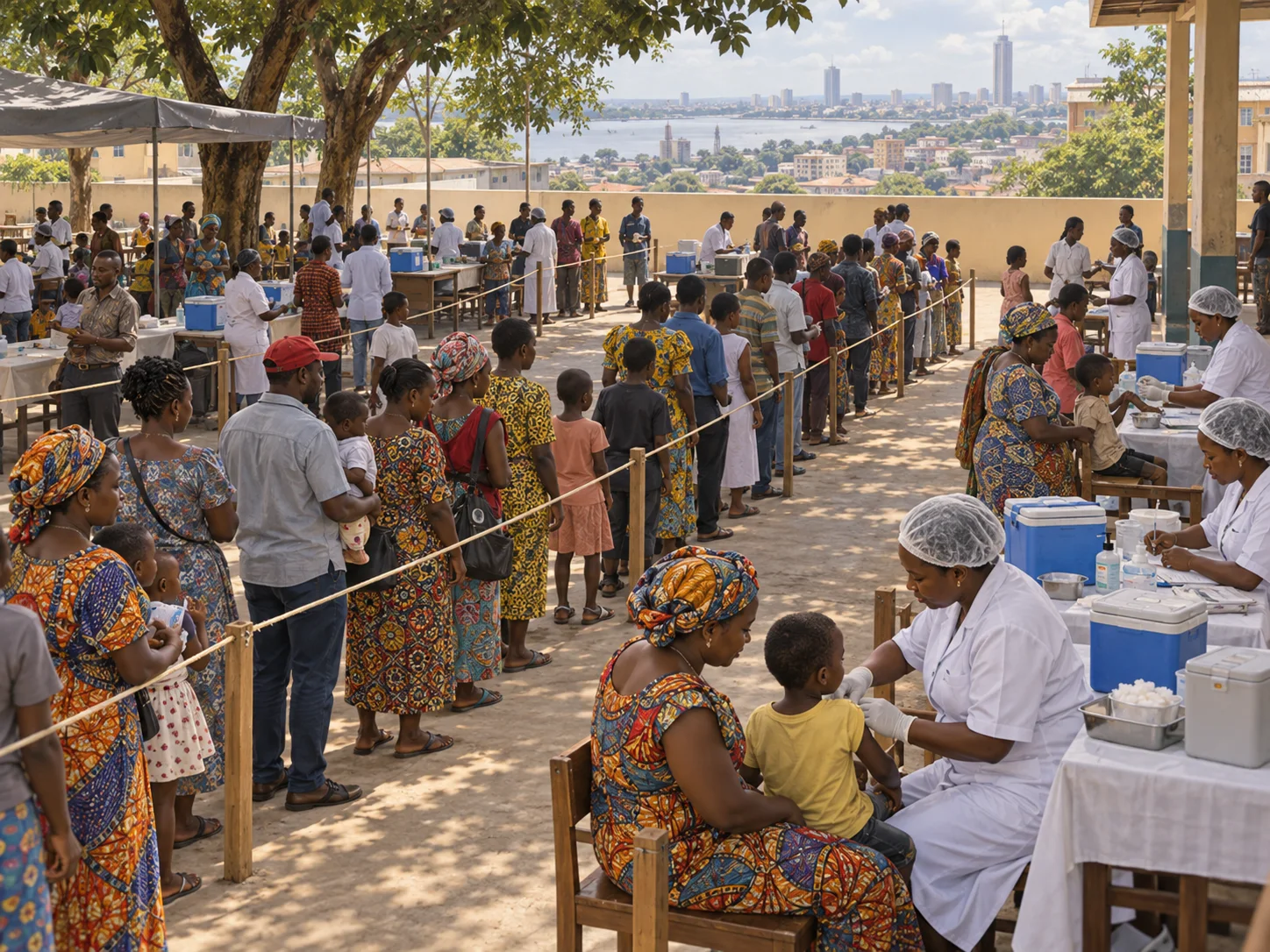
In 2016, people waited for yellow-fever vaccination in Masina, a densely populated district of Kinshasa, Democratic Republic of the Congo. A World Health Organization account records an unusual message being called out beside the line. Pregnant women and people with babies younger than nine months were advised not to join the vaccination queue, and to protect themselves against mosquito bites instead.
Yellow fever is transmitted by mosquitoes, and vaccination campaigns seek to protect large numbers of people before an outbreak spreads further. The campaign in Kinshasa and Kongo Central began on 26 May. By 2 June 2016, the WHO reported 1,947,567 vaccinations. It described a major effort involving around 2,000 vaccinators and hundreds of vaccination sites. People came even from districts outside the campaign's original targets. At the same time, the global supply of vaccine remained tight.
Behind those remarkable totals, the operation depended on small, repeated checks. Red Cross volunteers examined vaccination cards to establish whether someone had already received a dose. The line was not simply a conveyor belt carrying identical patients towards identical injections. Eligibility mattered, previous vaccination mattered, and scarce supplies needed careful management. Some of the people most eager for protection were being told, for medical reasons, not to join that particular queue. It is a detail that resists any easy celebration of the crowd. Public health is not only about reaching a million people. It is also about recognising the different circumstances of the person standing next in line.
The contradiction of teaching infection prevention inside a vaccination queue captured the campaign's practical difficulty. People gathered to avoid disease still had to be kept safely apart while moving through the site.
WHO recorded more than vaccination totals. At Masina in Kinshasa, a town crier addressed the queue itself, warning pregnant people and infants under nine months not to join it. The line was both an entrance to prevention and a place to explain who required another form of protection.