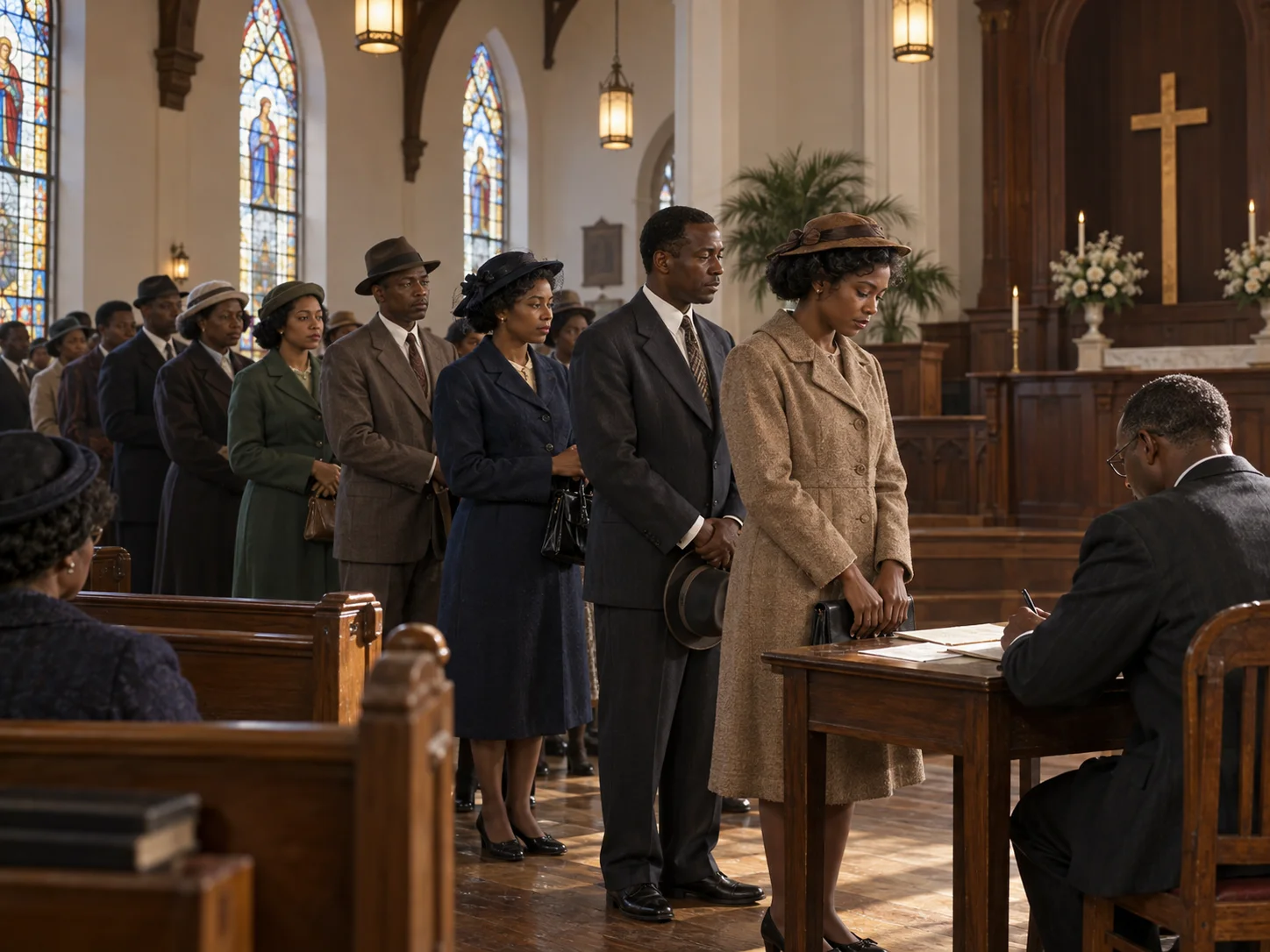
During the civil-rights era in the American South, Black citizens had to queue before election day simply to enter the voter register. A Library of Congress photograph catalogue directly identifies African American citizens waiting to register. The destination was not a ballot box. It was the office that could place a name on the roll and make a future vote legally possible.
Poll taxes, literacy tests, arbitrary questions and restricted office hours were used as barriers in southern registration systems. Reaching the desk did not guarantee acceptance, and applicants could face retaliation from employers or neighbours. Queue length alone therefore cannot measure either public enthusiasm or institutional openness. The people waiting carried the risk of refusal as well as the cost of time.
The photograph does not tell us whether every person succeeded. It does show why voting rights cannot be understood only as statutory language. Election-day lines are often treated as the visible symbol of democracy, but another queue comes first: the wait to be recognised by the register. What was sought here was not merely a document, but the right to join the next election line at all.
Churches often served as meeting points and information centres, converting the danger of approaching registration alone into the visibility of a group. The people waiting were not merely customers who happened to arrive together. The line became both an administrative order and a public statement that applicants would not quietly turn back when obstructed.