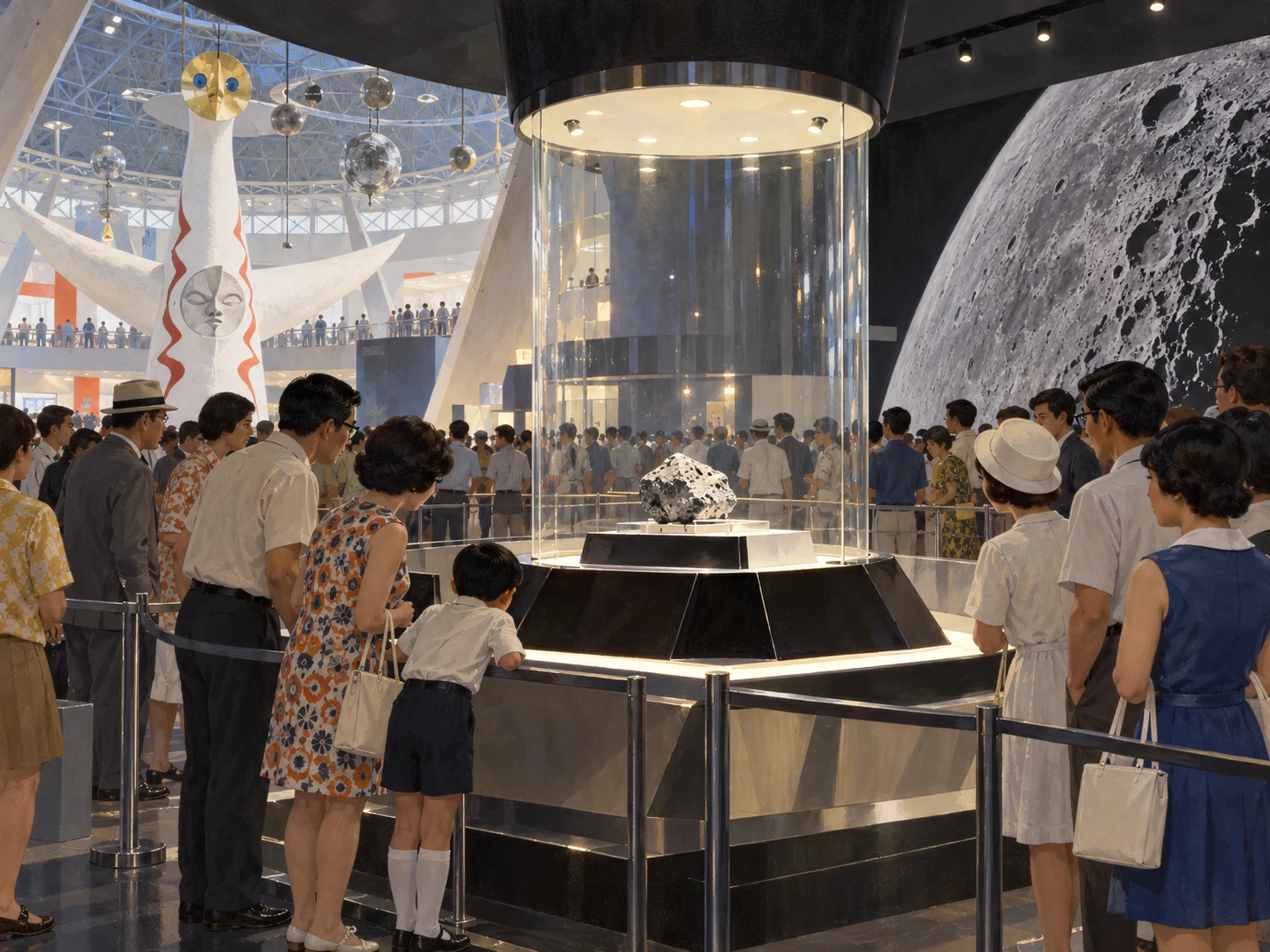
At Expo '70 in Osaka, a moon rock displayed in the United States Pavilion drew extraordinary attention. Apollo 11 had landed on the Moon the previous year. Visitors now had a chance to see physical evidence of that achievement—and they had to wait their turn to do it. A story about leaving Earth produced a very earthly queue.
The object itself was small. However vast the exhibition grounds or ambitious the space program, only so many people could examine a display at once. The technological triumph narrowed to a familiar act: waiting for the person ahead to move. The contrast between a journey across space and a slow passage through a pavilion is part of the wonder.
Not every visitor saw the rock, and waiting times varied; one dramatic estimate should not stand for every day of the fair. Still, the line makes an unusual point about shared discovery. Humanity could reach the Moon, but the experience of marveling at a piece of it still had to be distributed one person at a time.
In the lunar-sample queue, the human route to the display was longer than the journey across its glass case. A small exhibit turned an achievement of spaceflight into a sequence viewed one visitor at a time.