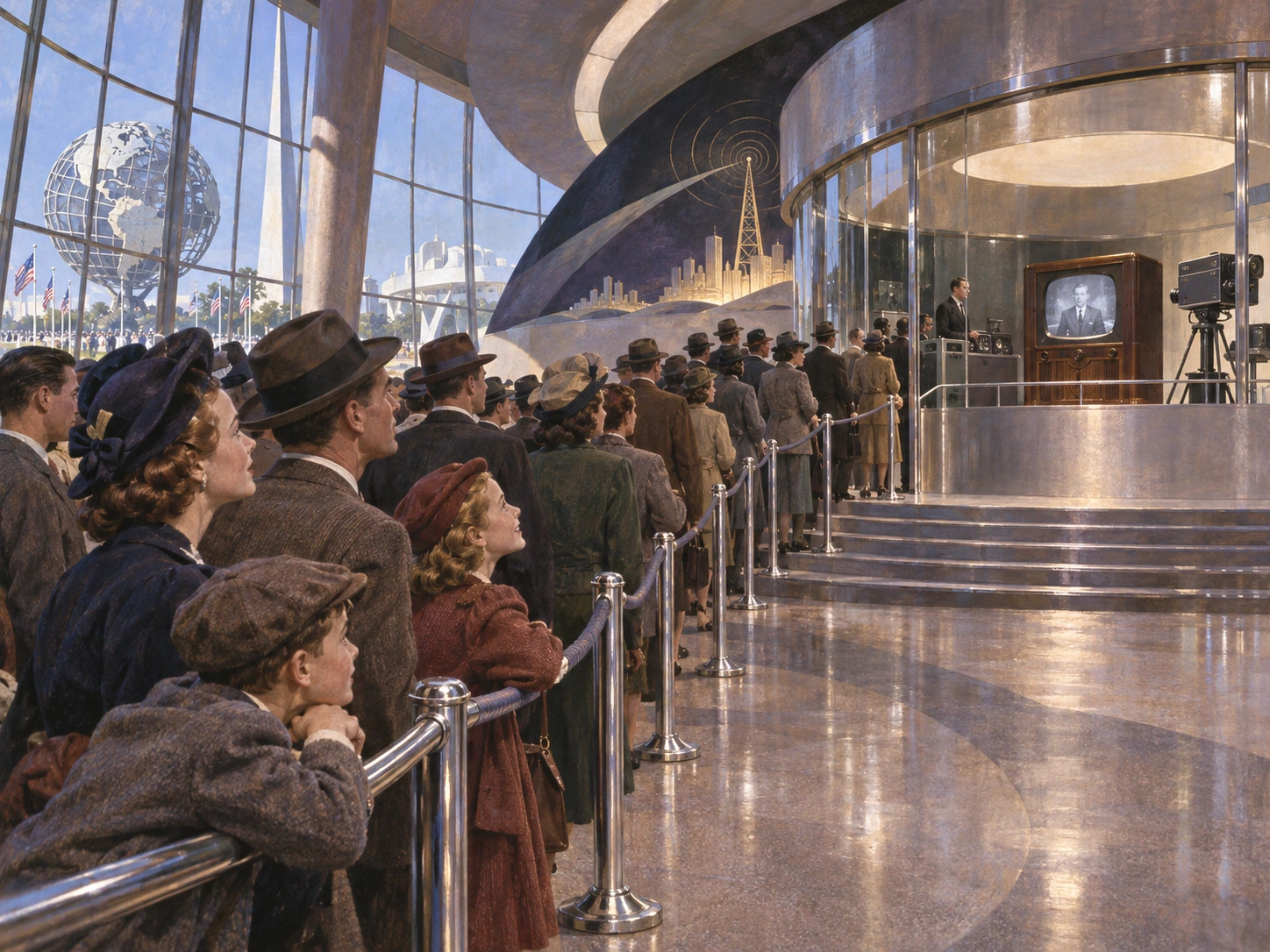
At the New York fair's television exhibits, visitors did more than watch. In 1939, people moving through the RCA pavilion could be directed before cameras and then towards receivers. The image was not a recording to be replayed later; a body appeared electronically somewhere else at the same moment. While queueing to see the future, visitors also waited for the future to show them themselves.
This differed from a cinema admission line. A completed film could be shown to a large seated audience at a fixed time. Early television demonstrations required camera, lighting, receiver and explanation to work for each small group. The demonstration format, not only the technology's novelty, produced the wait.
The surviving guide does not establish individual waiting times, so an hours-long queue cannot be claimed. It does record steady visitor flow and the fact that television was a first encounter for most people. Later broadcasting would send one image to millions simultaneously. This early meeting worked in the opposite direction: small groups entered the picture and waited for their personal turn on the screen.
Seeing oneself on a screen differed from watching a finished programme. In minutes, a visitor moved among the roles of subject, viewer and experimental participant. Queue order also became an order of appearance. Ordinary fairgoers, rather than selected performers, tested television's immediacy with their own bodies.