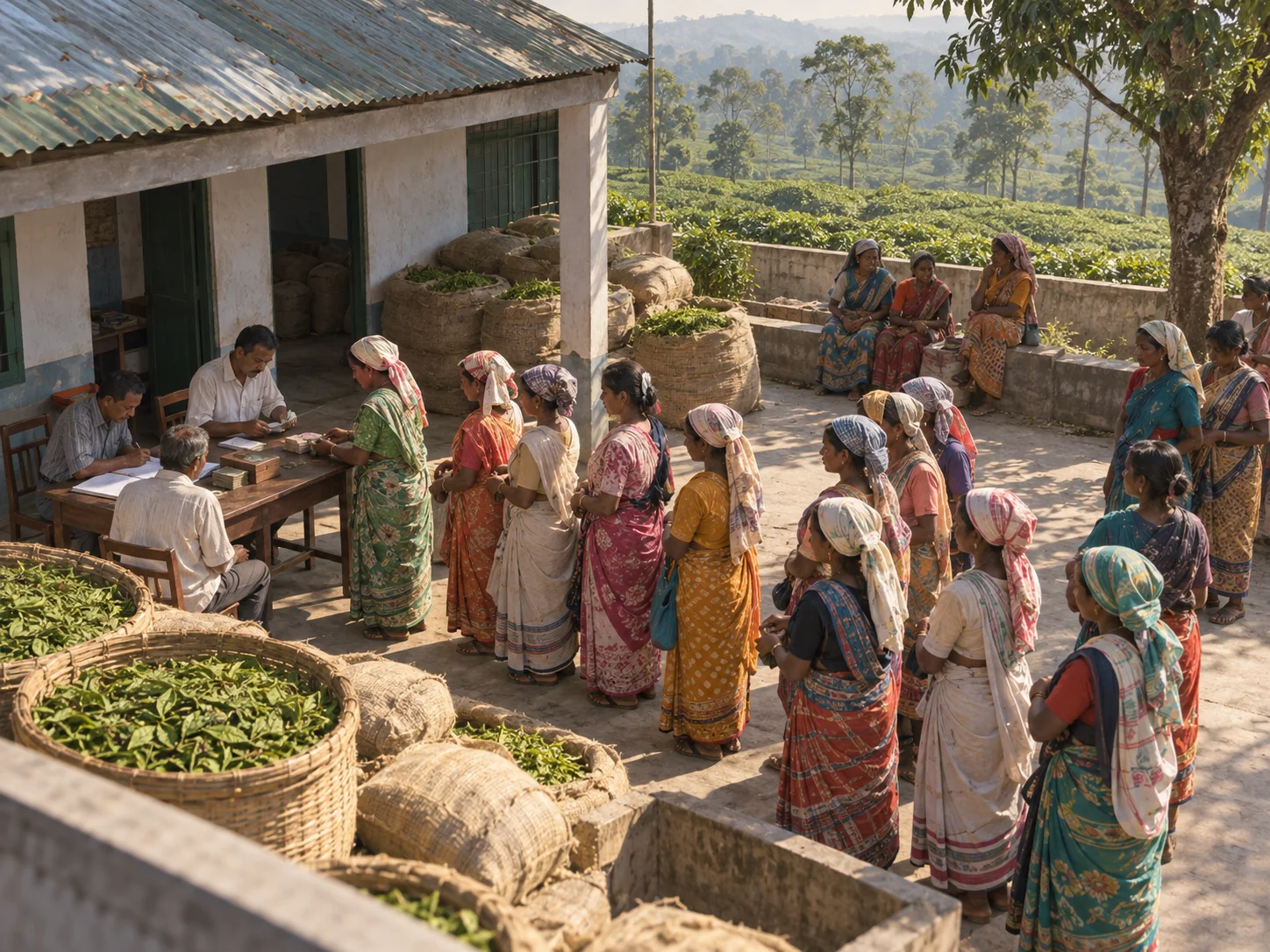
In April 2024, a photograph from a tea plantation in Habiganj, Bangladesh, showed women with piles of picked leaves queueing to be paid. Three estates belonging to the same company had stopped production after electricity and gas disconnections, endangering the livelihoods of about 4,800 workers. Wages were two to three weeks overdue.
The product of the women's labour sat beside them in the payment line. Harvesting did not immediately become household income: unpaid utility bills and a closed factory had interrupted even the final sequence of receiving wages. The image placed production and delayed subsistence in the same queue.