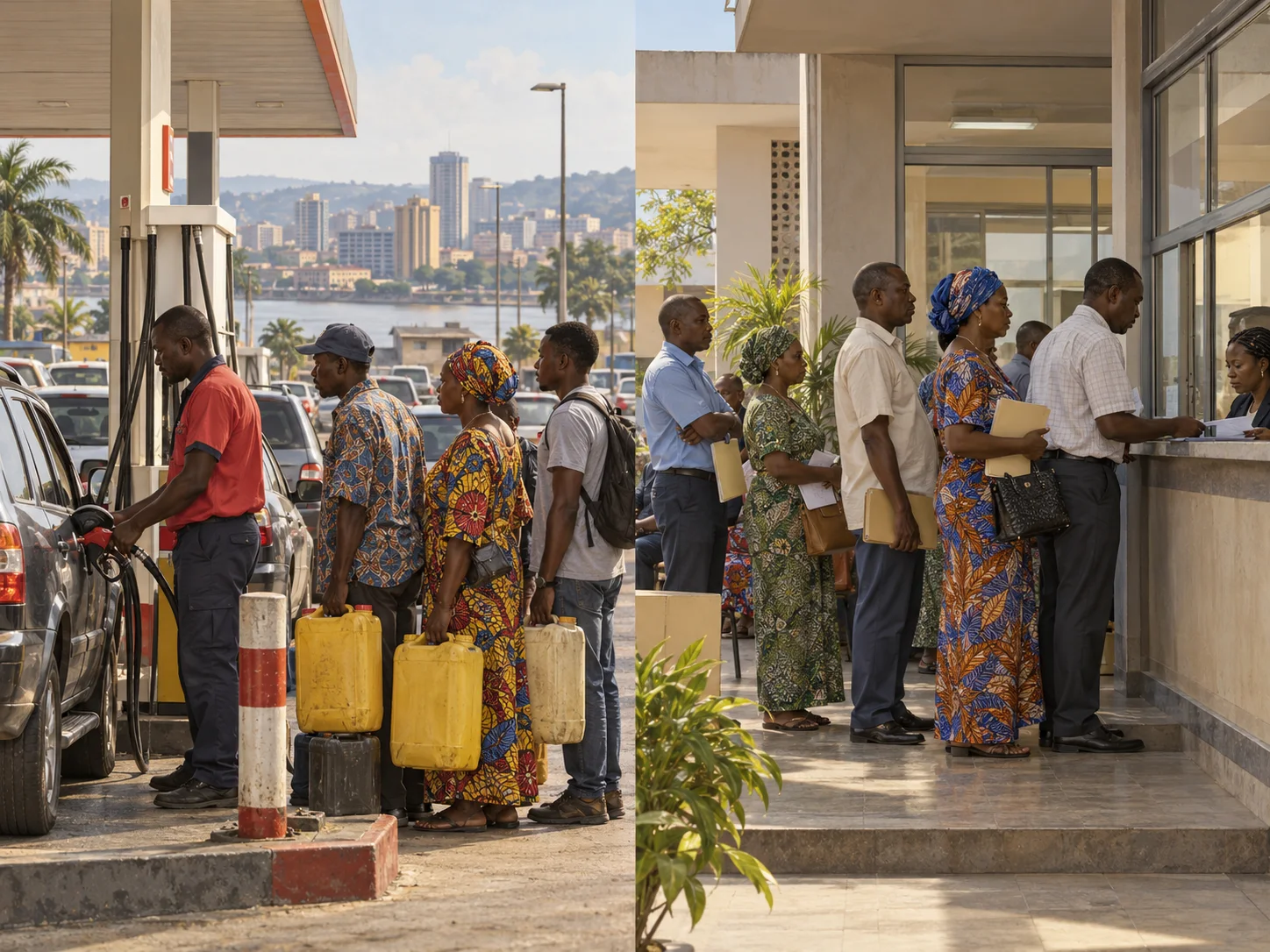
In May 2026, vehicles waiting for fuel stretched beyond Brazzaville filling stations day after day. RFI's on-site reporting described a long line obstructing a main road and a taxi driver unable to move from early morning until noon.
Cars that normally carry people had to stop in order to obtain fuel. As the line grew, fewer taxis and buses remained available and passenger fares rose. The wait at the station therefore spread into the travel time of people who were nowhere near the pumps.
One driver's turn connected to the schedules of many future passengers. The fuel queue revealed how urban transport depends on refuelling one vehicle at a time.