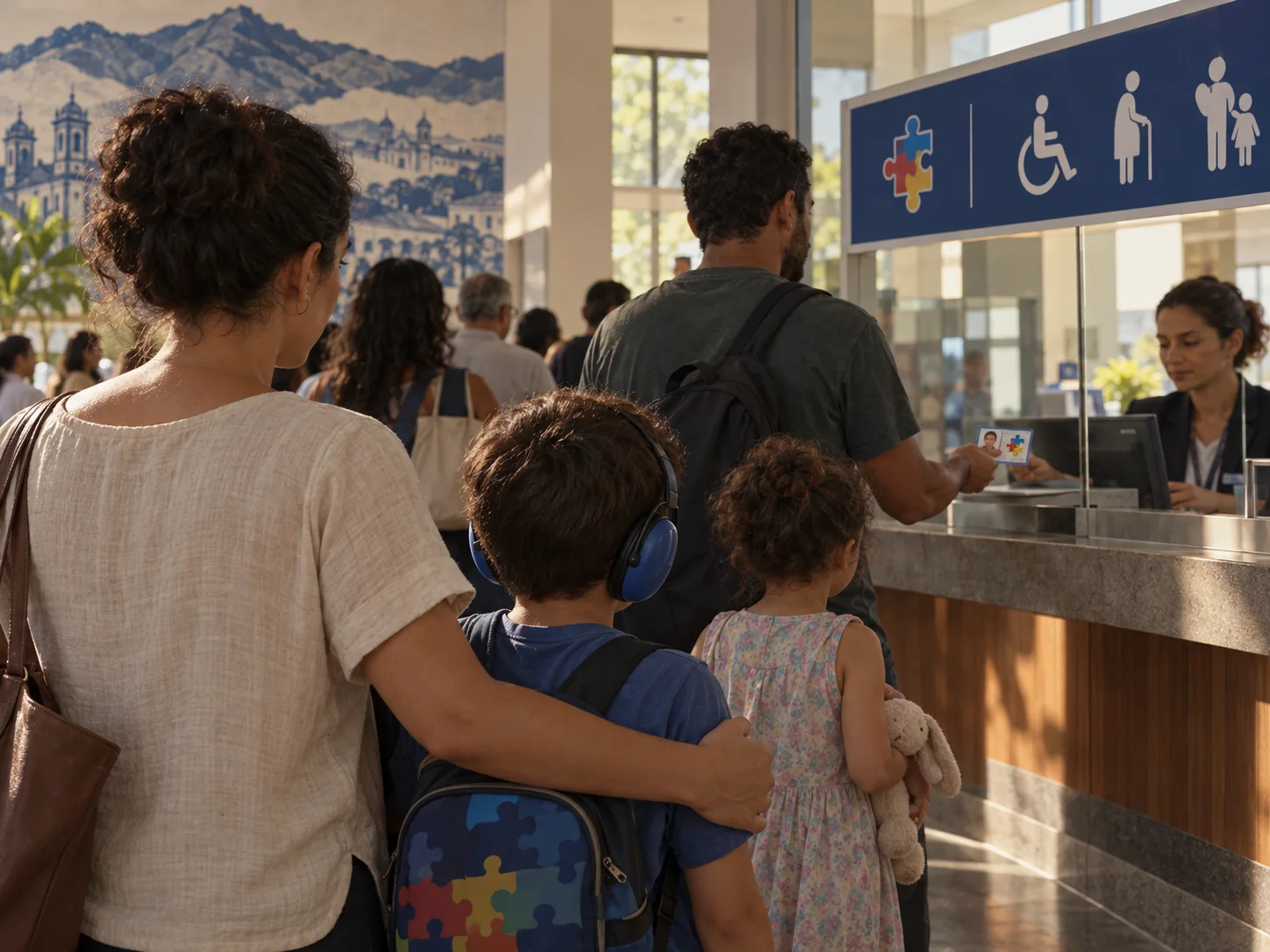
By 2024, the Brazilian state of Minas Gerais had issued its Ciptea autism identification card to 22,633 people across 727 municipalities. The card documents a right to prompt, priority access in public and private services. One father described confrontations when his son used priority queues at supermarkets and health facilities because other customers did not understand why he qualified.
The card does not represent a casual privilege to skip a line. It communicates a support need that may not be visible. A priority system can still force families to justify themselves; official identification transfers part of that burden from repeated personal explanation to a recognized document.