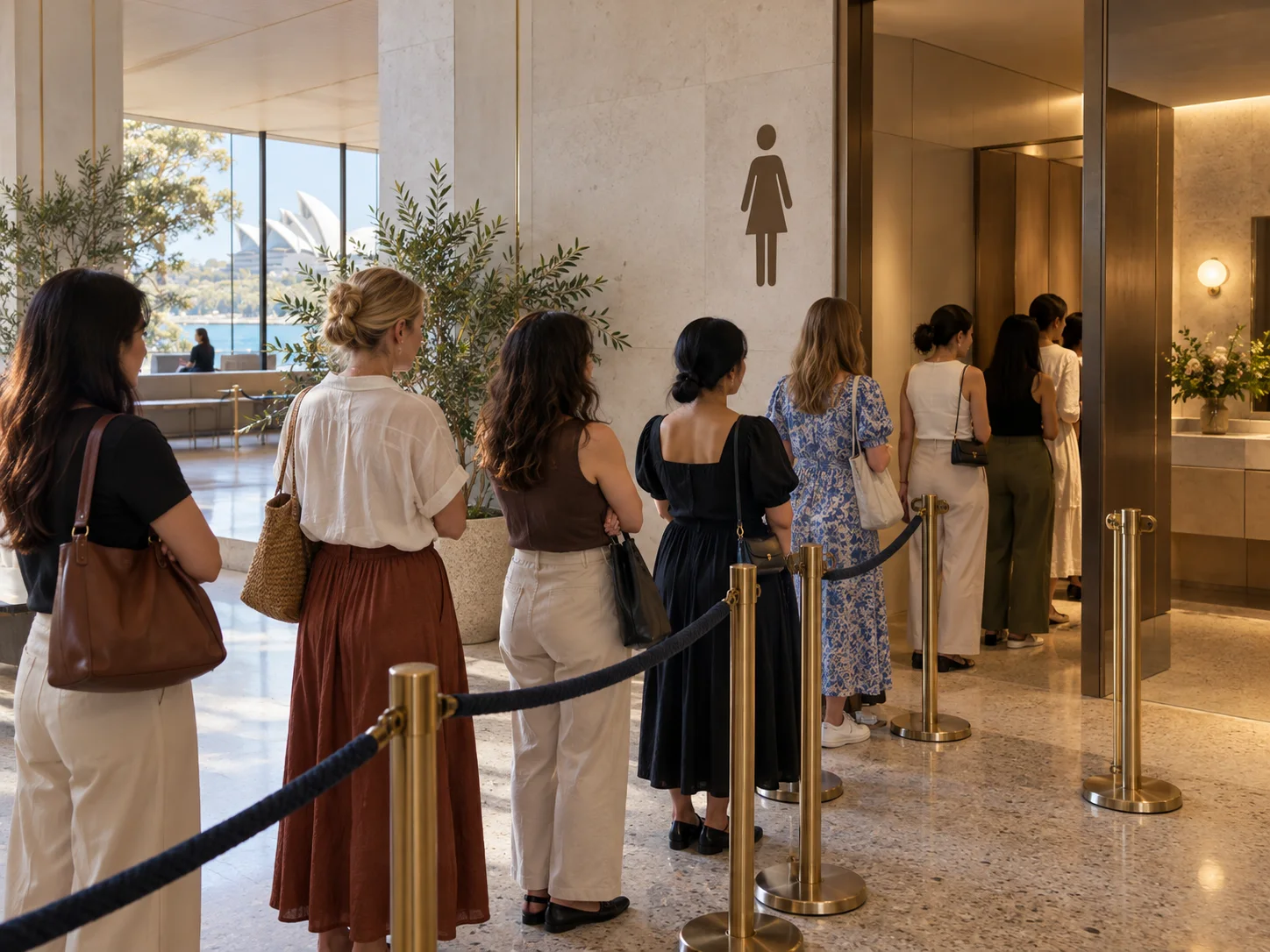
At theatre intervals, queues for women’s toilets can delay not only patrons but performers trying to return to the stage. An analysis reported by ABC found that women were 34 times more likely than men to be queued for bathrooms. Pregnancy, menstruation and accompanying children can increase visit length and frequency. Meanwhile, the same floor area can provide men with cubicles plus several urinals, while women rely entirely on cubicles.
The Australian Building Codes Board estimated that peak waits could reach thirteen minutes for women versus nine for men. Its proposal would raise women’s closet pans from four to six in a 300-person venue and from thirty-four to forty-six in a theatre of about 5,000. The design question was therefore not whether equal floor space had been allocated, but whether equal numbers of users could be processed in equal time. Queue reduction begins with capacity and patterns of use, not symmetry on a plan.