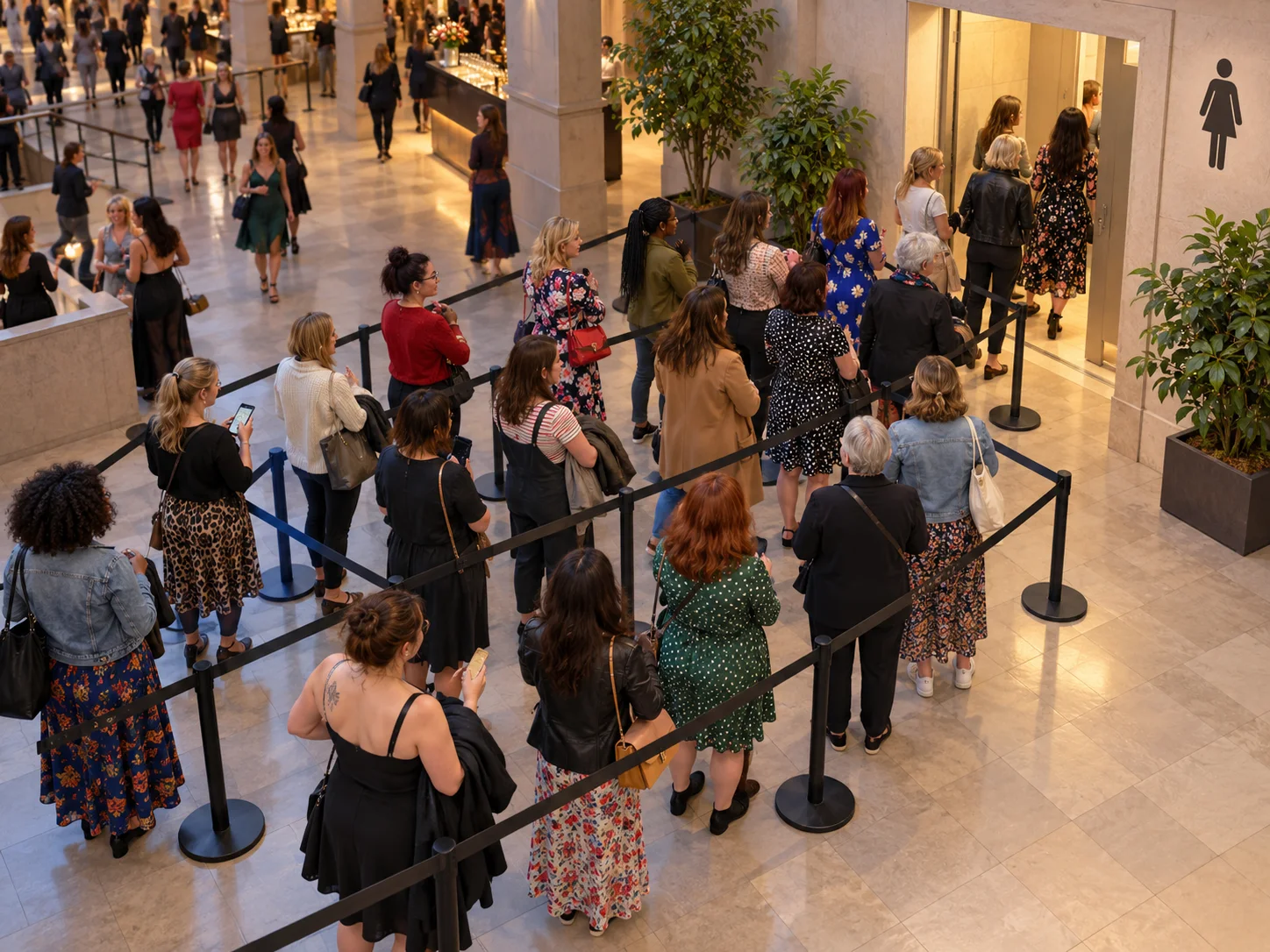
Queues for women’s toilets are not explained by personal delay but by differences in use time and fixture capacity. The article cites average visits of sixty seconds for men and ninety for women. Menstruation and accompanying children or dependent adults add further demands. Yet the same floor area can hold a cubicle and several urinals for men while providing only a few cubicles for women.
Council-run public toilets in the UK fell from 5,159 in 2010 to 4,486 in 2018. A known response, “potty parity,” calls for women’s provision at ratios of two-to-one or three-to-one to equalise waiting times, but in Britain it remained guidance rather than a firm rule. The queue begins before anyone reaches the door: it is embedded in a plan that treats equal floor space as equal capacity.