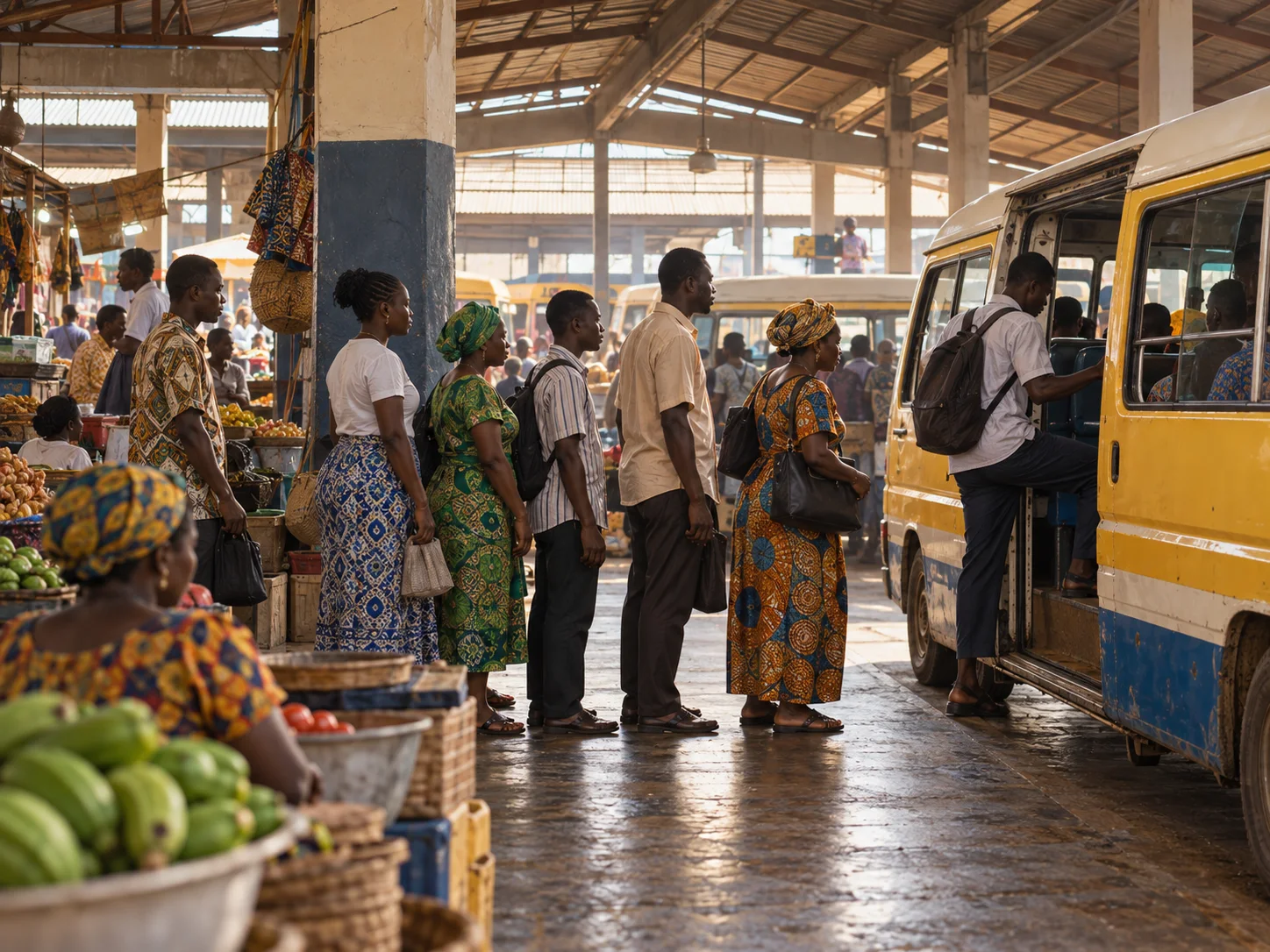
Ghana’s shared minibuses, known as tro-tros, commonly leave terminal stations when every seat has been sold rather than at a fixed published time. Passengers join destination lines and fill the vehicle in order. An early arrival may secure a seat, yet it can also mean a long wait inside because nobody can write the arrival of the final passenger on a timetable.
For an operator, waiting avoids the loss of running with empty seats. In a low-fare, small-business system, securing the revenue from one trip matters. For passengers, however, delay depends on demand. A vehicle may fill almost immediately during the morning rush and remain stationary much longer at a quiet hour.
The queue therefore allocates more than boarding order. People already seated depend on strangers who have not yet arrived. The last passenger is not simply late; that person is the event that releases everyone else. In this transport system, “full” performs the work normally done by a clock.
A tro-tro's departure is set not by a clock but by the passenger who fills the final seat. Arriving early does not guarantee leaving early; one person's arrival completes the timetable for everyone already aboard.