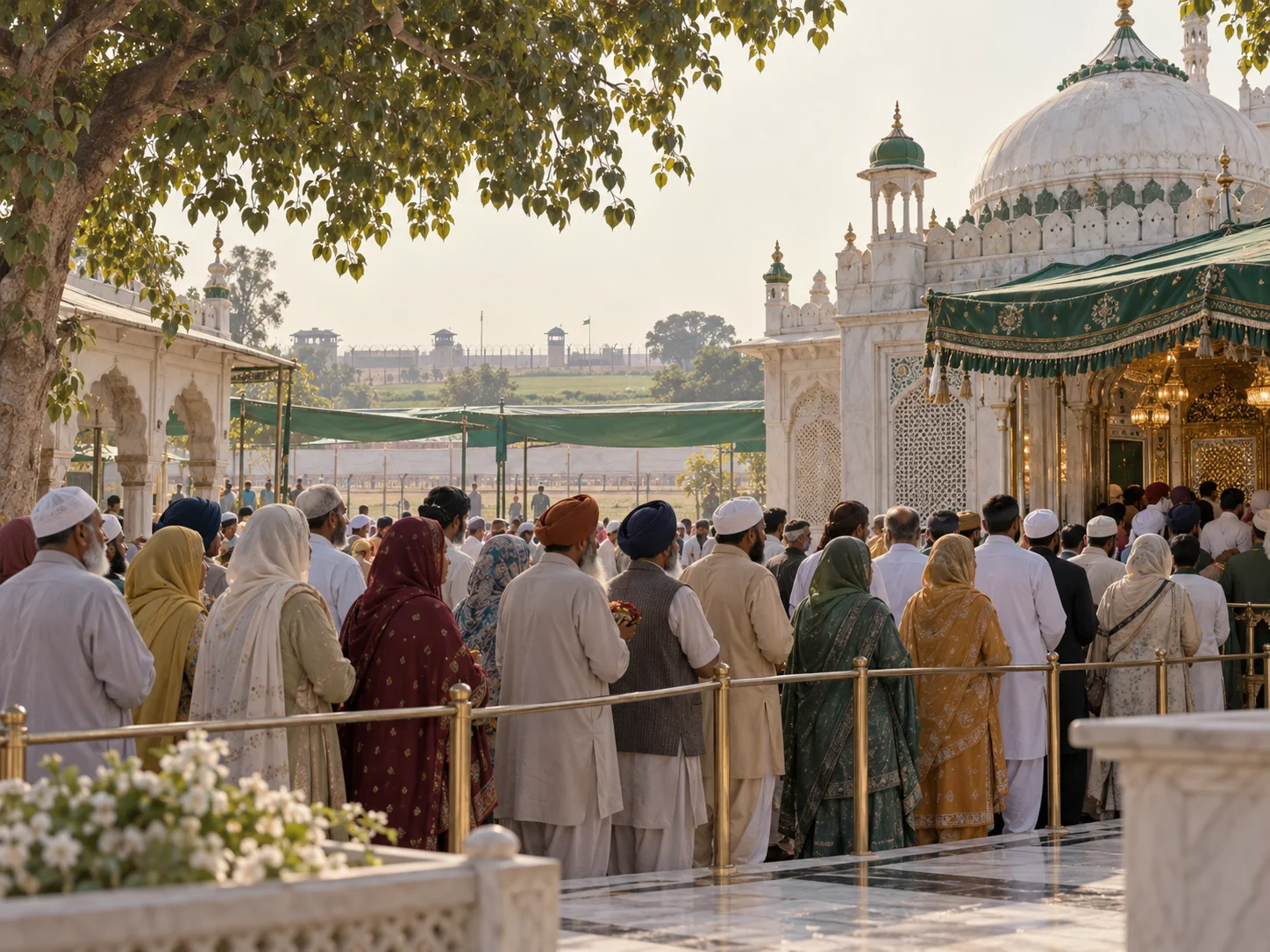
In Khem Karan in northwestern Punjab, the shrine of the Sufi saint Sheikh Brahm stands roughly twenty-five metres from the India–Pakistan border. A Religion News Service report from October 2024 records Hindu, Muslim and Sikh devotees forming a physical queue every Thursday to pay their respects. Preparations for langar, the communal meal, begin early, and the weekly observance can draw thousands in a day.
Just beyond the people advancing toward the shrine is a border fence that imposes a very different kind of order. Worshippers from several faiths approach the same entrance in turn, making a shared culture visible beside a line of political division. Waiting here is not only a way to enter a constrained sacred space; it is also participation in a communal rhythm renewed every Thursday.