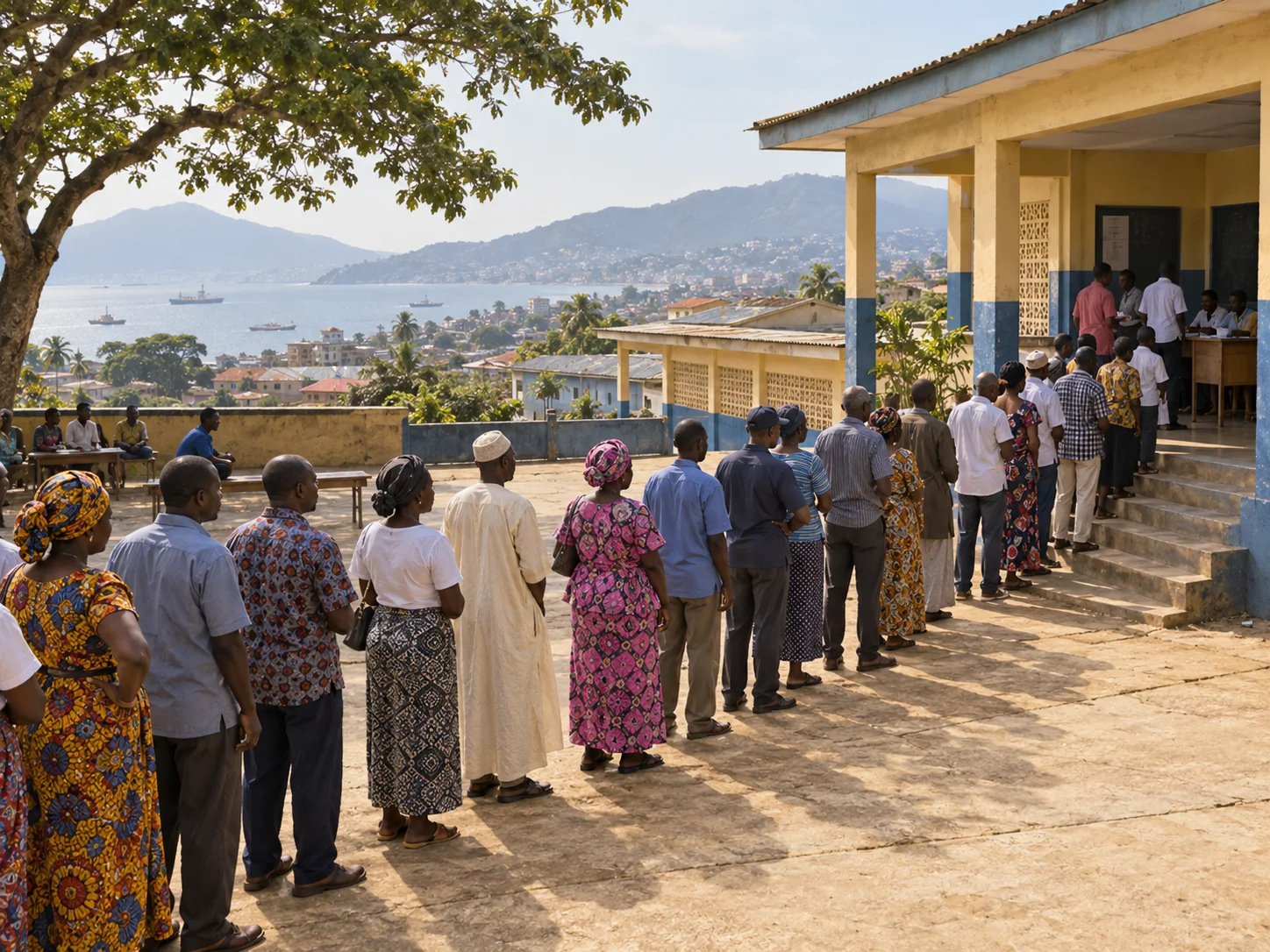
On 24 June 2023, the polling centre at End Municipal Primary School in Freetown remained closed after its scheduled 7 a.m. opening. Mohamed Kamara, 59, waited near the door, while other voters who had arrived early stood in long queues for hours. They had received no explanation for the delay, yet remained determined to vote.
The problem extended beyond one school. The African Union observation mission reported that 46.1 percent of the polling stations it visited opened late, chiefly because materials arrived late or officials were unprepared. It also recorded controlled queues outside polling stations before and during opening. The queue was therefore both evidence of administrative delay and a mechanism that preserved voters’ order until the process began.
One man, who had turned 83 the previous day, said this might be his last election. Waiting did not make his ballot count more than anyone else’s. But staying in the line was what allowed a formal right to become an actual vote.