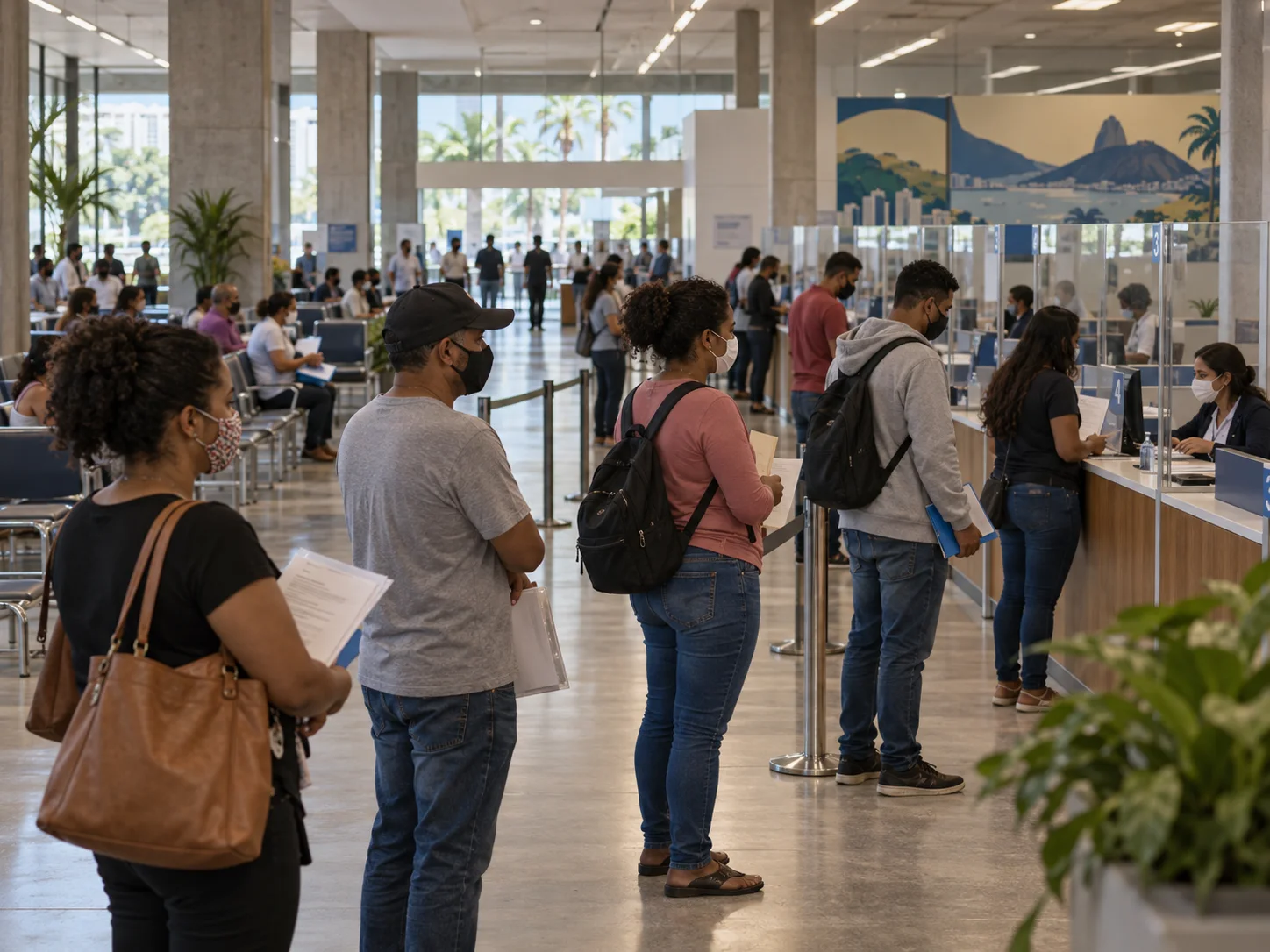
On 17 November 2021, the first payment day of Brazil's new Auxilio Brasil benefit, people formed lines outside branches of the state-owned bank Caixa in Sao Paulo. Contemporary reporting by Folha de S.Paulo described customers arriving before the 8 a.m. opening and lines growing around lunchtime. Queues also appeared at social-assistance offices as app failures and questions about eligibility pushed people toward face-to-face help.
Auxilio Brasil had replaced Bolsa Familia, the country's long-running cash-transfer programme for low-income households. The payment could be digital, but when a screen offered no clear answer, a bank employee or public servant became the final source of certainty. The queue was therefore not only for money. It was also a wait to learn whether a household had successfully crossed into the new system.