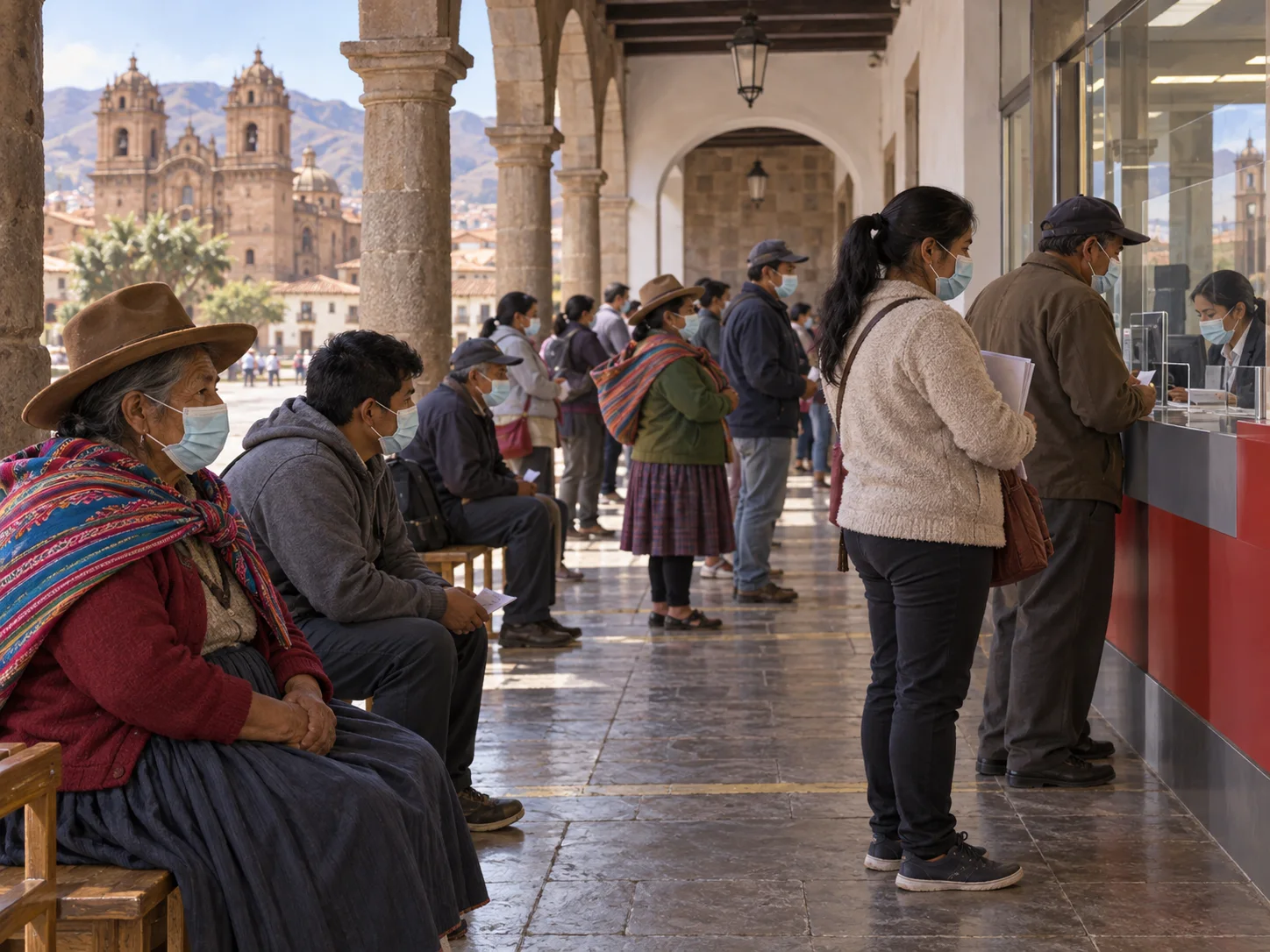
Early on 23 March 2020, a long queue gathered outside the main Banco de la Nación office in Trujillo, northern Peru. The newspaper La República reported that people had come to claim a government relief payment of 380 soles during the coronavirus emergency. Older people and mothers were among those who arrived. Some of the people interviewed had not checked the online service that said whether they qualified for the payment.
The subsidy was designed to help vulnerable urban households endure the disruption of the pandemic. Announcing money and delivering it safely, however, are different tasks. The Peruvian government subsequently publicized scheduled payment dates and time slots, and instructed people whose payments were still being processed not to visit banks. An online eligibility checker may ease a queue for those who can use it, but its existence alone does not mean everybody has the information they need.
Two instructions collided outside the bank. To reduce the risk of infection, people were supposed to avoid close contact. To keep their households going, some needed to collect cash. For them, the public-health instruction to remain at home ran into the practical necessity of leaving it. The queue was not a celebration of patience; it was a visible fault line between two urgent needs.
A photograph of a crowd cannot, by itself, settle how well a national support programme worked. But this documented line reveals an important distinction: a rescue measure is not complete when it is announced. It becomes real only when its intended recipients can receive it without facing an unnecessary new risk.
A benefit intended to support people during restrictions drew recipients to a bank. When policy purpose and payment method diverged, assistance itself demanded travel and waiting.