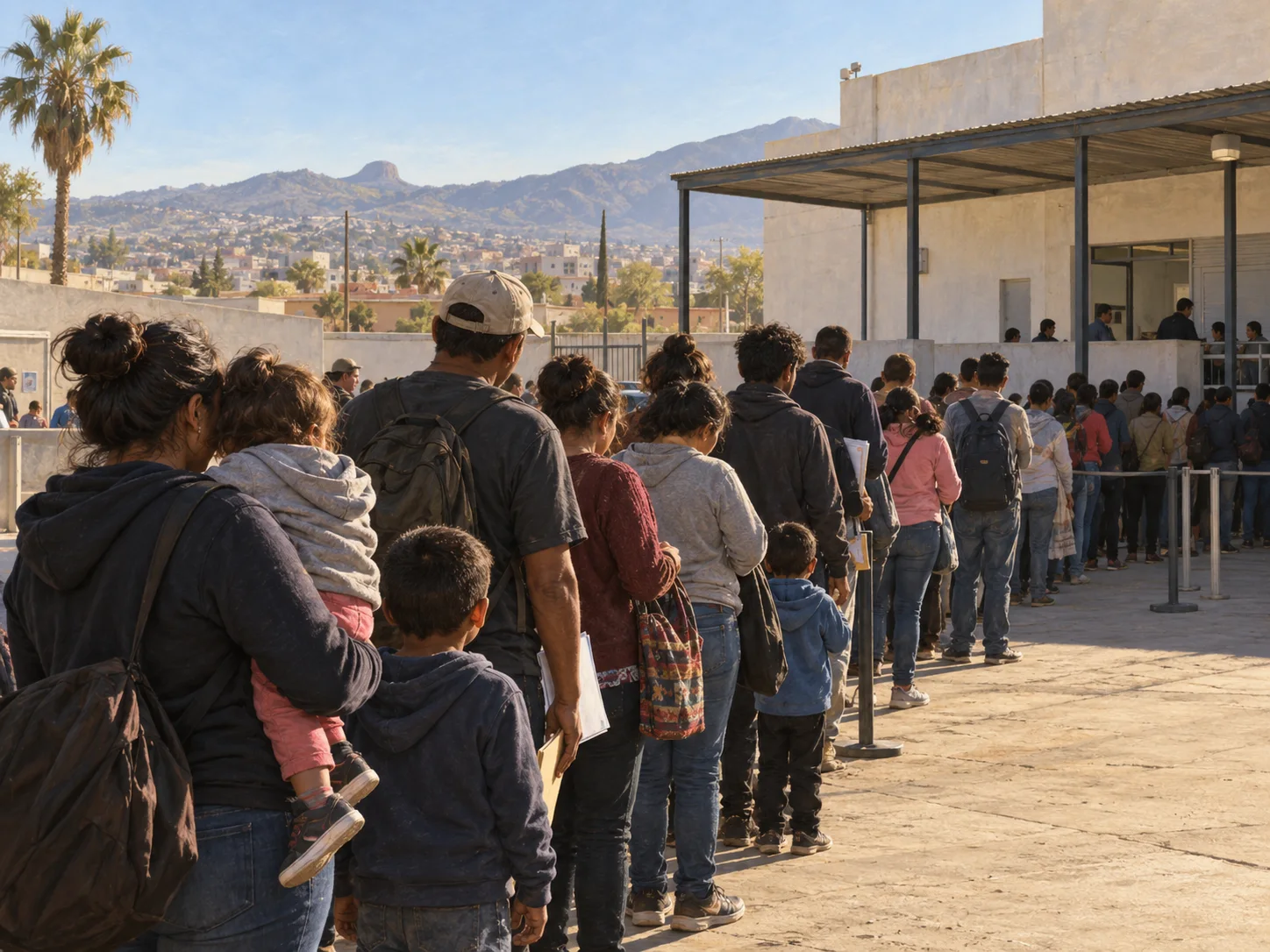
In 2019, the asylum queue at several Mexican border cities became a set of written lists. Under “metering,” U.S. Customs and Border Protection limited how many people could approach a port of entry each day. Municipal officials, migration agencies, volunteers and sometimes asylum seekers themselves maintained the resulting order. Human Rights First’s field research found that, at three locations opposite Texas ports in late February 2019, the lists held about 180, 218 and more than 500 people, with estimated waits ranging from roughly three weeks to more than two and a half months. By August, the Tijuana list had exceeded 10,000 names; people admitted in late June had waited more than three months.
This was not one continuous line on a pavement. After receiving a number, people had to remain near the border and be ready for the day their names were called—a dispersed queue spread across shelters, rented rooms and public spaces. Who controlled the list and how many people were processed varied by place and date, making the order itself difficult to understand. Because many applicants were seeking protection from persecution or violence, the system cannot be described merely as crowd management. Moving people away from a counter did not remove the wait. A number on a page represented weeks or months in which an applicant still had to find food, shelter and safety before being allowed to ask for asylum.