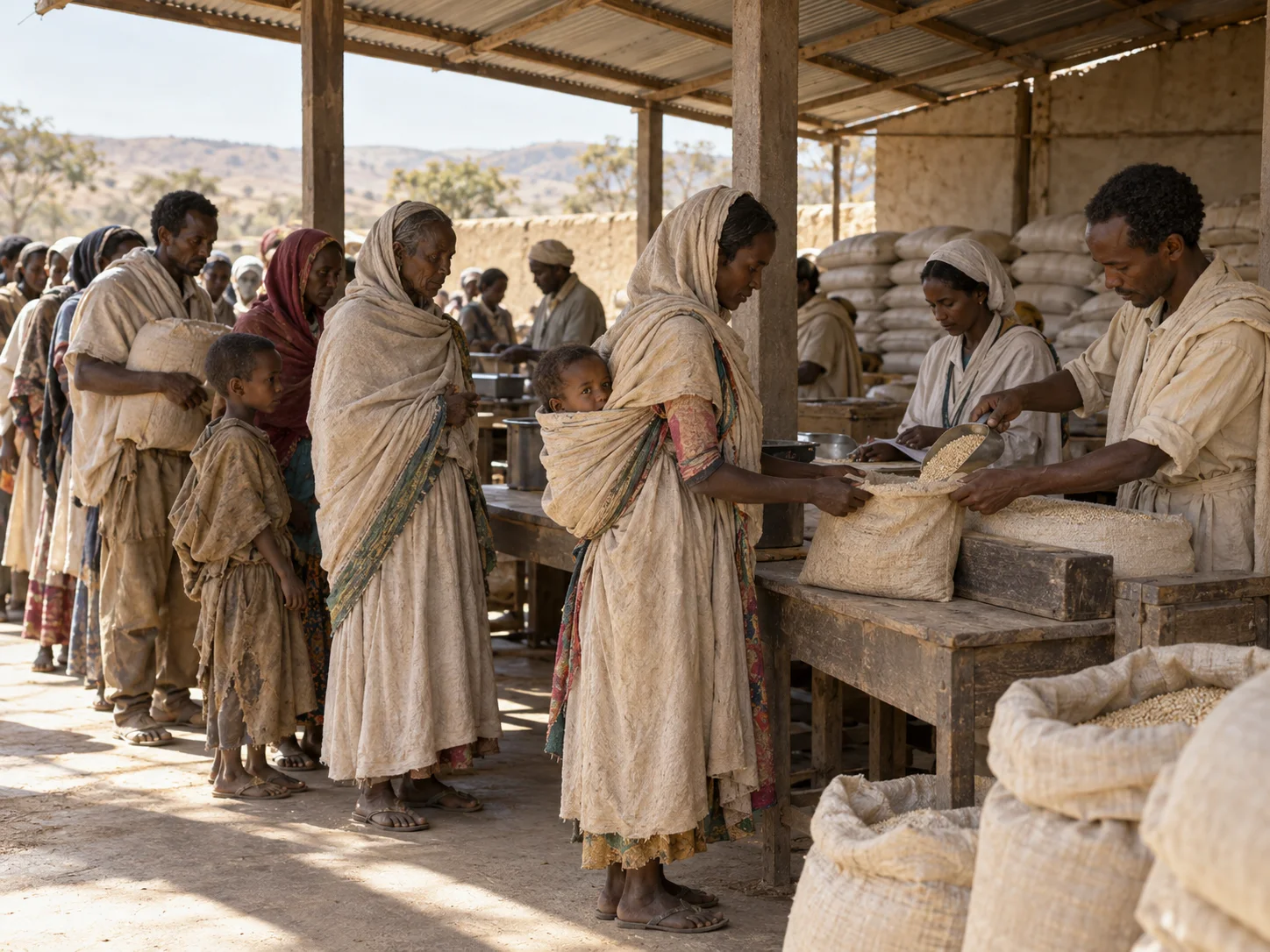
Images of Ethiopia's 1984–85 famine brought the plight of people seeking relief food to audiences around the world. People waited to receive supplies. Yet calling such a scene simply a food queue conceals the much longer journey that led to it: failed rains, conflict and policy decisions that complicated movement and distribution, and the immense difficulty of getting assistance to the places where it was needed. The queue began long before anyone reached a distribution point.
At a relief site, counting people, allocating limited supplies and deciding whether someone in poor health should be helped first are not minor administrative details. They are consequential choices. A single orderly line may look fair, but it cannot show those unable to travel, those who never received information, or those too ill to stand and wait. Counting only the people visible in the queue risks missing the scale of need.
Photographs of famine must not turn the people depicted into anonymous symbols of suffering. Each person had a life and relationships beyond the instant the camera recorded. The location, date and circumstances of any particular photographed queue still require verification against the original archive. One larger truth remains: aid is not successful merely because food exists. It succeeds when people who need it can actually obtain it.
The dated Getty archival caption explicitly identifies Ethiopians waiting for relief food during the 1984–85 famine.