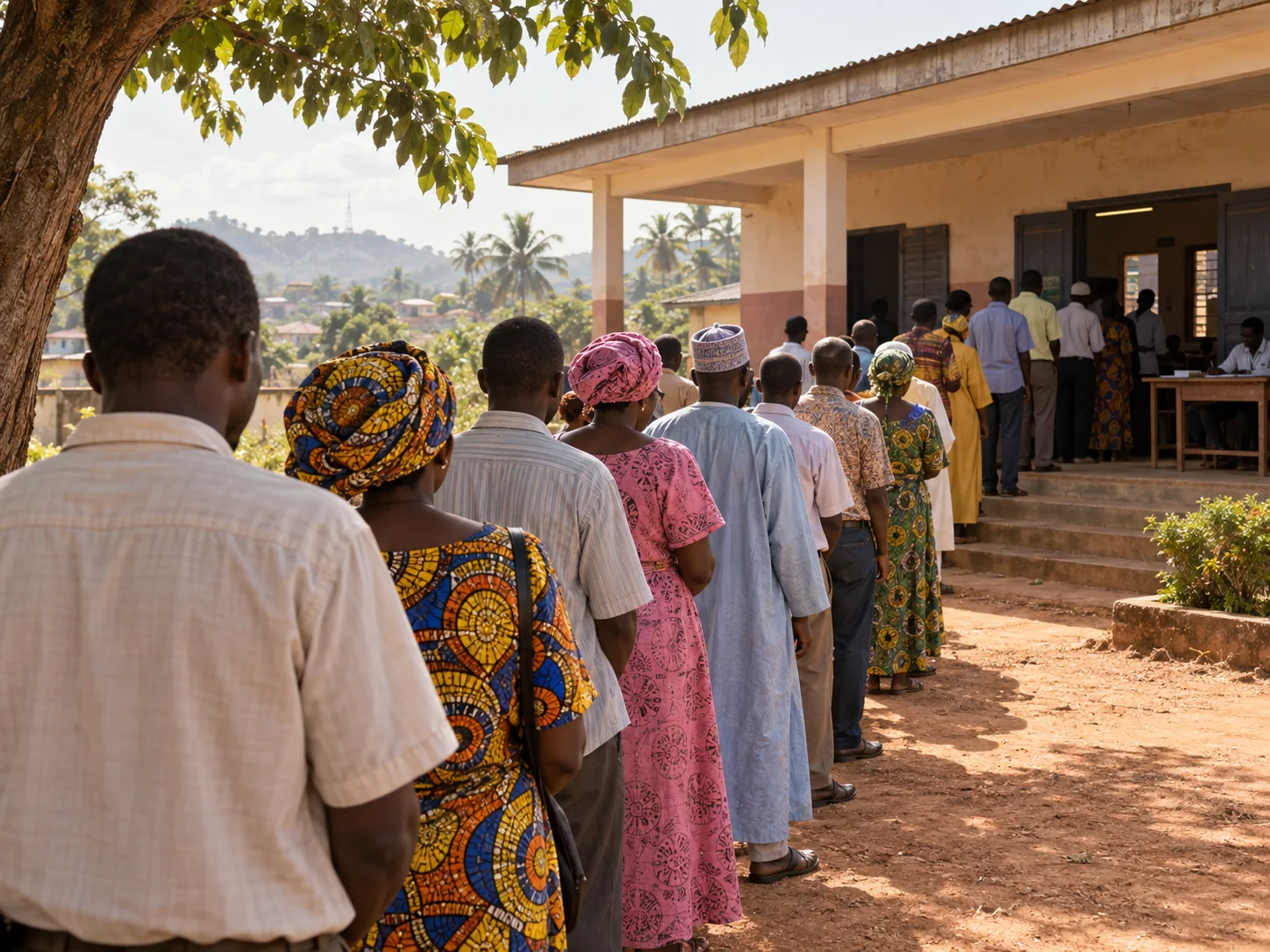
In Cameroon's presidential election on 7 October 2018, voters queued at Bastos Government Primary School in the capital, Yaoundé. SABC's report, carrying Reuters material, recorded that a heavy security presence including the presidential guard watched the line, while one early voter said he had come at that hour to avoid queues.
The meaning of waiting was not uniform across the country. In the Anglophone regions, clashes and gunfire involving separatists and the military deterred voters, and some polling stations did not open. The capital's queue looked like an ordinary electoral procedure; elsewhere, short lines or absence could reflect fear for personal safety.
What distinguishes this queue is that both presence and absence told part of the political story. In the capital, security forces surrounded people waiting their turn. In conflict-affected regions, simply travelling to a polling place could be dangerous. The distance to the same ballot differed sharply according to where a voter lived.