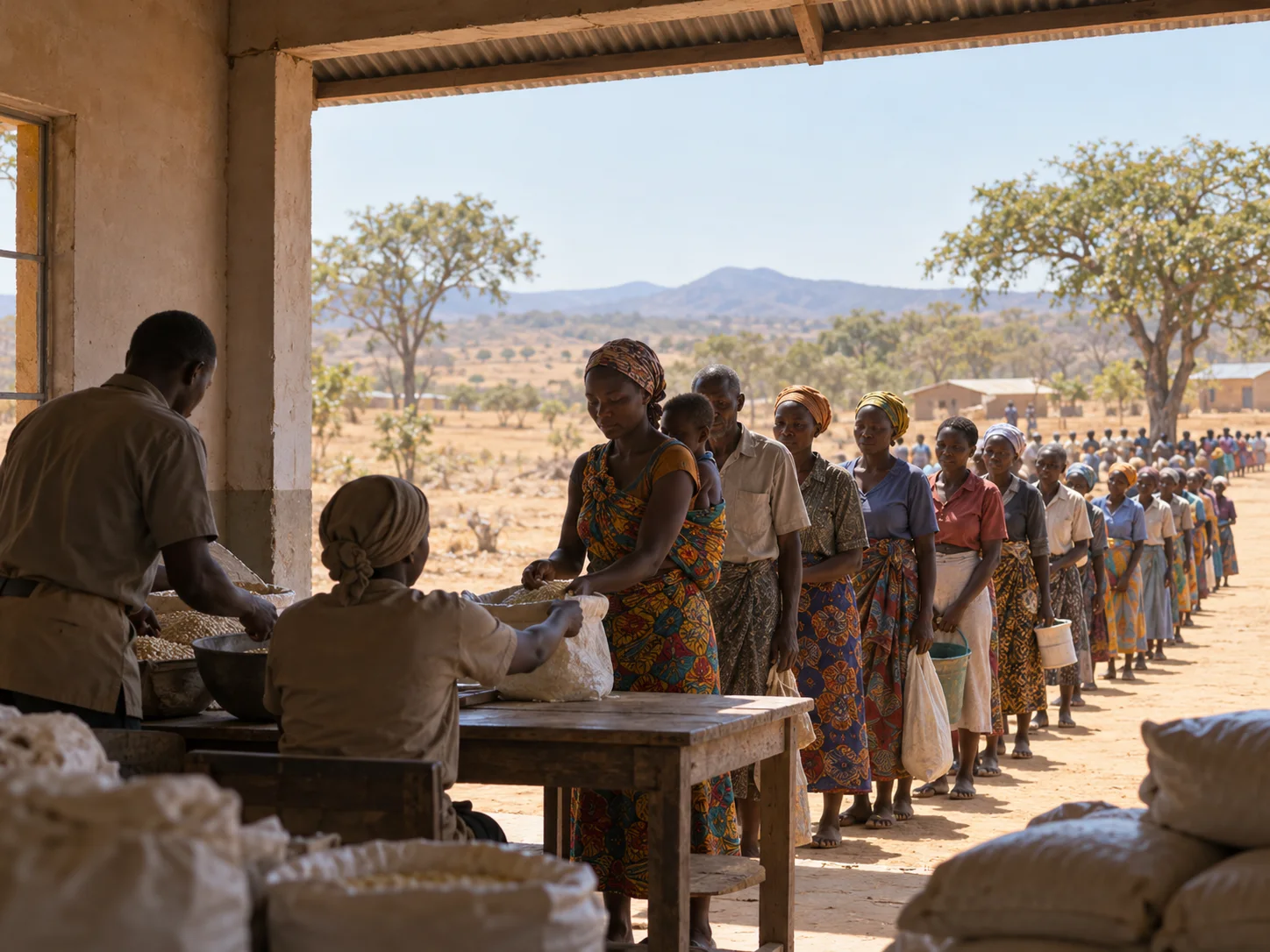
In a drought year, maize becomes a question not only of food but of time. In 2024, after an El Niño-linked drought devastated harvests in Zambia, ITV News reported that people queued for hours in the sun for vouchers that allowed them to buy maize at a controlled price.
Maize sits at the center of the Zambian table. Ground into meal, it becomes nshima, the firm porridge eaten with vegetables, beans, fish, or meat. Access to the grain therefore reaches far beyond a single purchase: it touches the daily budget and the shape of an ordinary meal. In the year Zambia declared the drought a national disaster, the people in this line were not waiting for a ready-made meal. They were waiting for the paper that made the next purchase possible.
A queue can help distribute scarce assistance in an orderly way, but order does not erase the cost of waiting in the heat. Here, the universal wish to feed a household passed through rainfall, farming, prices, and an administrative voucher before taking the visible form of a line. The wait made clear how closely weather and dinner can be connected.