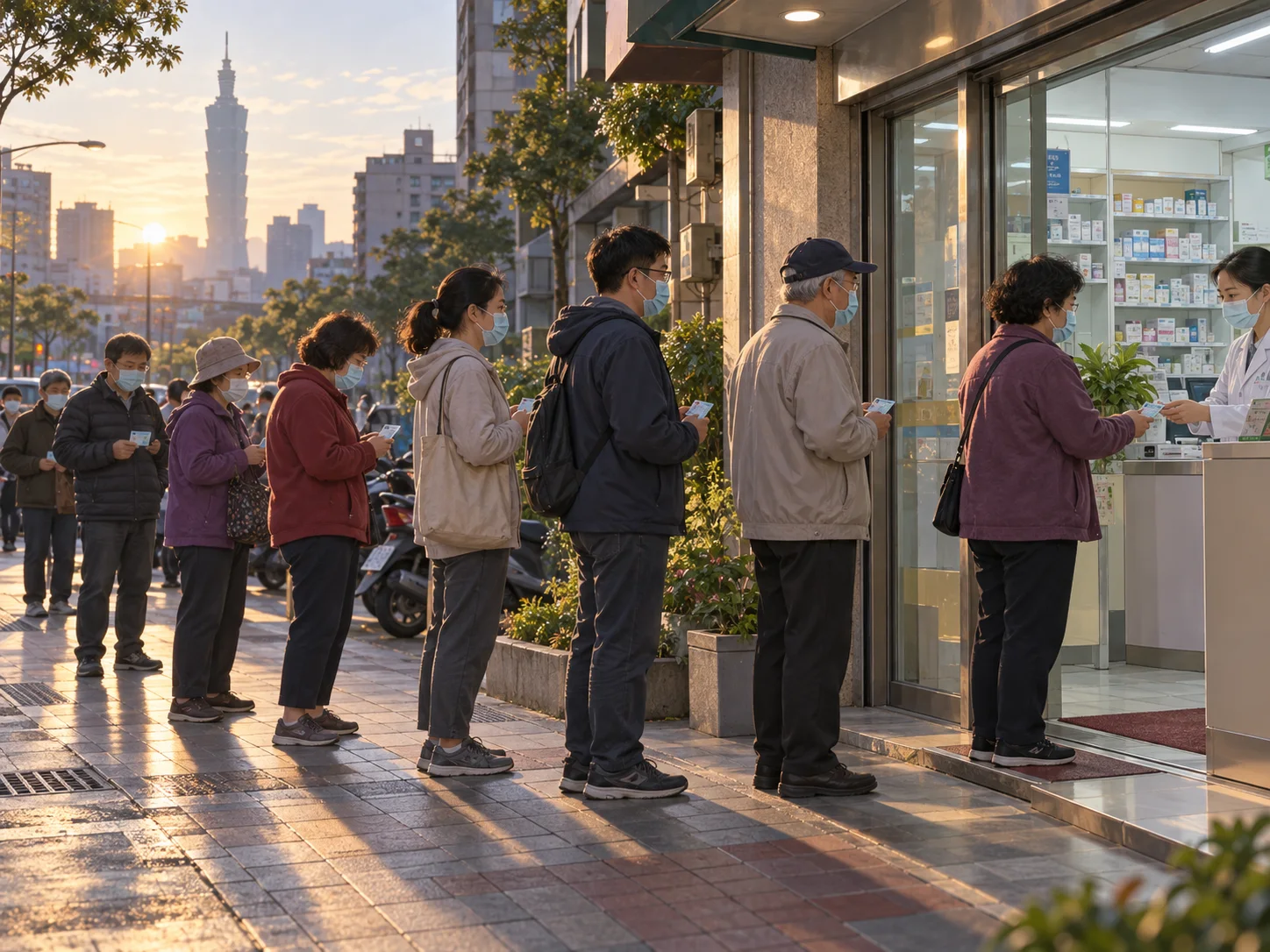
In February 2020, Taiwan introduced a name-based mask rationing system using National Health Insurance cards. Fixed daily supplies went to 6,505 contracted pharmacies, and the initial allowance was two masks per person in seven days. Queues formed outside pharmacies, while the government used purchase-day rules to reduce congestion and released stock information as open data.
What distinguishes this line is that access to a scarce product was managed through identity cards and a nationwide database, then dispersed through public inventory maps. People waited not only for stock but for their purchasing entitlement to renew. Information designed to prevent unnecessary queues became part of the rationing system itself.