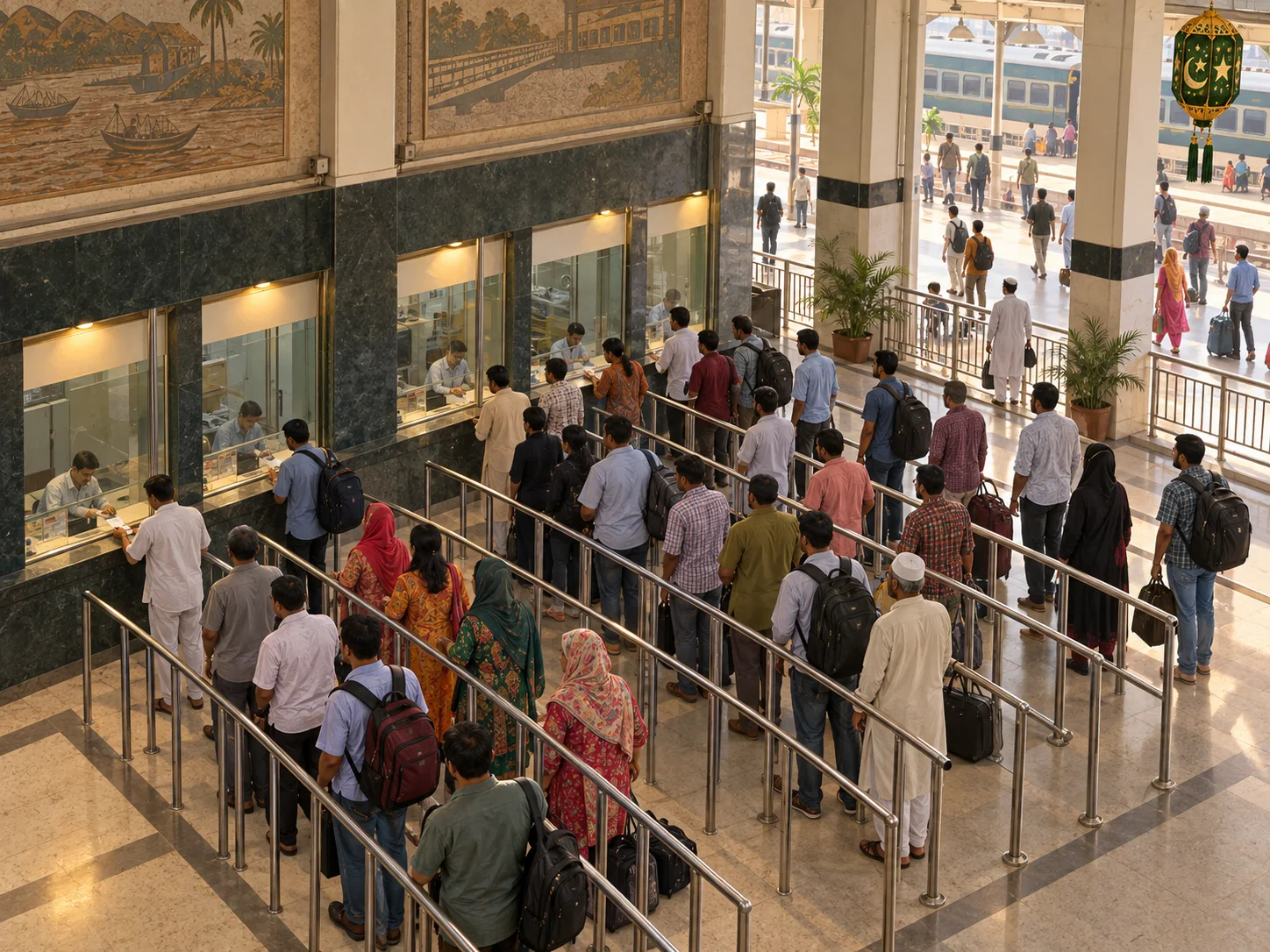
In August 2018, long lines formed before dawn at Kamalapur railway station in Dhaka for advance Eid-ul-Azha tickets. The Daily Star reported that many passengers had waited through the night. After sales began, a network failure stopped all twenty-three counters for about ninety minutes, freezing queues that were already long.
What distinguishes this queue is that its movement depended not only on demand but on the communications system behind nationwide reservations. Travel dates and seats were limited. For people who had kept their place overnight, the ninety-minute outage was not merely an inconvenience; it reduced the time in which their preferred train could still be secured.