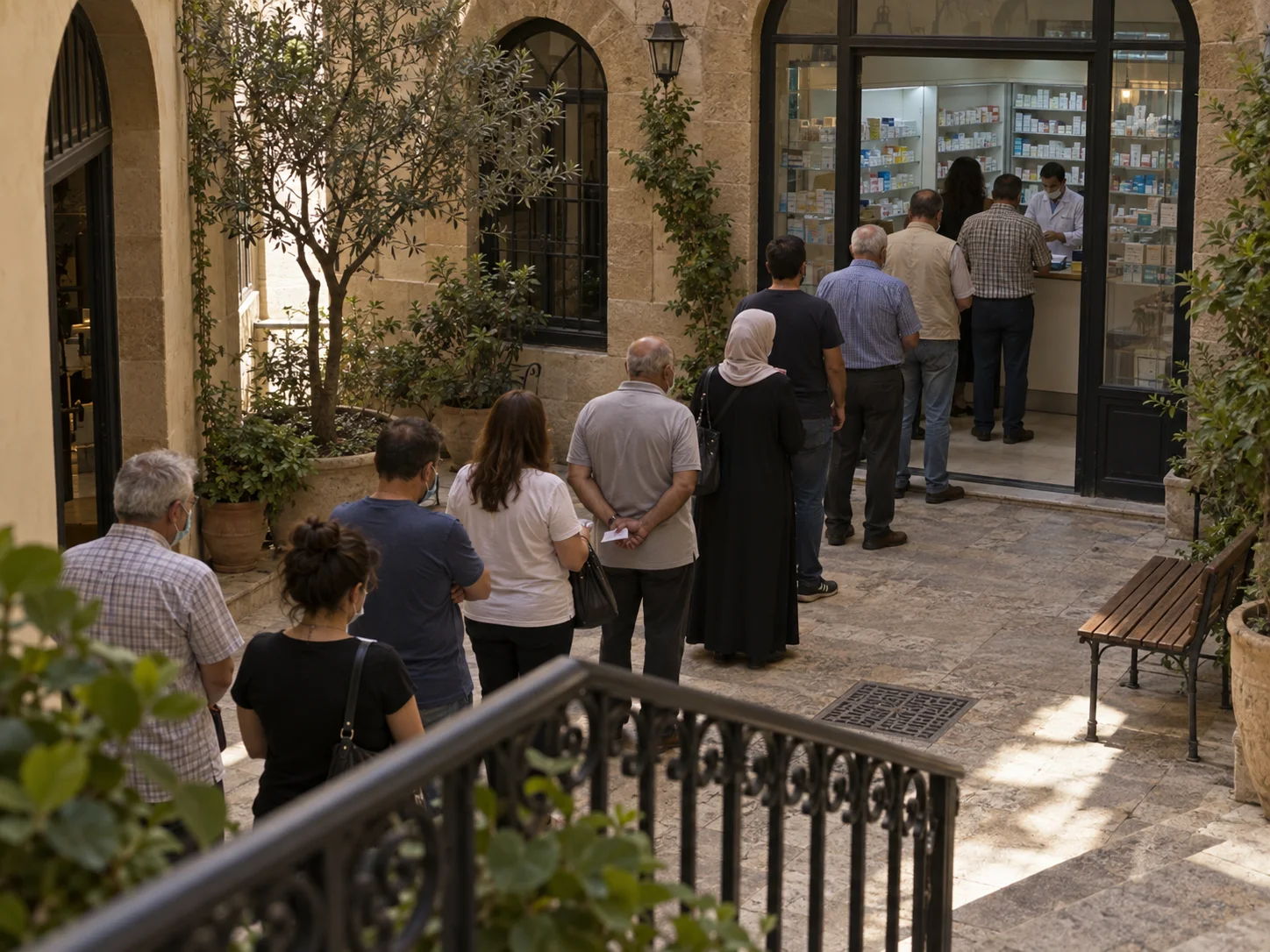
In May 2021, a Reuters photograph documented customers queuing at a pharmacy in Beirut. Lebanon's shortage of foreign currency and the breakdown of subsidy arrangements had disrupted medicine imports; the following month, pharmacies closed in protest. One resident said he had visited ten pharmacies looking for medicine, and that the two still open did not have it.
This line had lost the ordinary promise that reaching the front would bring the desired item. In a normal retail queue, position means progress toward available stock. When the supply chain breaks, waiting becomes one more check before moving to another shop. Behind each small pharmacy line stood national problems of import payments and central-bank subsidies.
Searching for medicine should not be turned into a celebration of endurance. Continued treatment depended on inventory and foreign-exchange policy. The photographed queue shows where an economic crisis ceased to be only a set of currency figures and appeared instead as empty shelves and uncertainty about the body.