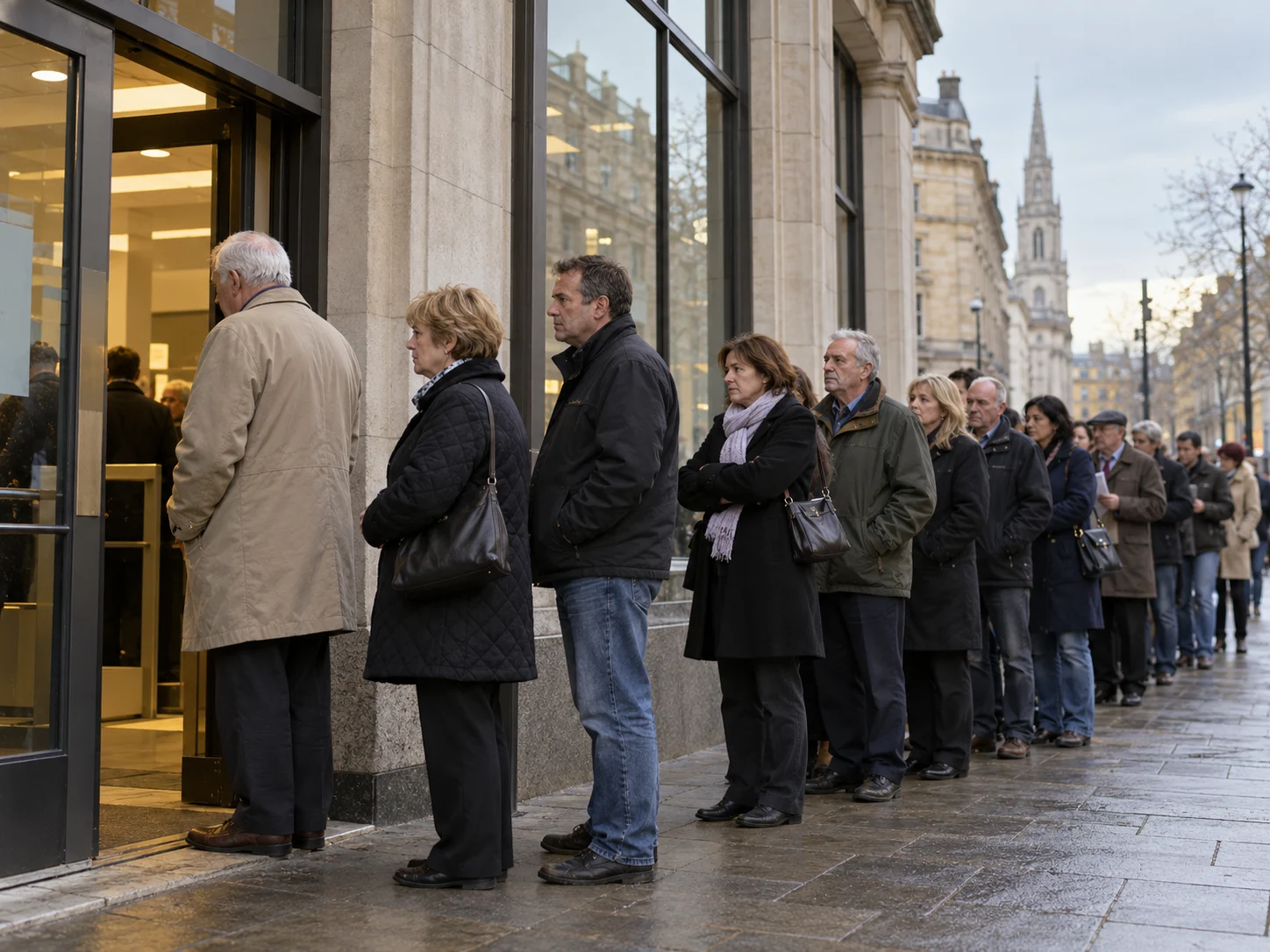
On 14 September 2007, depositors queued outside branches of the British mortgage lender Northern Rock. News had broken the previous day that the company had sought emergency support from the Bank of England. A later House of Commons report places that announcement at the start of the run. Contemporary Guardian reporting described customers at Houndsditch who waited from 8:00 until 10:30 and a line of about one hundred people in Leeds.
They were not waiting for a new product or an attractive interest rate. They wanted a counter at which savings could be withdrawn or transferred. Banks do not hold every deposit as cash available to everyone at once. When fear concentrates demand, the physical number of desks and staff turns an abstract question of confidence into a visible line. That customers gathered at branches even in an era of telephone and online banking made the scene especially striking in modern Britain.
The government later announced protection for deposits in an effort to stop the panic. Until that assurance took effect, however, a balance remained a number on a statement. A customer regained control only after reaching the front and completing a transaction. Britain’s most conspicuous bank run in generations showed how quickly invisible financial trust could be measured in bodies on a pavement and minutes before closing time.