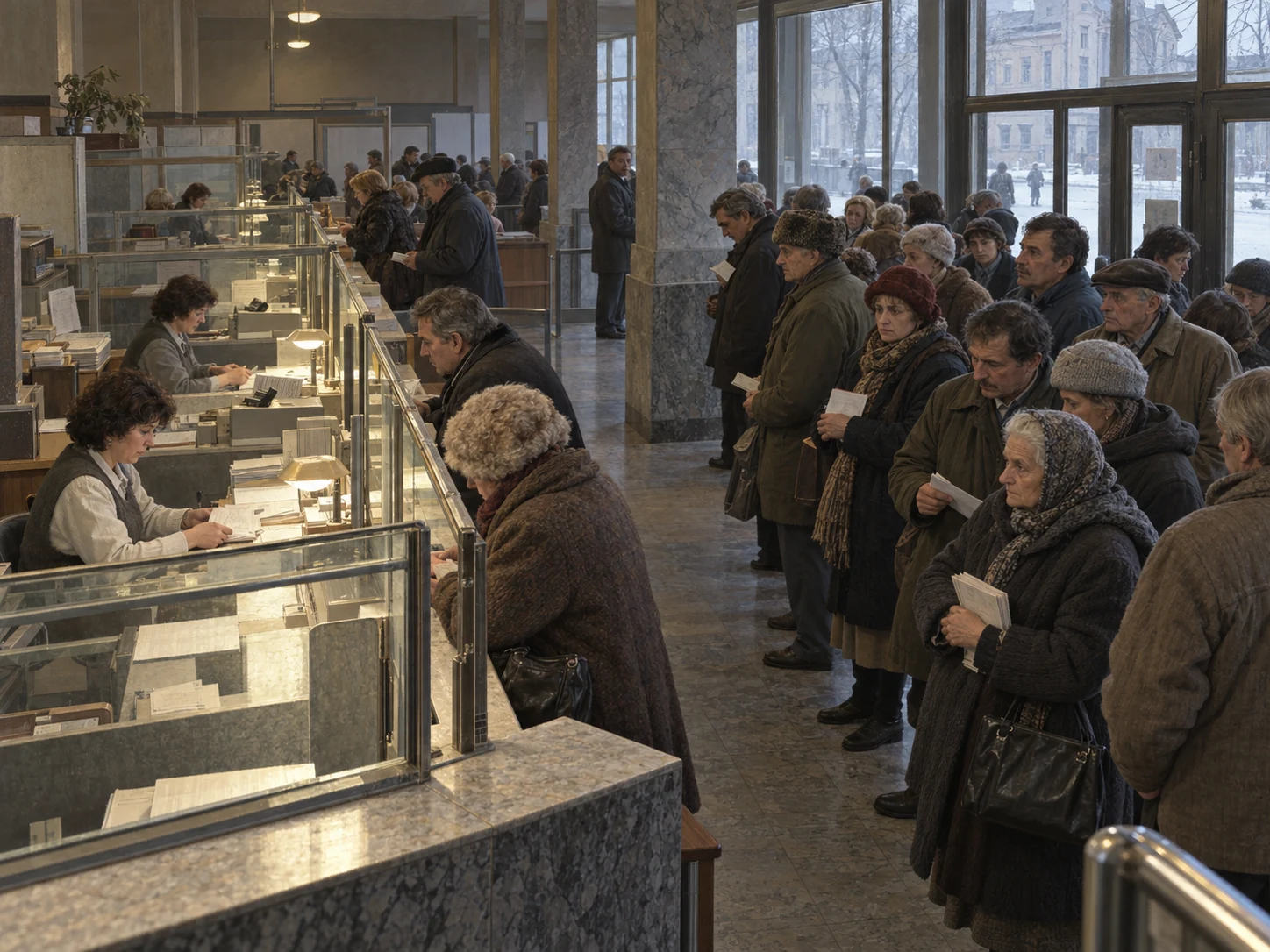
In the spring of 1993, depositors trying to recover money from the failing Dafiment private bank in Belgrade formed a line that snaked around a football stadium. Contemporary reporting by the Washington Post said thousands waited for hours, yet what they received that day was not cash but a numbered appointment telling them when to return to their branch.
The queue formed amid war, international sanctions and accelerating inflation during the breakup of Yugoslavia. Banks had attracted hard-currency savings with extraordinary interest rates. When another private bank stopped payments, anxiety spread rapidly and the rush to withdraw intensified. The line measured not only the shrinking value of money but also the speed at which trust in financial institutions was collapsing.
What distinguishes this wait is its double order. People first queued at the stadium to obtain a number, then had to wait again for the date assigned by that number. The ordinary act of retrieving one's savings had become a queue merely for permission to join a later queue—a precise image of everyday life under hyperinflation.