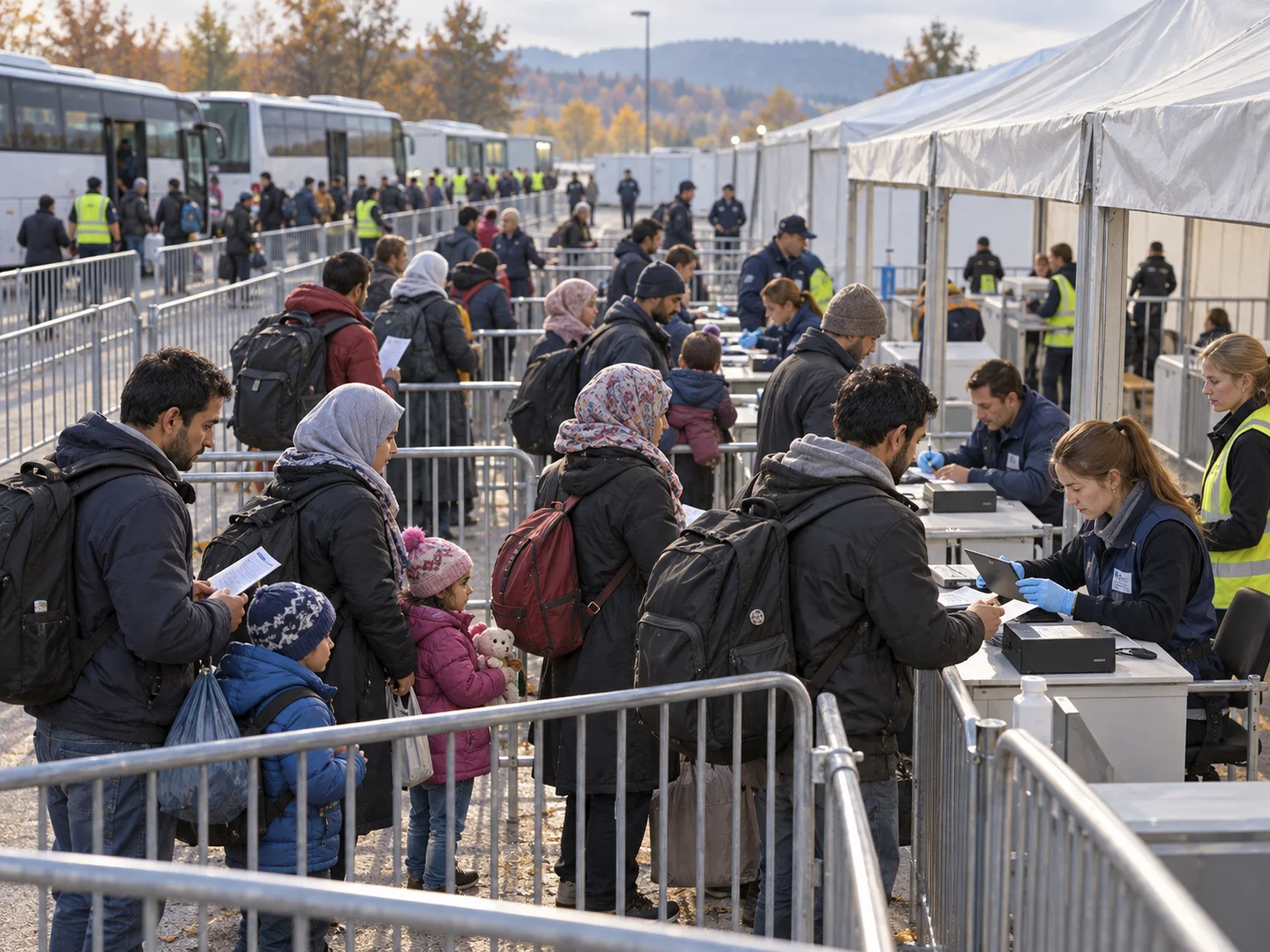
In 2015, refugees and migrants passing through Slovenia were generally required to complete registration at reception centres before receiving food and other assistance. When registration was slow, people waited for many hours and sometimes spent one or several nights outside. Only urgent medical cases were exempted.
What distinguishes this wait is the direct link between migration control and the order of humanitarian assistance. A delay in administrative registration also delayed access to food and water. The sequence was not only a border procedure; it was a gateway to basic necessities.