Ecuador’s final sucre exchange deadline compressed a long monetary reform into one day.
The conversion rate was fixed at 25,000 sucres to one dollar. The number was precise, but its consequences were uneven. For people holding cash savings, running small shops or changing prices, dollarisation was not an abstract entry in a central-bank ledger. It was the work of carrying familiar value into an unfamiliar unit.
Notes that measured value were about to become paper no longer redeemable, driving holders to banks.
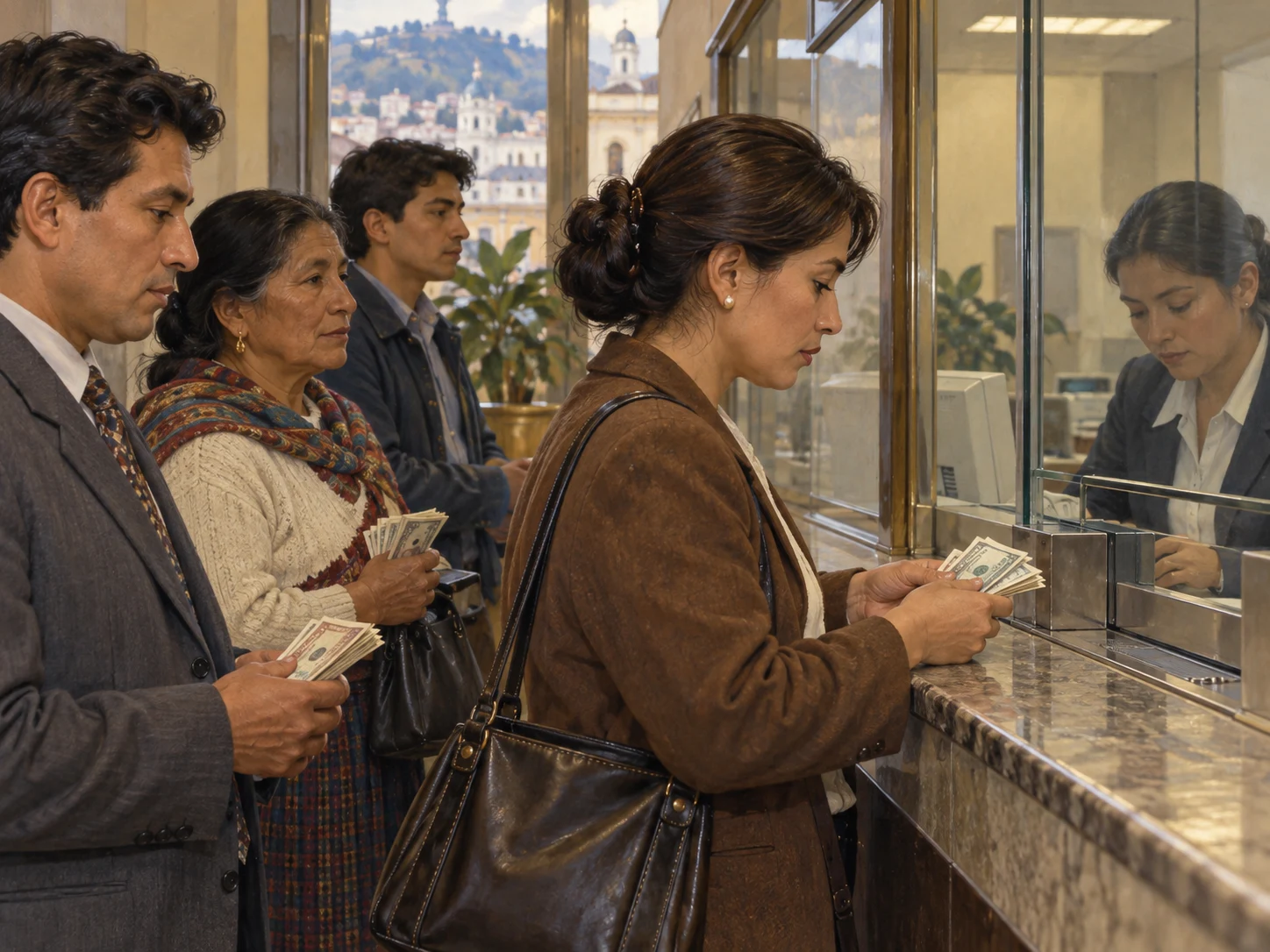
On 9 September 2000, long lines formed at selected banks in Ecuador as people exchanged sucres for U.S. dollars and new coins. The following day, the sucre would cease to function in ordinary transactions after 116 years as the national currency. A Reuters report placed mock funeral ceremonies for the old money beside the practical rush at exchange windows.
At the back of the line, an old note was still money. Beyond the window, it was becoming a historical object. Its meaning changed while its owner advanced. A currency transition is announced by a state, but completed person by person as wallets are emptied across a counter. Thousands of those small exchanges replaced what a country meant when it said 'money.'
At the back of the line, the state’s temporal boundary of money was approaching.
On the final day before Ecuador’s sucre ceased circulating in September 2000, long lines formed at bank windows to exchange it for dollars. More than 90 percent of the old currency had reportedly been converted, but the person still in line faced a simpler question: would these notes cross the deadline?