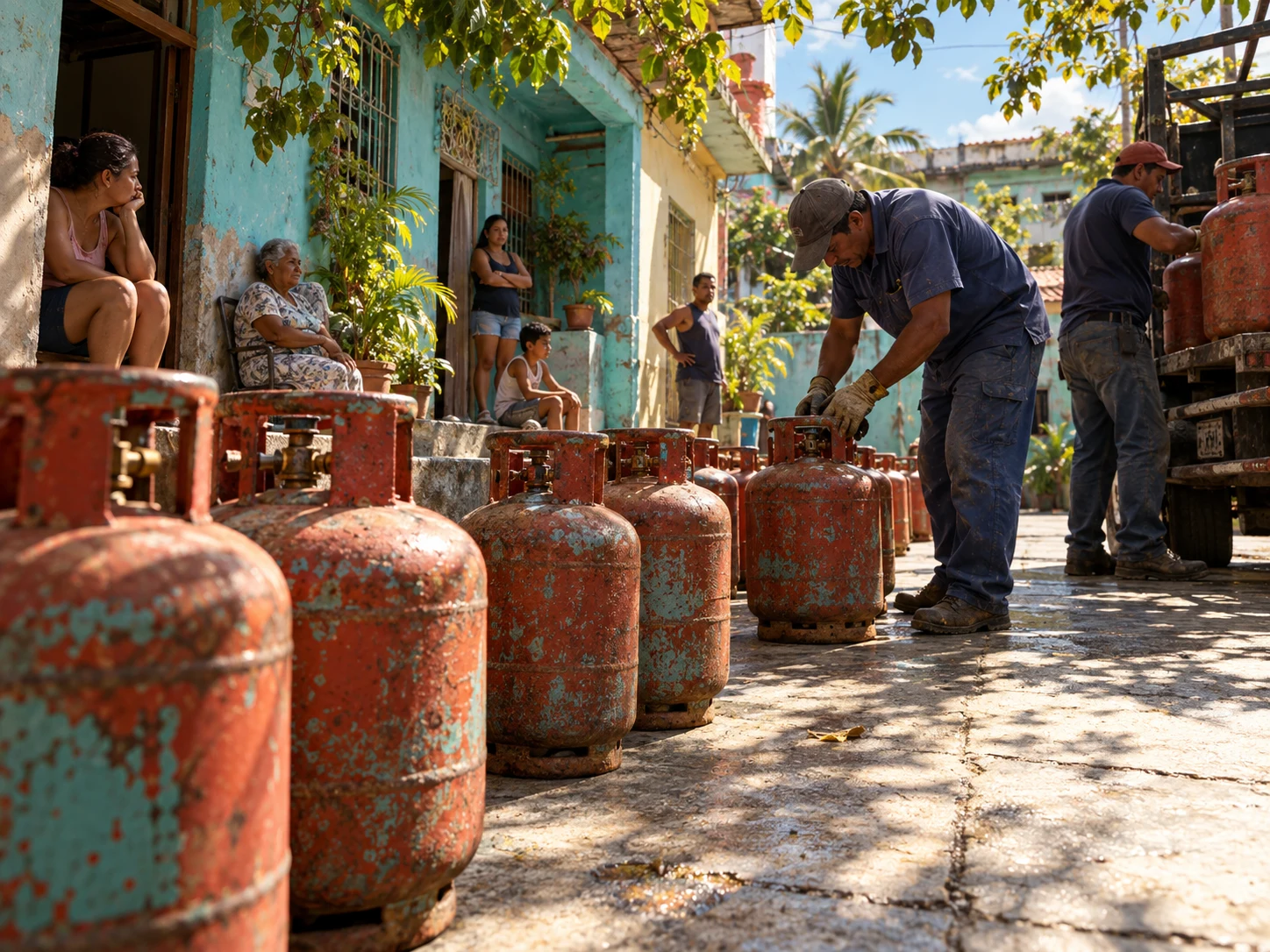
An empty cooking-gas cylinder is not necessarily light. Someone must carry the metal container from home, find a place where it can be refilled, and then bring it back heavier than before. A candidate record from Venezuela in 2020 points to shortages of household cooking gas and residents waiting with cylinders for supplies.
When fuel for the stove runs out, the disruption reaches beyond dinner. It changes what a family can cook, when a meal can be prepared and whether another source of heat is available. Time that might have gone to paid work, care or rest is spent trying to secure an ordinary necessity. The cylinder makes a shortage visible as a physical burden: scarcity is something a person may have to lift and carry.
But a country's fuel crisis cannot be reduced to a single representative line. Distribution arrangements may differ from one neighborhood to another. Was service first come, first served? Did residents have to register in advance? Did everyone who waited receive gas? The answers would distinguish this scene from a generic account of shortage.
The current candidate notes do not establish the town, distribution point or exact date of the reported queue. Without the underlying photograph or report, neither its size nor the hours spent waiting can responsibly be supplied. This is not a tale about a supposedly patient population. It is a story about the work, often invisible, required simply to put a flame beneath a family's next meal.