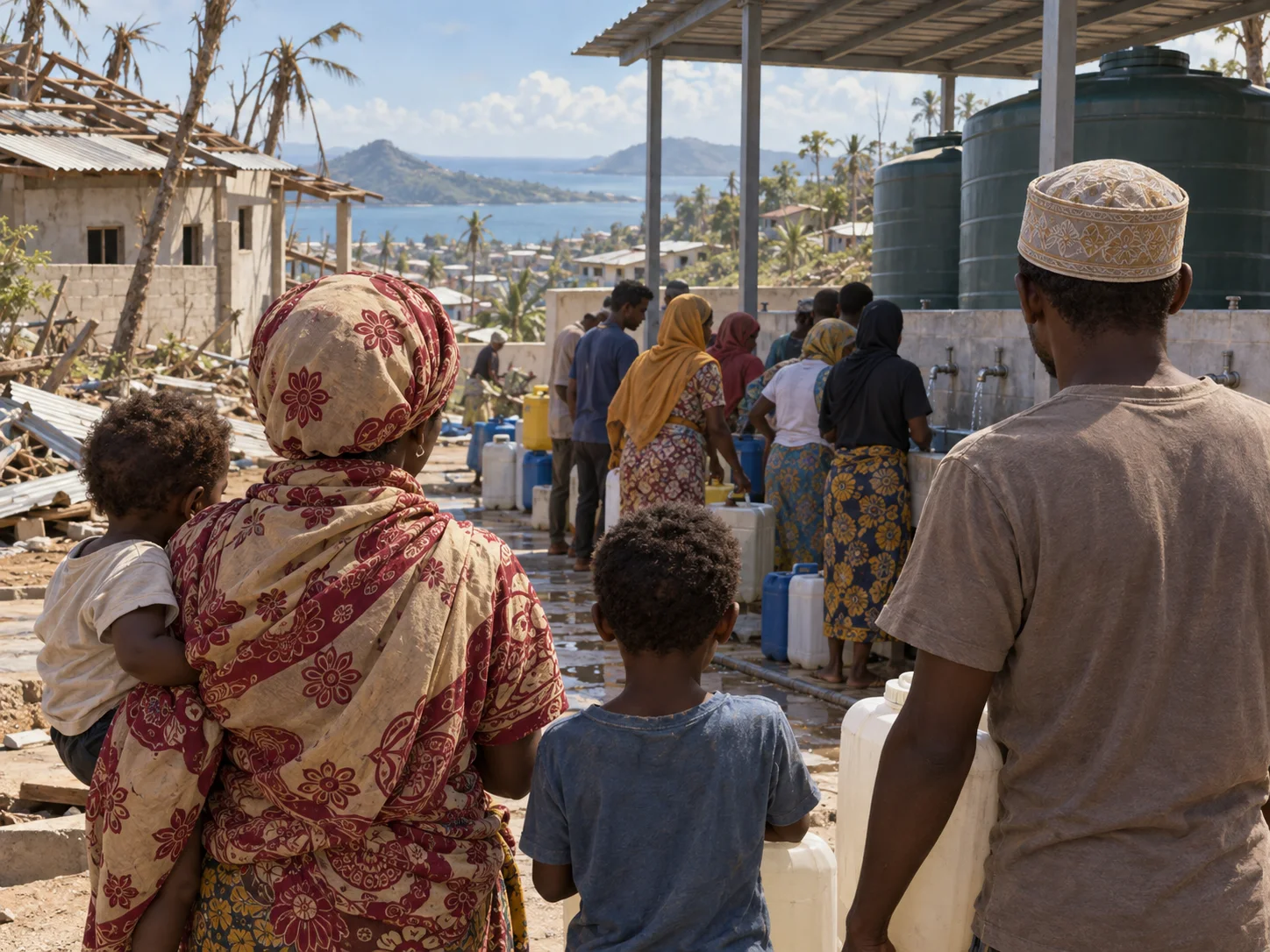
Five days after Cyclone Chido, long queues had formed at public water points in the French territory of Mayotte. Reporting from the island on 19 December 2024, Le Monde found that the nearest standpipe serving part of Kawéni had run dry. Residents carried five- and ten-litre containers elsewhere in search of water. Families washed with buckets or bottles, while people relying on a small river worried about bacterial contamination. No distribution of food or water had reached the neighbourhood by that date.
Water was not the only scarce necessity producing a line. At one of the island’s main filling stations in the Kawéni industrial zone, cars stretched for several hundred metres. Some people had slept there hoping to refuel. Authorities limited purchases to thirty litres and prohibited filling cans, while police patrols tried to contain tensions. The water company said half the network should be repaired within forty-eight hours and 95 per cent within seven days, yet in some places it could not even determine whether reservoirs were empty.
This queue should not be turned into a sentimental story about resilience. When homes, roads, communications and water infrastructure fail together, standing in order can be the bare minimum for sharing scarcity fairly, but it also transfers the cost of delayed restoration into residents’ time and bodies. The length of the line did not measure enthusiasm. It measured how few functioning points remained through which an essential resource could reach a damaged community.