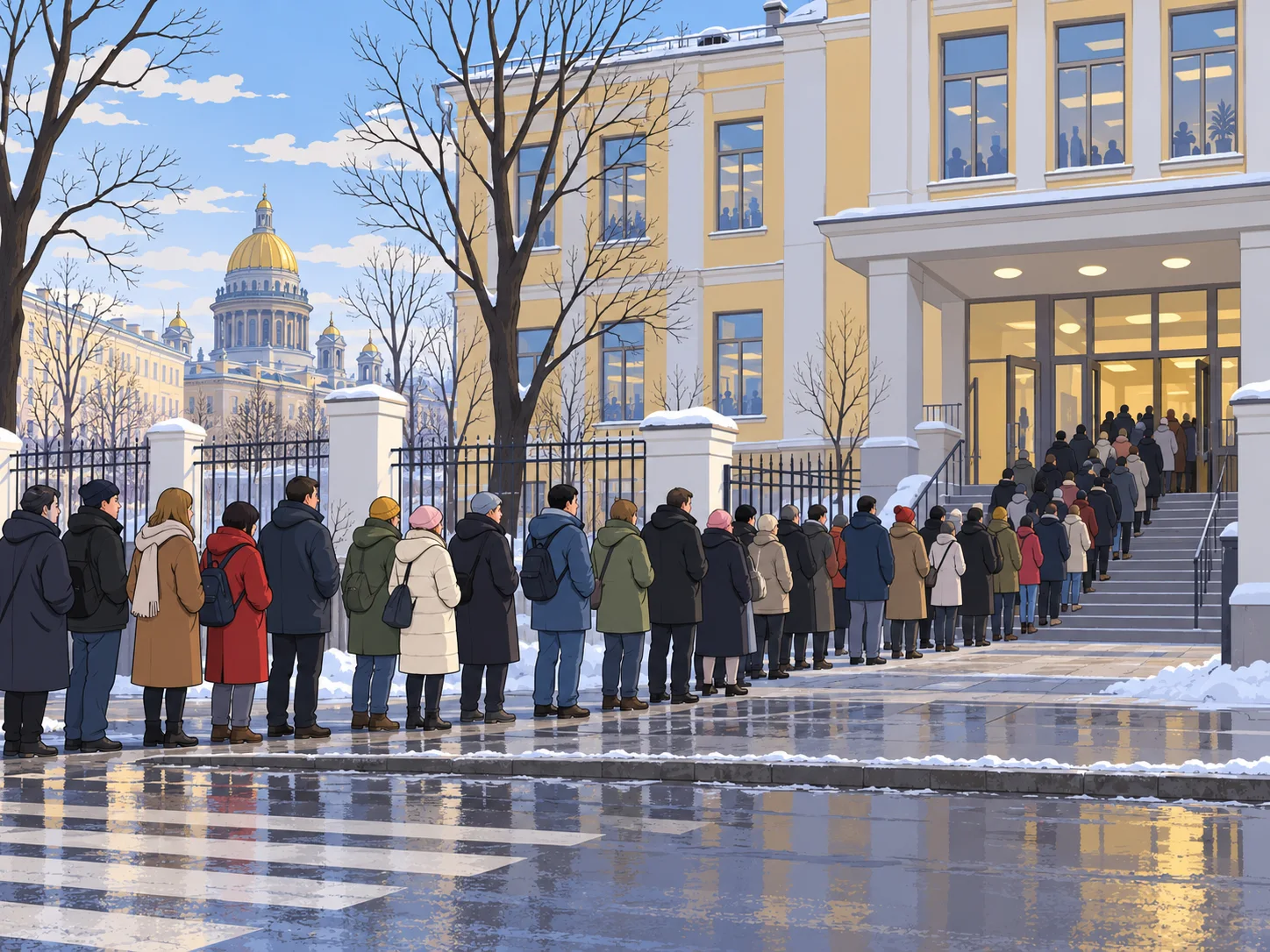
On 17 March 2024, the final day of Russia’s presidential election, long lines formed at noon outside polling stations in Moscow, St Petersburg and other cities. Supporters of the late opposition leader Alexei Navalny had called for a coordinated “Noon Against Putin” turnout. At one station in north-eastern Moscow there was no line at 11:55; by 12:01, about eighty people were waiting.
The political intention of every person in a queue cannot be assumed. Even so, the tactic was distinctive: a procedure normally designed to spread voters over time was used to create a visible gathering within a legal act. Waiting was not a failure of the system here; it was the medium through which dissent appeared on the street.