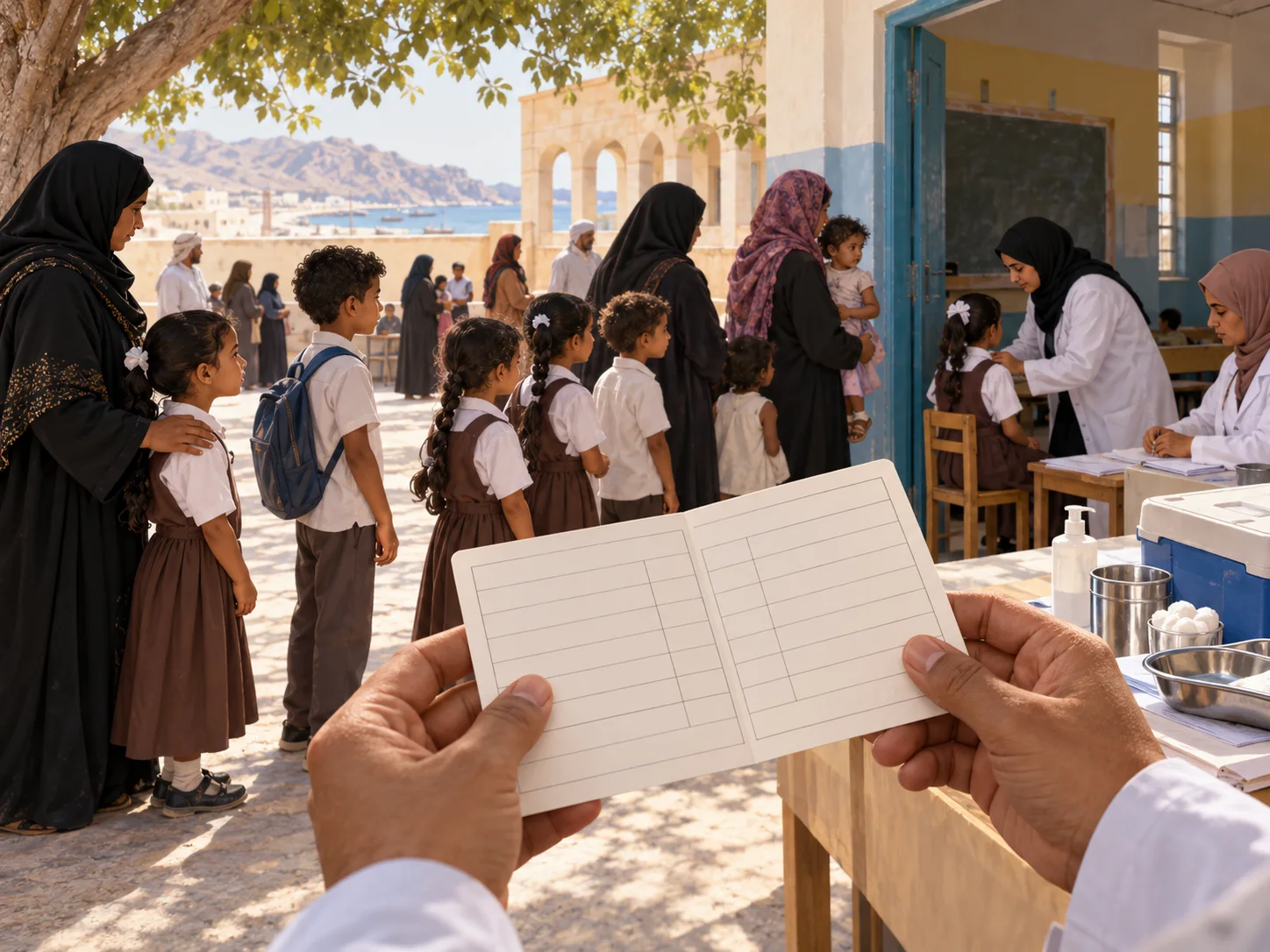
In 2016, children at a primary school in Mukalla, southeastern Yemen, stood in line for vaccination. A UNICEF photograph and report follow midwife Entesar Saeed Bamoumen as she delivered polio, measles and rubella vaccines in schools and her community.
On ordinary clinic days she vaccinated about forty children. During campaigns, the number could reach 375 in a day. This was not a hospital reception line but an order created when one local midwife brought public health services to a school.
In a region where conflict and road closures made travel to medical facilities difficult, bringing care to where children already were mattered. The school queue was a practical flow through which a limited workforce protected many children from preventable disease.