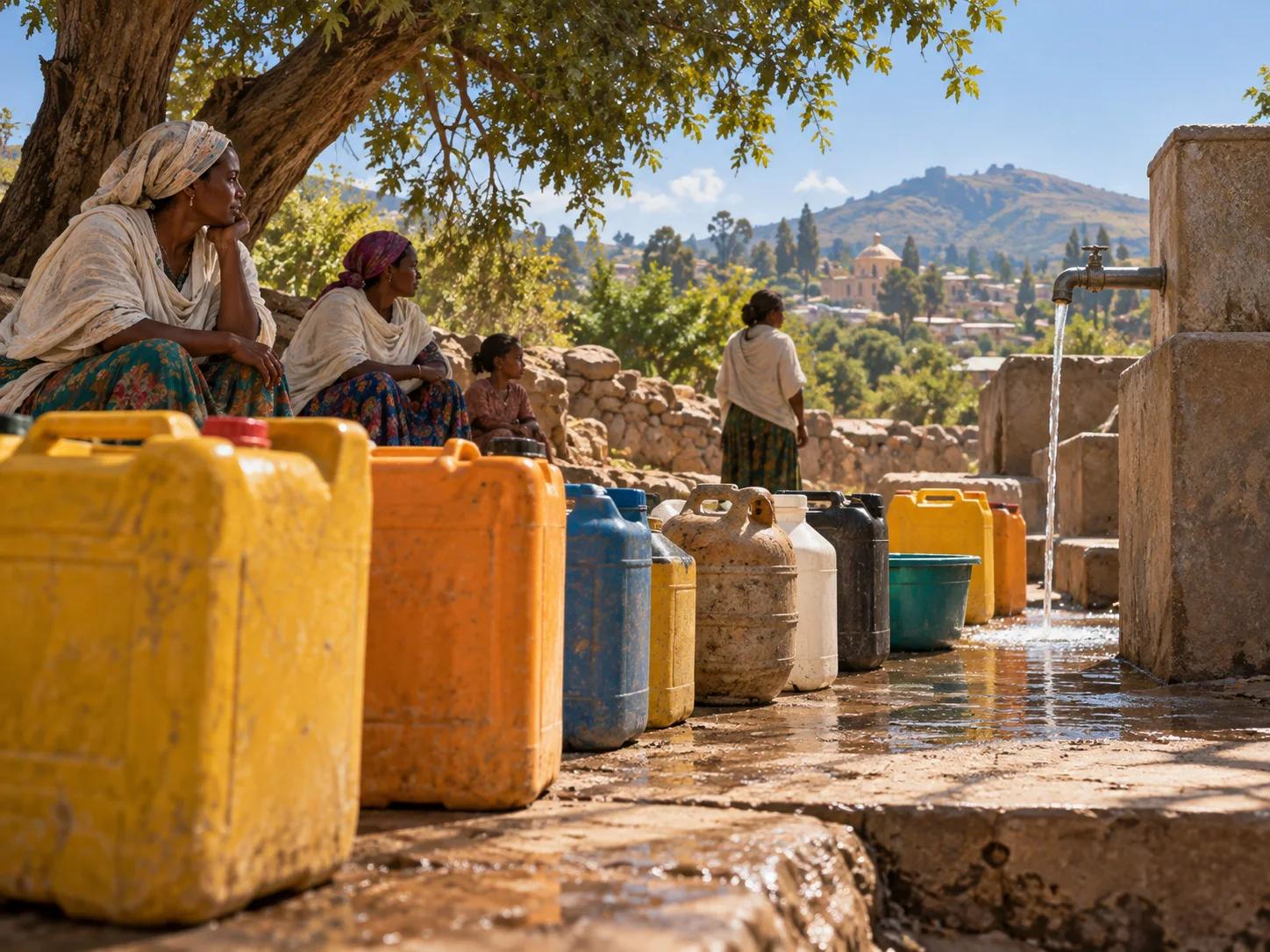
In Legga Kebele, Ethiopia, Enaniye Awoke used to join the water queue at 3 a.m. She could find 150 containers ahead of hers, with her turn not arriving until midday. People left jars in line, returned home and came back to check their position.
Containers rather than bodies held places, making the duration of scarcity visible. Jars could be broken while unattended, leaving a household without water for three days.
A new water system removed this wait. The change documented by UNICEF was not only a shorter distance: whole nights and mornings once spent protecting a place in the water order returned to family life.