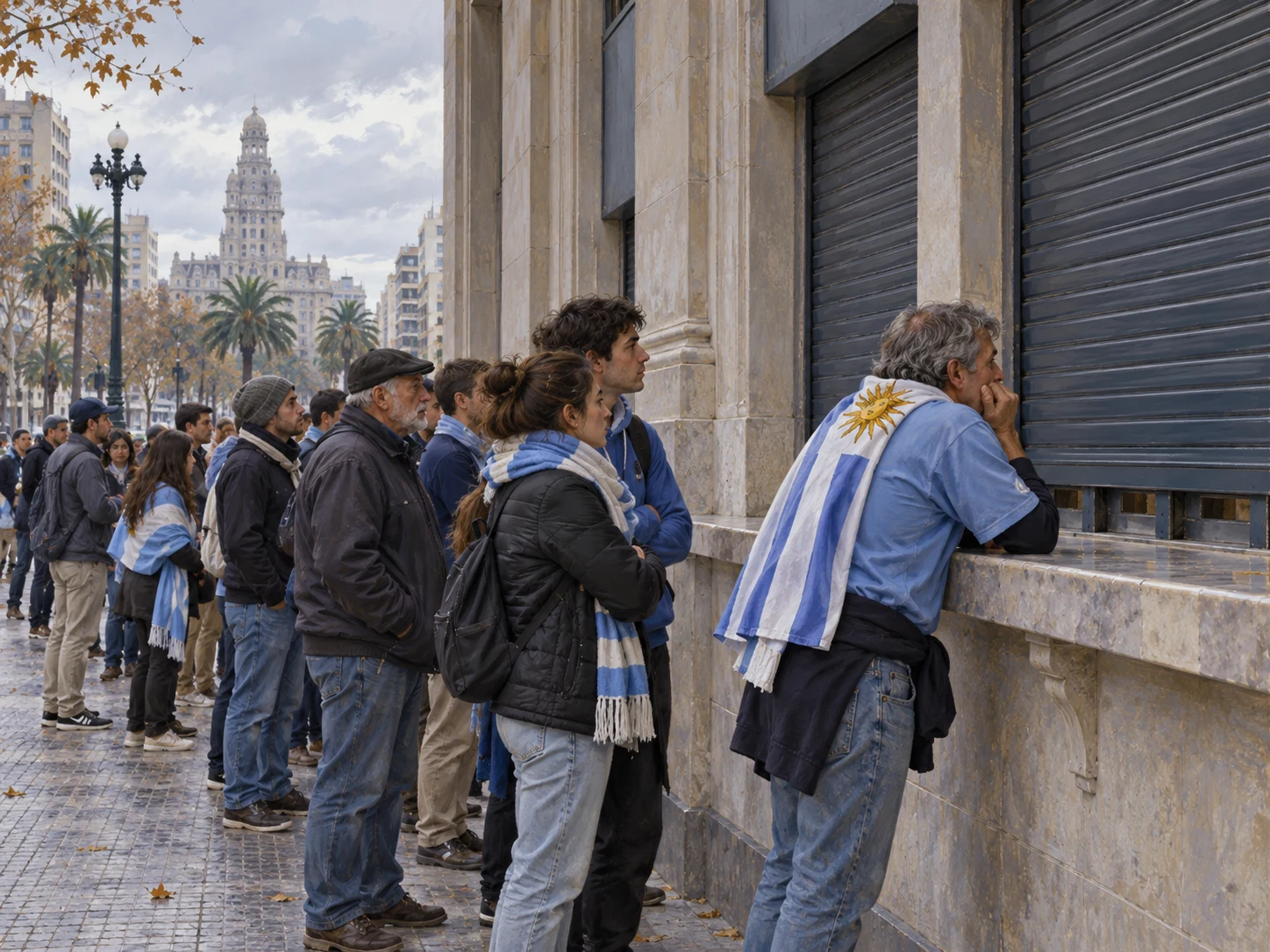
On the morning of 20 July 2011, after Uruguay reached the Copa América final, a long line formed outside the Uruguayan Football Association (AUF) in Montevideo. Local broadcaster Subrayado reported that dozens of supporters waited in the expectation that tickets for the final would go on public sale. They never did. The 5,800 tickets available to the AUF were allocated to clubs, players' families and travel agencies instead.
The crowd was therefore waiting for a ticket window that never opened. Uruguay's fourth-place finish at the previous year's World Cup had already renewed enthusiasm for the national team, and hope moved faster than official information. A ticket queue normally creates an order in which something can be bought. Here the order remained, but the product did not appear. The line captured not only the mechanics of scarcity, but also the power of football to reorganize an ordinary morning.