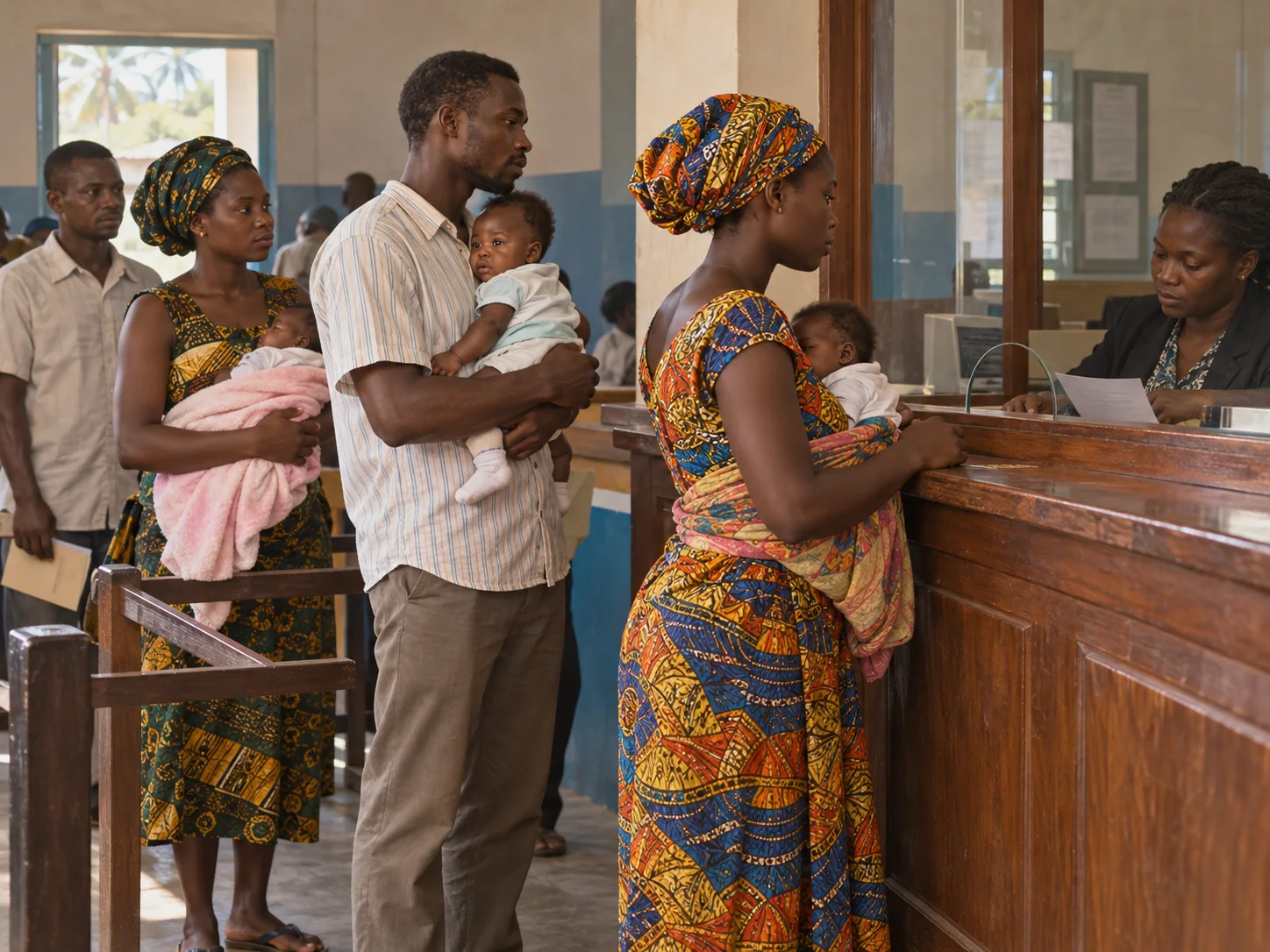
In 2016, a birth-registration queue at Liberia’s statistics bureau in Monrovia snaked past rows of plastic chairs and into the corridor. A 52-year-old woman learned she needed a birth certificate only when applying for a passport to attend a church conference in the United States. A 21-year-old needed one for university elsewhere in Africa; a 25-year-old sought a replacement after his family documents were destroyed during civil war. Although law required registration within fourteen days of birth, the under-five registration rate was estimated at just 4 per cent in 2007. Registration had long been concentrated in the capital and paper records were lost in war. Training health workers and volunteers raised coverage to 25 per cent by 2013, before Ebola closed facilities and cut registrations by 39 per cent in 2014. The corridor held not only parents of newborns but adults whose undocumented beginnings had resurfaced at later gates to travel, education and migration.
Liberia · 2016
Liberia’s Birth-Registration Queue Beyond the Plastic Chairs