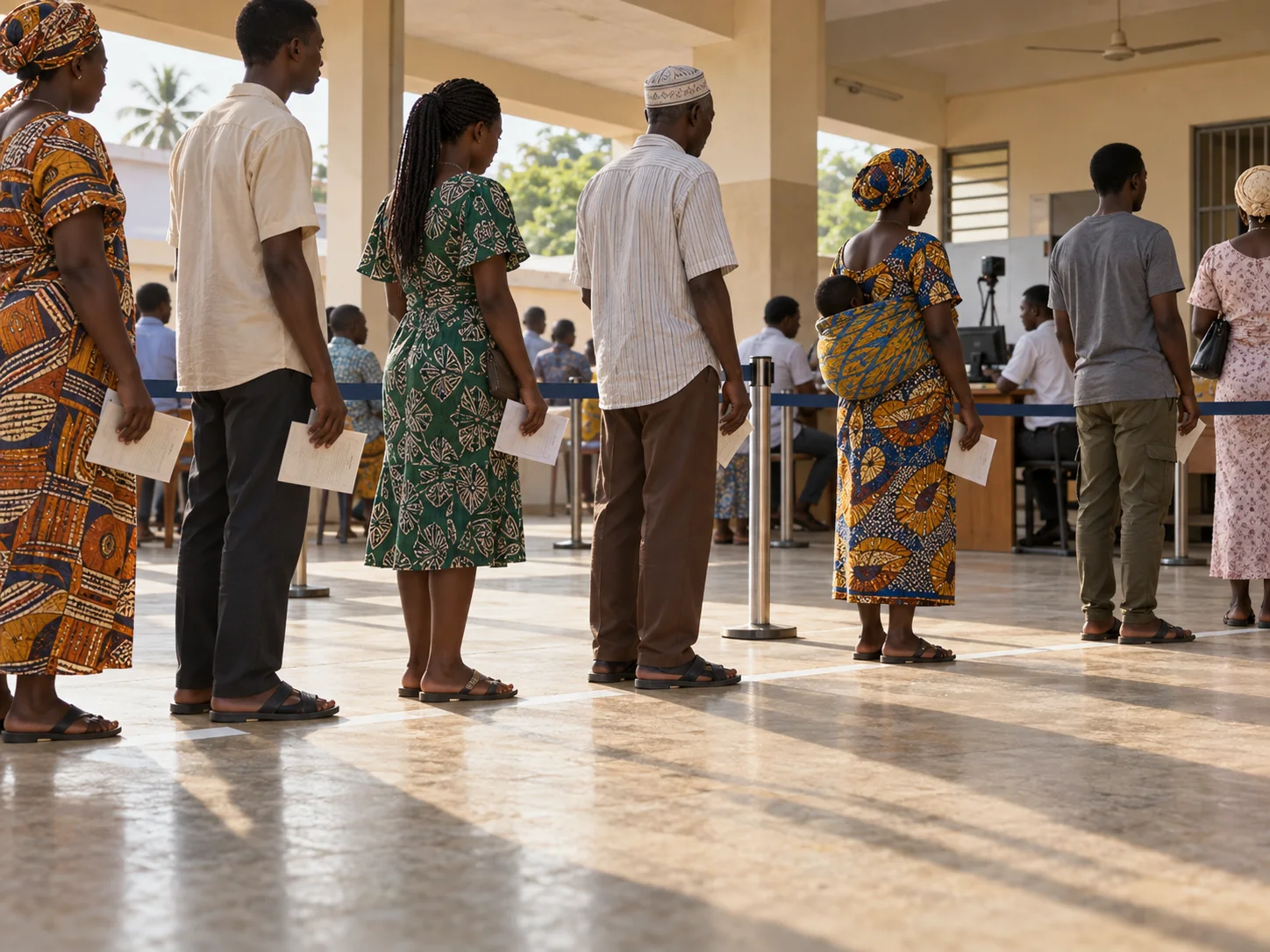
In 2026, residents reached the Ghana Card registration centre at Adenta Market in Accra as early as 4 a.m., carrying chairs, umbrellas and food. Local reporting documented waits of more than five hours on wooden benches with no guarantee of service. A photograph dated 14 July showed the long registration queue, while some applicants said they had returned three or four times without succeeding.
The Ghana Card is meant to place citizens within a unified digital identity system. At the centre, however, network problems and too few registration kits slowed processing. For traders who closed their shops to attend, waiting cost not only time but a day’s income.
Entry into a national digital database depended on a thoroughly physical act: arriving before dawn and preserving a place. In Adenta, the infrastructure of digital identity became visible as five hours on a wooden bench.