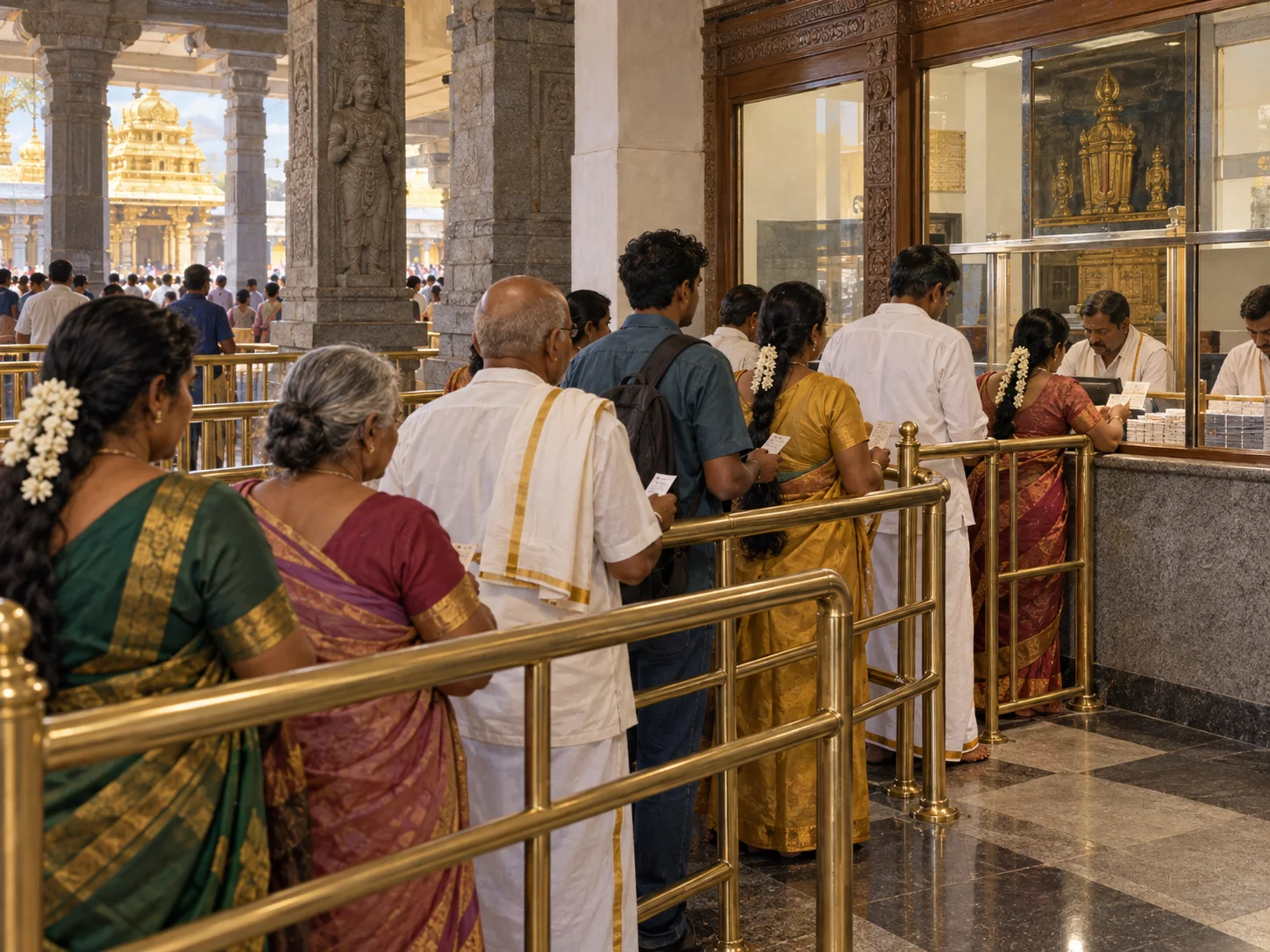
The Tirumala kiosk automated the ticket, not the sacred food.
The kiosk used identity details and digital payment to issue that ticket. It did not turn the sacred food into a vending-machine product; it changed an administrative step that came before collection. Devotion, identity checks, payment and inventory had all been compressed into the experience of one long queue.
It moved identity and payment into another channel without changing the offering’s meaning.
At the Venkateswara temple in Tirumala, India, the laddu received after worship is more than a souvenir. It is prasadam, food that has been offered in a religious setting and then shared. In June 2025, the temple administration, TTD, introduced self-service kiosks for tickets to buy additional laddus. Previously, pilgrims could wait at a cash counter for a ticket before joining the collection process.
Digitisation does not abolish waiting. A visitor may still need help with the machine, wait at the laddu counter or move through a crowded temple complex. But it can change which stage requires a person to stand in line. The reform left the meaning of the offering intact while attempting to reduce the procedural friction around receiving it.
The reform separated devotional time from administrative time.
In 2025, Tirumala shifted extra-laddu ticket purchases from cash queues to kiosks using darshan ticket numbers and digital payment. The reform did not change how the sacred sweets were made; it distributed the administrative step that determined who could buy them.